Russian
 English
 Romaian
 Portuguese (Brazil)
 Greek
Greek

Why Is Glycerine a Key Ingredient Across Food, Healthcare, and Personal Care?
Networking |
2026-10-07 09:02:24
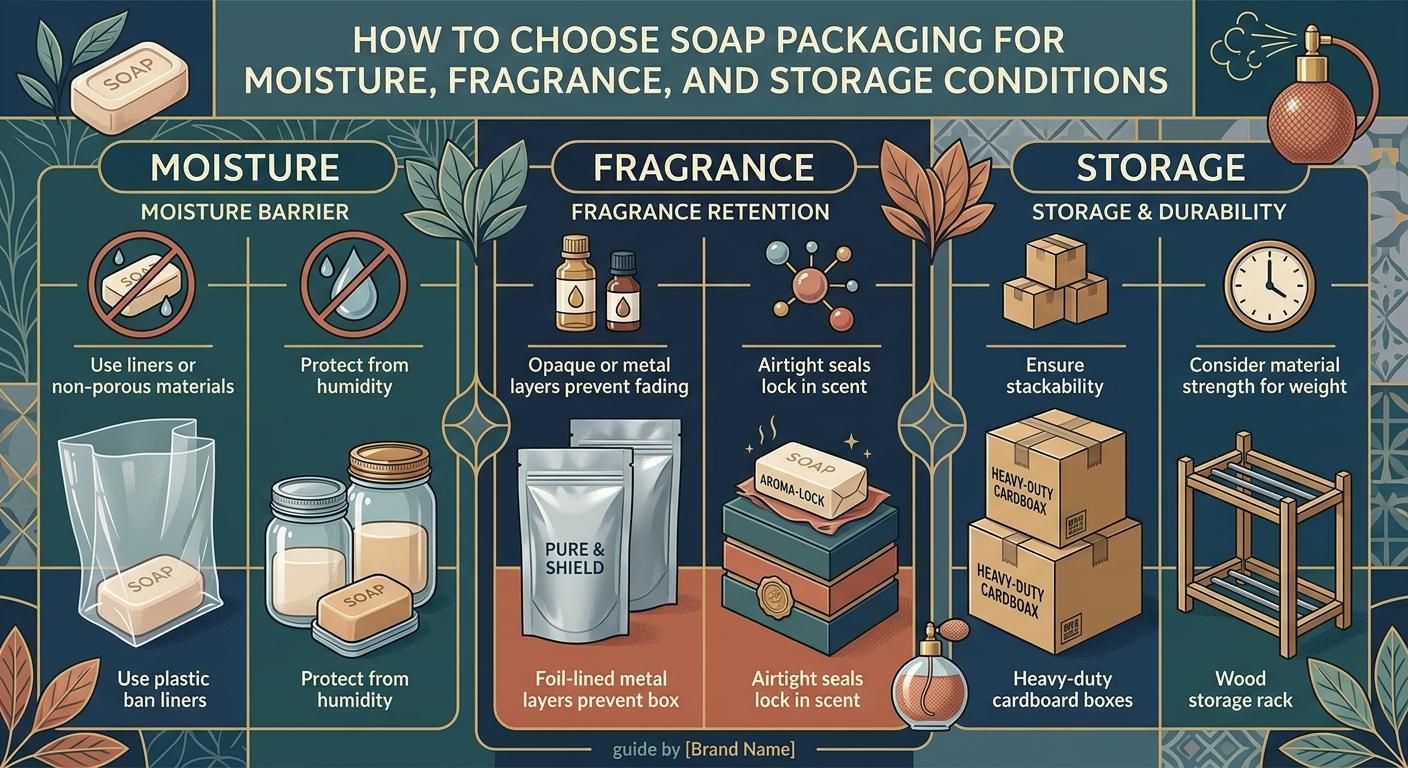
Choosing the right packaging for soap involves much more than selecting an attractive box or printing a memorable logo. Soap is a product that can respond to its surrounding environment, and the wrong packaging may contribute to fragrance loss, unwanted moisture exposure, surface changes, or damage during storage and transportation.
For soap manufacturers, handmade soap businesses, and private-label brands, packaging decisions should begin with the characteristics of the product itself. A fully cured cold-process soap, a glycerin-rich transparent bar, and a soap containing delicate botanical ingredients may not require exactly the same packaging approach.
Temperature, humidity, storage duration, fragrance composition, and distribution methods also influence which materials are appropriate. By understanding these factors before selecting a packaging format, businesses can protect product quality, reduce avoidable waste, and create a more reliable customer experience.
The most effective packaging decisions begin with a clear understanding of how the soap behaves under normal storage conditions. Different formulations can respond differently to moisture, air exposure, temperature fluctuations, and prolonged storage.
Cold-process soap generally requires a curing period after production. During this time, excess water evaporates and the bar develops its final characteristics. Packaging too early or storing the bars in unsuitable conditions may interfere with drying and contribute to quality problems.
For many traditional cold-process formulations, breathable storage conditions are useful during curing. A tightly sealed, moisture-resistant package is therefore not automatically the best choice immediately after production.
Once the soap has completed its required curing period, the packaging can be selected according to its formulation, fragrance, intended shelf life, and distribution environment.
Glycerin is a humectant, meaning it attracts and retains water. Many transparent glycerin-rich soaps can develop moisture droplets on their surfaces when exposed to humid air, a phenomenon commonly known as sweating.
For these products, a suitable moisture-barrier film or compatible sealed wrap may help reduce contact with humid air. The packaging should be tested with the actual soap formulation because performance can vary according to the product and material used.
Soaps containing dried flowers, herbs, clays, milk-derived ingredients, or other specialty additives may have different storage requirements. Decorative inclusions can be sensitive to moisture, while certain ingredients may influence color, odor, or overall product stability.
Packaging should complement the formulation rather than compensate for inadequate manufacturing or storage practices. If a product has unusual stability requirements, appropriate testing can help determine the best protective solution.
Moisture is one of the most important considerations when choosing soap packaging. However, not every soap needs the same level of moisture protection. The right material depends on whether the product needs to release residual moisture, resist humid air, or remain protected during transportation.
Kraft paper and uncoated paperboard are popular choices for handmade soap brands because they offer a natural appearance and support attractive printing.
They can work well for sufficiently cured, relatively stable soap bars stored in appropriate conditions. Paper-based packaging can also provide basic protection against dust, handling, and surface abrasion.
However, ordinary kraft paper is not a strong moisture barrier. In humid environments, it may absorb moisture, soften, wrinkle, or become stained. Businesses selling in tropical climates or transporting products through humid regions should evaluate whether an additional protective layer is necessary.
Films made from suitable materials, such as certain polyethylene or polypropylene structures, can provide stronger resistance to moisture than uncoated paper alone. Their actual performance depends on the film type, thickness, seals, and overall package construction.
These materials may be useful for glycerin-rich soaps or formulations that require greater protection from humid air. A sealed wrap can also help reduce direct exposure to the surrounding environment.
The trade-off is that plastic films may complicate recycling and may not match the sustainability goals of every brand. Material selection should balance product protection, cost, appearance, and end-of-life considerations.
Coated paperboard can combine a printable outer surface with some additional resistance to moisture. It is particularly useful when a soap brand wants a polished retail carton without relying entirely on flexible film packaging.
The level of protection depends on the coating and construction. Some coatings provide only limited resistance, while specialized barrier treatments may offer more substantial performance.
A coated box should not be assumed to be waterproof or fully moisture-proof. If the soap is highly sensitive to humidity, a separate inner wrap may still be necessary.
Fragrance is a major part of the soap experience. Customers often choose a bar because of its lavender, citrus, rose, eucalyptus, or other distinctive scent. If the fragrance weakens significantly before the product reaches the customer, the perceived quality may suffer.
Many fragrance ingredients are volatile, meaning they can gradually evaporate. Exposure to air, elevated temperatures, and unsuitable storage conditions may accelerate changes in fragrance intensity or character.
Essential oils and fragrance oils also differ in their chemical composition and stability. Some aromatic components are more volatile than others, so a packaging solution that works well for one fragrance may not perform equally well for another.
Brands should evaluate fragrance retention over the intended storage period instead of assuming that all scented soaps need identical protection.
A compatible inner wrap can help reduce fragrance loss by limiting direct air exchange around the soap. Depending on the formulation, this may involve a suitable film, a protective sleeve with an appropriate barrier layer, or another validated packaging structure.
Paper alone may be sufficient for some products and market conditions, but it should not automatically be treated as an effective fragrance barrier.
The inner wrap must also be compatible with the soap's ingredients and surface characteristics. Testing can help identify materials that maintain fragrance while avoiding unwanted sticking, staining, or other interactions.
Even well-designed packaging cannot completely prevent fragrance changes if the soap is stored in unsuitable conditions. Warm warehouses, direct sunlight, and hot delivery vehicles can expose products to elevated temperatures.
Store finished soap in a clean, dry, temperature-controlled environment appropriate for its formulation. Keep products away from direct sunlight and avoid placing cartons near heat-producing equipment.
These simple practices can complement packaging protection and help preserve a more consistent fragrance profile.
A soap box may perform well in a climate-controlled room but behave differently in a warehouse, shipping container, or retail space with fluctuating humidity.
Understanding where the soap will spend most of its time helps determine the necessary level of protection.
Fully cured bars that are not especially moisture-sensitive may be suitable for paper-based packaging when stored in a clean, dry environment.
Keep cartons away from damp floors, leaking walls, and areas where condensation may develop. Shelving that allows appropriate airflow around stored cartons can also help reduce exposure to localized moisture problems.
Avoid storing soap directly beside products that release strong odors, as certain fragrances can be affected by surrounding materials or volatile compounds.
In humid regions, moisture can affect both the soap and the packaging. Paper may lose stiffness, labels may lift, and moisture-sensitive soap surfaces may develop condensation or sweating.
Brands distributing products through humid conditions should consider moisture-resistant inner packaging, suitable seals, and stronger outer cartons where necessary.
Storage practices are equally important. Products should be kept away from damp areas, and any air-conditioning or dehumidification strategy should be appropriate for the facility and product requirements.
Repeated changes in temperature may influence fragrance stability, material flexibility, and the likelihood of condensation under certain conditions.
For example, a product moving from a cool storage room into a warmer, humid environment may encounter conditions that encourage moisture to form on its surface or inside the packaging.
Packaging trials should therefore reflect realistic distribution conditions. Testing only in a stable indoor environment may not reveal problems that appear during transport or seasonal weather changes.
Packaging structure influences how well the soap is protected from physical damage, how easily it can be displayed, and how much additional material is needed.
Folding cartons are suitable for many retail soap products because they provide a defined space for branding, product details, and required labeling.
They also help protect the bar from dust and routine handling. When combined with a suitable inner wrap, they can provide both attractive presentation and additional protection against environmental exposure.
The carton dimensions should fit the soap closely enough to limit unnecessary movement without squeezing or distorting the bar.
A paper sleeve covers part of the soap while leaving other areas exposed. It can be an appealing option for brands that want a simple, minimalist appearance.
However, sleeves offer limited protection against moisture and fragrance loss when compared with a fully enclosed, properly sealed barrier package. They may be more appropriate for stable, fully cured bars that will be sold and stored under suitable conditions.
The exposed surface should be considered carefully if the product will be handled frequently or displayed in dusty or humid locations.
A fully enclosed wrap can help protect sensitive soap formulations from environmental exposure. The degree of protection depends on the material's barrier properties and the quality of the seal.
For some products, a sealed inner wrap combined with a printed outer carton offers a practical compromise: the inner layer provides functional protection, while the carton carries the branding and product information.
This combination can be particularly useful when a brand wants premium retail presentation without compromising the soap's storage requirements.
A packaging material can provide a good moisture barrier and still be unsuitable if it interacts poorly with the soap. Direct contact between the product and packaging should therefore be evaluated before a material is approved for production.
Some soaps may adhere to certain films or coated surfaces, particularly when stored under warm conditions or when their formulation contains ingredients that influence surface texture.
Printed inks, adhesives, coatings, and decorative components should also be assessed for their suitability in the intended application.
Packaging trials should include a realistic storage period rather than a quick inspection immediately after wrapping. This makes it easier to identify slow-developing issues such as discoloration, odor changes, or material transfer.
A box that is too tight can create pressure marks or make packing unnecessarily difficult. A box that is too loose may allow the bar to move, resulting in scuffed surfaces or damaged corners.
Measure the finished soap after curing, especially when dimensions can change during drying. Use these measurements to determine the internal box size and allow appropriate manufacturing tolerances.
A correctly fitted package improves handling while giving the finished product a neat and professional appearance.
The packaging requirements for a soap sold directly from a local market may differ from those of a bar shipped across several regions.
During distribution, products may experience vibration, compression, humidity changes, and prolonged exposure to elevated temperatures.
An individual soap box is generally designed for product presentation and routine handling. It may not provide sufficient protection against the pressure and movement associated with parcel delivery.
For online orders, consider an appropriate shipping carton, cushioning, and a packing arrangement that prevents the individual boxes from moving excessively.
This does not mean every soap order needs heavy packaging. The goal is to provide protection appropriate to the shipping route, parcel size, and fragility of the finished product.
Before ordering packaging in bulk, prepare sample units using the intended soap, inner wrap, outer box, and shipping materials.
Observe how the samples perform during storage and handling. Where practical, include testing under expected humidity and temperature conditions, along with ordinary parcel-handling simulations.
Record changes in fragrance, surface appearance, box stiffness, seal integrity, and overall product condition. These observations can guide improvements before a larger production run begins.
Sustainable packaging is an important consideration for many soap businesses, particularly brands built around natural ingredients or reduced-waste lifestyles.
However, environmentally preferable packaging must still protect the product adequately. The best solution balances material efficiency, realistic product requirements, and the available disposal or recycling infrastructure.
Uncoated paperboard and kraft cartons can be suitable for stable soap products that do not require a strong moisture barrier. They are also easy to customize with printing, labels, and sleeves.
If the product needs more protection, a barrier treatment or separate inner wrap may be necessary. The complete packaging system should be evaluated rather than judging the outer box in isolation.
A paper box containing plastic lamination, a film window, or certain coatings may be handled differently from an uncoated paper carton in local recycling systems.
Brands should confirm the actual material composition and avoid describing packaging as universally recyclable or plastic-free unless those claims are accurate.
Reducing unnecessary components can help simplify packaging, but product quality and safe storage must remain part of the decision.
The cheapest box is not necessarily the most economical option. Packaging costs also include inner wraps, labels, assembly time, storage, damaged products, shipping requirements, and possible replacements.
Consider the complete cost of packaging one finished soap, including all protective and decorative components. A slightly more expensive material may prove worthwhile if it reduces fragrance loss, moisture-related defects, or product damage.
Likewise, a premium barrier package may be unnecessary for a stable formulation stored in a controlled environment.
The appropriate solution depends on the actual risks faced by the product rather than the assumption that more packaging always means better protection.
Request samples from packaging suppliers and test them with your own soap. Evaluate material quality, fit, sealing performance, printing, and storage results.
Small-scale trials help identify problems while changes are still relatively inexpensive. They also provide practical evidence for comparing different materials and packaging structures.
Before choosing a final packaging format, review the product's requirements systematically.
Soap formulation: Is it a traditional cured bar, a glycerin-rich soap, or a formulation with special storage needs?
Moisture sensitivity: Does the soap require a breathable environment, basic protection, or a stronger moisture barrier?
Fragrance stability: How well does the fragrance hold up during the intended storage period?
Storage conditions: Will the product remain in a dry room, a humid warehouse, or a variable transport environment?
Material compatibility: Does the packaging cause sticking, staining, odor changes, or surface damage?
Distribution method: Will the soap be sold locally, displayed in stores, or shipped to customers?
Sustainability goals: Can the packaging meet environmental objectives without compromising product protection?
Total cost: What is the combined cost of the box, inner wrap, assembly, shipping, and potential product loss?
Answering these questions makes it easier to choose packaging based on measurable needs instead of appearance alone.
The right soap packaging begins with understanding the product. Moisture-sensitive formulations may require a stronger barrier, fragrance-focused products may benefit from a suitable sealed wrap, and stable, fully cured bars may work well with simpler paper-based packaging under appropriate storage conditions.
Climate, material compatibility, shipping demands, and storage duration all influence the final decision. A package that performs well in one environment may not deliver the same results in another, which is why testing with the actual soap is essential.
For soap businesses, the most reliable approach is to combine suitable materials, thoughtful box construction, realistic storage practices, and practical packaging trials. By matching packaging to the needs of the formulation, brands can help preserve fragrance, maintain product appearance, reduce avoidable waste, and deliver soap in the condition customers expect.
Order Now: https://ibexpackaging.com/soap-boxes/