

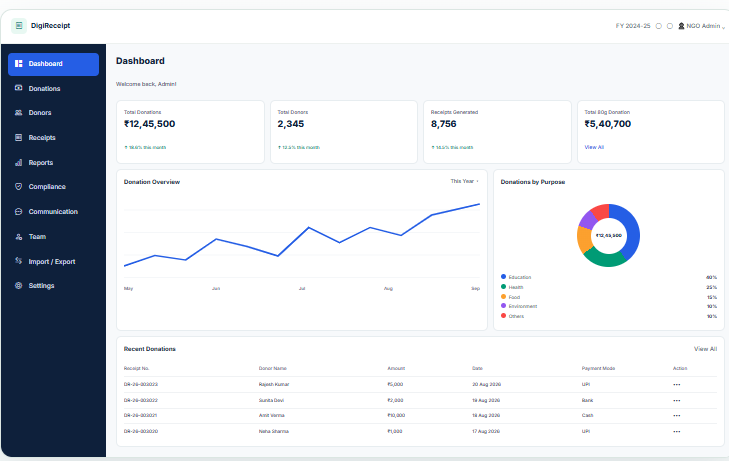

Donating to a charitable organisation is a meaningful way to support people, communities, and causes that need attention. Whether you contribute towards education, healthcare, food distribution, environmental protection, or social welfare, keeping a proper record of your contribution is important. An NGO Donation Receipt serves as written confirmation that a charitable organisation has received your donation. It also helps donors maintain financial records and understand whether their contribution may qualify for tax benefits.
Many donors make contributions online, through bank transfers, or by donating directly to an NGO. In every case, receiving a valid donation receipt adds transparency to the process. It provides useful information about the organisation, the donated amount, and the date of payment.
What Is an NGO Donation Receipt?
An NGO donation receipt is an official document issued by a non-governmental organisation after receiving money or other eligible contributions from a donor. It confirms that the donation has been received and records the basic details of the transaction.
The receipt acts as proof of donation and can be useful when maintaining personal financial records. It may also be required when claiming eligible tax deductions under applicable provisions of Indian income tax law. However, a donation receipt alone does not guarantee tax benefits. The NGO must meet the relevant eligibility requirements, and the donation must satisfy the applicable rules.
For donors, this document provides confidence that their contribution has been acknowledged. For NGOs, issuing receipts helps maintain organised records and build trust with supporters.
Why Is an NGO Donation Receipt Important?
An NGO Donation Receipt is important because it creates a clear record of every contribution. When people donate regularly, remembering the exact amount, date, and purpose of each payment can become difficult. A receipt makes it easier to track donations and maintain financial documents in one place.
It also promotes transparency between donors and charitable organisations. A properly issued receipt shows that the NGO has acknowledged the contribution and recorded the transaction. This can strengthen the relationship between the organisation and its supporters.
For individuals who may be eligible for tax deductions, donation receipts are useful supporting documents. They help donors keep evidence of their contributions while preparing their income tax records. Donors should check the NGO's eligibility and the current tax rules before claiming any deduction.
Details That Should Be Included in an NGO Donation Receipt
A donation receipt should contain accurate information so that the donor can identify the transaction easily. Although the exact format may differ between organisations, certain details are generally important.
The receipt should mention the NGO's registered name, address, and contact information. It should also include the date of donation, receipt number, donor's name, and the amount received. If the contribution was made online or through a bank transfer, the organisation may include a transaction reference or payment identification number.
The purpose of the donation can also be mentioned, especially when the contribution is intended for a specific charitable programme. If the NGO is eligible to receive donations under Section 80G, relevant approval details should be provided where applicable. Donors should verify these details rather than assuming that every NGO donation qualifies for a deduction.
How to Get an NGO Donation Receipt Online
Getting an NGO Donation Receipt online is usually a simple process. Many charitable organisations provide donation facilities through their official websites. Donors can visit the website, select a cause, enter the contribution amount, and complete the payment using an available method.
After the payment is successful, the NGO may send a digital receipt to the registered email address. Some organisations also allow donors to download the receipt directly from the payment confirmation page or their donor account.
Before making an online donation, check that the website belongs to the genuine organisation. Enter the correct name, email address, and other requested details so the receipt can be issued accurately. If the receipt is not received within the expected time, contact the NGO and provide the payment reference number.
Understanding Section 80G and Tax Benefits
In India, eligible donations to approved charitable institutions may qualify for deductions under Section 80G of the Income Tax Act, subject to applicable conditions. The deduction amount depends on the organisation's approval category, the nature of the donation, and the relevant tax provisions.
Not every NGO is approved under Section 80G, and not every contribution is eligible for a deduction. For example, donations made in cash above the prescribed limit are not eligible for a Section 80G deduction. Other conditions may also apply depending on the donor's circumstances and the applicable tax regime.
Before claiming a deduction, donors should verify the NGO's current 80G approval and retain the donation receipt along with other required documents. They should also check the applicable reporting and documentation requirements for the relevant financial year.
How NGOs Benefit from Issuing Donation Receipts
Issuing receipts is not only helpful for donors but also an important administrative practice for NGOs. It allows organisations to maintain proper records of incoming contributions and track donations received through different channels.
Accurate receipts can improve donor confidence because supporters receive confirmation of their payments. They also help NGOs organise financial information, prepare reports, and manage communication with donors.
A consistent receipt process can make donation management more efficient. Whether an NGO receives small individual contributions or larger institutional donations, maintaining clear documentation supports accountability and responsible financial management.
Conclusion
An NGO Donation Receipt is an important document that confirms a charitable contribution and helps donors maintain reliable financial records. It supports transparency, makes donation tracking easier, and may serve as supporting documentation for eligible tax deductions. Donors should always check the organisation's details, keep their receipts safely, and verify applicable tax conditions before claiming any benefit. For NGOs, issuing accurate and timely receipts is a simple but valuable way to build trust and maintain organised donation records.
Frequently Asked Questions (FAQs)
1. What is an NGO Donation Receipt?
It is an official document issued by an NGO to confirm that it has received a donation from an individual or organisation.
2. Why should I collect a donation receipt?
A donation receipt provides proof of your contribution and helps you maintain financial records. It may also support an eligible tax deduction claim.
3. Can I get an NGO Donation Receipt online?
Yes. Many NGOs send digital receipts to donors through email after successful online payments.
4. Does every NGO donation qualify for Section 80G?
No. Only donations meeting the applicable conditions and made to eligible approved organisations may qualify for a deduction.
5. What details are required on a donation receipt?
It generally includes the NGO's name, donor's name, donation amount, payment date, receipt number, and relevant registration or approval details.
6. What should I do if I do not receive my receipt?
Contact the NGO through its official communication channels and share your payment confirmation or transaction reference number.
7. Should I keep my NGO donation receipts?
Yes. Keep your receipts and related payment records safely for personal financial documentation and any applicable tax requirements.