

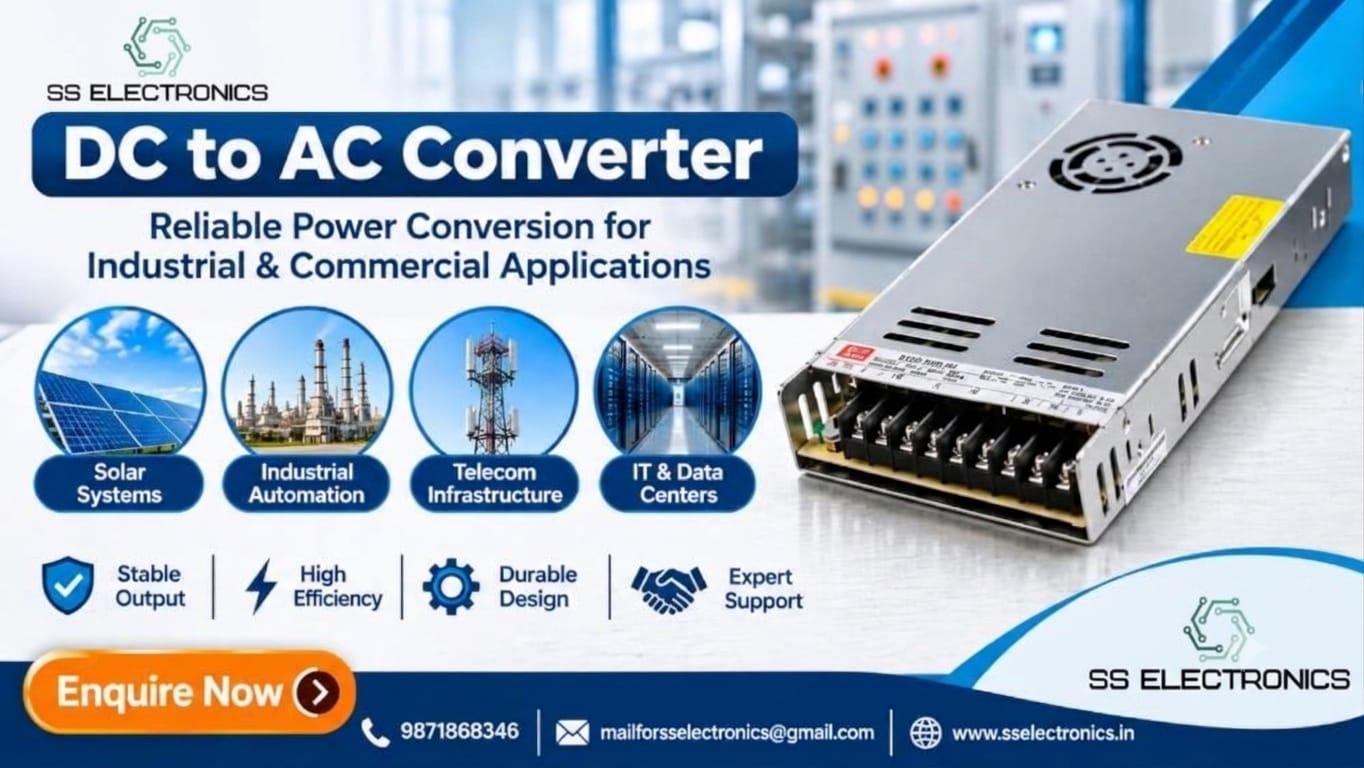
Reliable electricity is essential for industrial operations, commercial facilities and modern infrastructure. However, different electrical systems operate using different power sources. Batteries and solar panels generate direct current (DC), while many machines and electronic devices require alternating current (AC). A DC-to-AC converter helps bridge this gap by converting DC electricity into AC power for compatible equipment.
Choosing the right converter is important for maintaining equipment compatibility and supporting the electrical requirements of an installation. From manufacturing units and automation systems to solar projects and telecom infrastructure, businesses need to consider several technical factors before purchasing a power conversion solution.
Understanding How a DC-to-AC Converter Works
A DC-to-AC converter, commonly known as an inverter, changes direct current into alternating current. It receives electricity from a DC source, such as a battery bank or another compatible supply, and produces AC output for connected equipment.
The converter must match the electrical requirements of the application. Input voltage, output voltage, frequency, waveform and load capacity are among the important specifications that buyers should review. A mismatch between the converter and connected equipment may result in compatibility or operating problems.
Businesses exploring a suitable DC to AC Converter should begin by identifying the power source and the electrical specifications of the equipment they intend to operate.
Common Types of DC-to-AC Converters
Different applications require different conversion characteristics. Understanding the available categories makes it easier for engineering and procurement teams to shortlist suitable products.
Pure Sine Wave Converters
Pure sine wave converters produce a smooth AC waveform. They are commonly considered for sensitive electronic equipment and applications where output waveform quality is important. Before selecting a model, buyers should check whether the connected equipment specifically requires pure sine wave output.
Modified Sine Wave Converters
Modified sine wave converters generate an alternative waveform that may be suitable for certain compatible electrical loads. They can be considered for applications where the equipment manufacturer permits this type of output. Compatibility should always be confirmed before installation.
Industrial-Grade Converters
Industrial-grade converters are considered for selected manufacturing, automation and commercial applications. Their suitability depends on the electrical load, operating duration, environmental conditions and product specifications. Buyers should review the manufacturer's datasheet to understand the permitted operating conditions.
High-Capacity Converters
Some installations require higher output capacity to operate larger loads. High-capacity converters are considered for such requirements. Selection should account for both normal operating consumption and additional starting power where equipment has high inrush current.
Special-Purpose Converters
Special-purpose conversion solutions are designed for applications with particular electrical or installation requirements. These may be relevant to specialised industrial equipment, renewable energy projects, mobile power arrangements and communication infrastructure.
Major Applications Across Industries
DC-to-AC conversion supports several industries where DC power sources need to operate compatible AC equipment.
Industrial automation: Automation installations may use converters when a DC source needs to supply AC-operated equipment. Engineers should evaluate the load characteristics and power requirements before integrating a converter into the system.
Manufacturing: Production facilities use machinery, electrical panels and different types of equipment. A converter may be required in selected installations where the available source and equipment operate on different current types.
Solar energy: Solar panels generate DC electricity. An inverter-based arrangement converts this electricity into AC power for compatible loads. Battery storage, where included, must also be considered as part of the overall system design.
Telecommunications: Telecom infrastructure may use DC-based battery backup arrangements. Converters can support selected auxiliary devices that require AC power, depending on the system architecture.
IT and commercial infrastructure: Certain commercial facilities, data-related installations and specialised equipment may require AC power from a DC source. The converter must be selected according to the connected devices' specifications.
Important Factors to Consider Before Purchasing
Selecting a converter involves more than comparing prices or physical dimensions. The following factors can help buyers make a technically informed decision.
1. DC input voltage: Check the voltage supplied by the battery or DC source. The converter's input range must be compatible with that source.
2. AC output requirements: Verify the required output voltage and frequency. These values should match the specifications of the equipment being powered.
3. Load capacity: Calculate the total connected load and consider starting current where applicable. Motors and other equipment may require additional power during startup.
4. Waveform compatibility: Determine whether the connected equipment can operate with modified sine wave output or requires pure sine wave output.
5. Operating environment: Review ambient temperature, ventilation, mounting space, dust exposure and expected operating duration. Follow the manufacturer's installation guidance.
6. Protection and safety: Check the product's protection features and ensure that suitable wiring, earthing and external protection arrangements are included in the installation design.
7. Product documentation: Request the technical datasheet and installation instructions. These documents help engineers verify ratings and compatibility before procurement.
How to Evaluate a Supplier
Supplier selection is an important step for industrial buyers, panel builders, OEMs and system integrators. A supplier should be able to provide relevant product information and help buyers understand the available options.
When comparing DC to AC Converter Suppliers, businesses should consider product availability, technical information, bulk order coordination and delivery support. Sharing the complete electrical requirement can make the selection and quotation process more efficient.
SS Electronics offers DC-to-AC converter solutions for industrial, commercial and infrastructure-related requirements in India. Its listed product categories include pure sine wave, modified sine wave, industrial-grade, high-capacity and special-purpose converters. The company also caters to bulk and project-based procurement requirements.
Tips for Better Industrial Procurement
A planned procurement process helps businesses reduce selection errors and coordinate purchases more effectively. Before requesting quotations, engineering teams should prepare a requirement sheet containing input voltage, output specifications, load capacity, waveform preference, application and quantity.
For project-based purchases, procurement teams should confirm stock availability, expected delivery schedules and relevant technical documentation. Comparing products against the same electrical requirements makes it easier to evaluate quotations.
Installation should be carried out according to the manufacturer's instructions and applicable electrical safety practices. Proper wiring, ventilation, earthing and protective arrangements are essential considerations for the complete system.
Conclusion
A DC-to-AC converter is an important component in applications where DC electricity needs to operate compatible AC equipment. Its use across industrial automation, manufacturing, solar energy, telecommunications and commercial infrastructure makes correct product selection essential.
By evaluating input voltage, output requirements, load capacity, waveform compatibility and operating conditions, businesses can identify suitable power conversion options. Working with an experienced supplier such as SS Electronics can also help buyers discuss their requirements and explore relevant converter categories for projects across India.
Frequently Asked Questions
1. What is a DC-to-AC converter used for?
It converts direct current electricity into alternating current for compatible electrical equipment and applications.
2. Is a DC-to-AC converter called an inverter?
Yes. Inverter is the commonly used term for a device that converts DC power into AC power.
3. Which type of converter is suitable for sensitive electronics?
Pure sine wave converters are commonly considered for sensitive electronic equipment. Always check the equipment manufacturer's recommendations.
4. Can DC-to-AC converters be used with solar panels?
Yes. They can form part of a solar power system that converts DC electricity into AC output for compatible loads.
5. How can I determine the required converter capacity?
Calculate the total connected load and account for additional starting power where applicable. Review the electrical specifications of the connected equipment.
6. What specifications should I check before purchasing?
Important specifications include DC input voltage, AC output voltage, frequency, waveform, load capacity and operating conditions.
7. Does SS Electronics support bulk converter requirements?
SS Electronics caters to bulk and project-based procurement requirements. Buyers can contact the company to discuss product specifications and availability.