

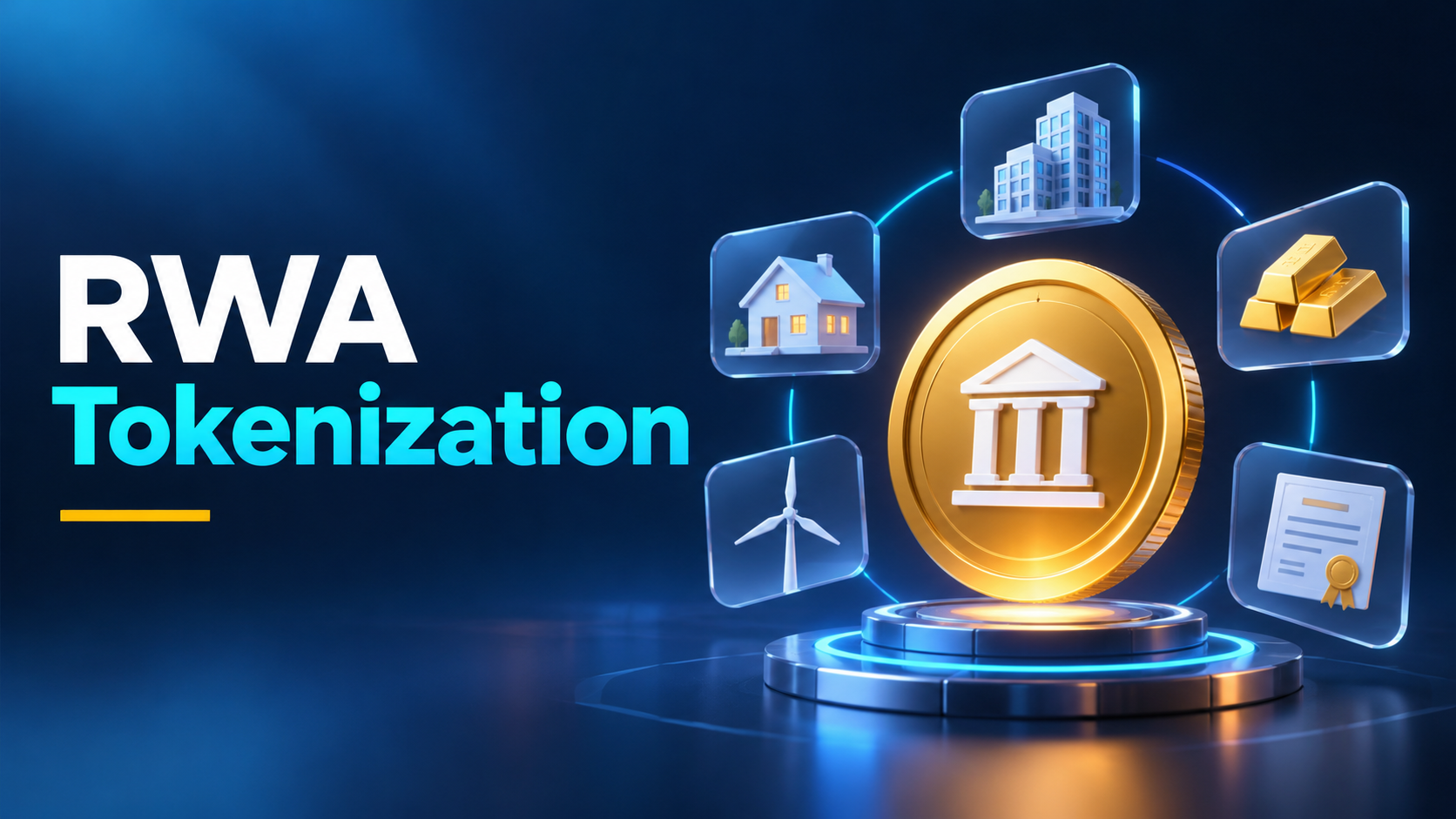
How Tokenization Can Turn Idle Business Assets into Digital Investment Products

Businesses across industries often hold valuable assets that remain underutilized or generate limited financial returns. These assets may include unused commercial properties, surplus equipment, machinery, warehouses, infrastructure, intellectual property, inventory, receivables, and other income-generating resources. Although these assets have significant economic value, converting them into accessible investment opportunities can be challenging through traditional financial structures.
Asset tokenization is emerging as a way to change how businesses manage, finance, and unlock value from underutilized resources. By representing ownership interests, economic rights, or contractual claims through blockchain-based digital tokens, businesses can explore new approaches to asset monetization and capital formation.
Instead of allowing valuable assets to remain idle, companies can explore converting eligible asset-backed interests into digital investment products that can be offered to qualified investors. This creates opportunities to unlock capital, diversify funding sources, and develop new investment models without necessarily selling the entire underlying asset.
Identifying Business Assets with Untapped Financial Potential
The first step toward tokenization is identifying assets that have economic value but are not being fully utilized. Many businesses possess resources that could support alternative financing or investment opportunities.
Some examples include:
-
Unused Commercial Properties: Vacant office buildings, warehouses, retail spaces, and industrial properties that could support rental or asset-backed investment structures.
-
Surplus Machinery and Equipment: Industrial equipment, manufacturing machinery, and specialized tools that could be incorporated into structured asset-financing arrangements.
-
Undeveloped Land: Commercial plots and development-ready land that may support investment structures linked to future development.
-
Inventory and Commodities: Excess inventory, agricultural products, metals, and other physical commodities that may be represented through eligible asset-backed structures.
-
Accounts Receivable: Outstanding invoices and contractual payment obligations that could support tokenized receivables financing.
-
Intellectual Property: Licensing rights, royalties, patents, and other contractual revenue streams that may offer alternative monetization opportunities.
Not every idle asset automatically qualifies for tokenization. Businesses must evaluate ownership, legal rights, valuation, revenue potential, and regulatory requirements before selecting an appropriate structure.
Converting Physical and Financial Assets into Digital Tokens
Once suitable assets are identified, businesses can explore representing their economic value through blockchain-based tokens.
Tokenization involves creating digital representations of ownership interests, financial claims, or specific rights associated with an underlying asset. These tokens can be programmed to follow predefined rules governing transfers, distributions, investor eligibility, and other relevant activities.
For example, a company holding an underutilized commercial warehouse could establish an appropriate legal investment structure and issue digital tokens representing eligible investor interests in that structure.
Similarly, a business with recurring receivables could explore tokenized financing arrangements in which digital tokens represent claims associated with specified payment obligations.
The tokenization process generally involves:
-
Asset identification and due diligence.
-
Ownership and legal rights verification.
-
Asset valuation and financial assessment.
-
Selection of an appropriate legal structure.
-
Token design and smart contract development.
-
Investor onboarding and compliance integration.
-
Token issuance and lifecycle management.
This process creates a digital framework for managing investment interests while maintaining the connection between tokens and their underlying legal and economic arrangements.
Creating New Investment Opportunities from Underutilized Assets
One of the significant opportunities associated with asset tokenization is its potential to transform assets that are difficult to access through traditional investment channels into structured digital investment products.
Businesses can explore different investment models depending on the asset category, ownership structure, and expected financial returns.
Fractional Investment Opportunities
High-value business assets often require substantial capital, limiting participation to a small group of investors.
Tokenization can support fractional investment structures by dividing eligible economic interests into smaller digital units. This may allow multiple investors to participate in an asset-backed investment opportunity, subject to applicable regulations and offering requirements.
For example, a company holding a high-value industrial property could establish an investment structure that allows eligible investors to acquire fractional interests rather than requiring one investor to finance the entire asset.
Revenue-Generating Investment Products
Certain business assets generate recurring income through rental agreements, licensing arrangements, service contracts, or other commercial activities.
Tokenization can represent eligible rights to these revenue streams through structured digital investment products.
Potential examples include:
-
Rental income from commercial properties.
-
Licensing revenue from intellectual property.
-
Contractual payments from infrastructure assets.
-
Receivables generated through business transactions.
-
Revenue-sharing arrangements associated with commercial operations.
Smart contracts can support predefined distribution calculations and payment workflows, although actual distributions still depend on the underlying legal agreements and available cash flows.
Asset-Backed Financing Opportunities
Businesses can also explore tokenization as an alternative financing mechanism.
Rather than selling an entire asset, companies may structure financing arrangements around eligible ownership interests, debt obligations, or contractual claims.
This approach could help businesses access capital while maintaining control over assets, depending on the chosen structure.
Expanding Access to Previously Illiquid Business Assets
Traditional investment structures can make certain business assets difficult to trade or transfer. Real estate, private credit, infrastructure investments, and specialized equipment often involve lengthy transaction processes and limited secondary-market access.
Tokenization can introduce digital infrastructure that supports more efficient ownership recordkeeping and eligible asset transfers.
With a properly designed tokenization platform, businesses can explore features such as:
-
Digital ownership and transaction records.
-
Fractional investment management.
-
Automated investor eligibility checks.
-
Smart contract-based transfer restrictions.
-
Digital asset issuance and redemption workflows.
-
Secondary-market integration.
-
Investor portfolio management.
These capabilities may improve the operational experience for businesses and investors.
However, tokenization does not automatically make an illiquid asset liquid. Secondary trading depends on regulatory permissions, market demand, transfer restrictions, platform availability, and the existence of willing buyers and sellers.
The Role of Smart Contracts in Managing Tokenized Investments
Smart contracts provide the programmable infrastructure required to manage different activities associated with tokenized investment products.
Instead of relying entirely on manual administrative processes, businesses can incorporate predefined rules into blockchain-based applications.
Some important applications include:
Token Issuance: Smart contracts can create and distribute digital tokens according to predefined issuance parameters.
Investor Management: Eligibility conditions and transfer restrictions can be incorporated into token transfer mechanisms.
Revenue Distribution: Where supported by the legal structure, smart contracts can calculate and facilitate distributions based on predefined rules and verified payment inputs.
Ownership Tracking: Blockchain records can provide transparent transaction histories and token ownership information.
Compliance Automation: Certain compliance checks, such as investor whitelisting and transfer restrictions, can be integrated into the tokenization infrastructure.
Redemption Management: Smart contracts can support predefined redemption processes when the underlying investment structure permits redemption.
These capabilities can help businesses establish more organized investment management systems while reducing certain repetitive administrative activities.
Business Industries That Can Benefit from Asset Tokenization
Tokenization is not limited to real estate or financial securities. Businesses across multiple industries can explore opportunities to unlock value from assets that are traditionally difficult to monetize.
Real Estate and Commercial Properties
Businesses with vacant commercial buildings, industrial properties, warehouses, and rental portfolios can explore tokenized investment structures. These models may help unlock capital from eligible property interests while creating additional investor participation opportunities.
Manufacturing and Industrial Equipment
Manufacturing companies often maintain expensive machinery, production equipment, and specialized industrial assets. Depending on their ownership and financing arrangements, these assets may support structured asset-backed financing opportunities.
Logistics and Warehousing
Warehouses, distribution facilities, storage infrastructure, and logistics-related assets can potentially become part of tokenized investment structures based on ownership interests or contractual revenue rights.
Intellectual Property and Licensing
Businesses that own patents, trademarks, copyrights, and licensing agreements may explore representing eligible royalty or licensing revenue interests through digital tokens.
Agriculture and Commodities
Agricultural businesses and commodity operators may explore tokenization for eligible inventories, stored commodities, production-related financing, and contractual payment rights.
Infrastructure and Energy
Infrastructure operators may investigate tokenized financing structures involving renewable energy facilities, utility infrastructure, transportation assets, and contractual revenue streams.
The suitability of each model depends on asset ownership, valuation, legal enforceability, investor protections, and applicable financial regulations.
Developing a Tokenization Platform to Monetize Business Assets
For companies planning to introduce tokenized investment products, a dedicated tokenization platform can provide the infrastructure needed to manage the entire investment lifecycle.
A well-designed platform should support multiple asset categories, different token structures, and investor management requirements.
Some essential platform components include:
|
Platform Module |
Key Function |
|---|---|
|
Asset Management |
Register and manage underlying business assets. |
|
Token Creation |
Configure and issue digital tokens. |
|
Smart Contract Management |
Automate predefined investment rules. |
|
Investor Dashboard |
Manage investor profiles and portfolios. |
|
KYC/AML Integration |
Support identity verification and compliance workflows. |
|
Payment Integration |
Facilitate supported investment transactions. |
|
Distribution Management |
Manage eligible income distribution processes. |
|
Secondary Marketplace |
Support permitted token transfers and trading. |
|
Reporting Dashboard |
Track asset performance and investment activity. |
|
Admin Panel |
Manage platform operations and permissions. |
Businesses can choose between custom tokenization platform development and white-label solutions based on their operational requirements, asset categories, compliance needs, and long-term expansion plans.
A multi-asset tokenization platform can be particularly useful for businesses planning to monetize different asset classes through a unified digital investment infrastructure.
Key Considerations Before Turning Business Assets into Digital Investments
Although tokenization presents new opportunities, businesses must establish a reliable foundation before launching asset-backed digital investment products.
Important considerations include:
Legal Ownership and Asset Rights: Businesses must establish clear ownership or legally enforceable rights over the underlying assets and determine which interests can be tokenized.
Asset Valuation: Independent valuation and financial assessment can help establish a reasonable basis for investment structures.
Regulatory Compliance: Tokenized products may fall under securities, investment, lending, commodities, or other financial regulations depending on their structure and jurisdiction.
Investor Protection: Businesses should define investor rights, risk disclosures, transfer restrictions, and dispute-resolution procedures.
Smart Contract Security: Token contracts and related platform infrastructure should undergo appropriate security testing and independent audits.
Asset Transparency: Investors need access to reliable information about the underlying assets, financial performance, associated risks, and investment terms.
Custody and Administration: Businesses must establish appropriate arrangements for asset custody, ownership records, payment processing, and ongoing administration.
Addressing these requirements can help create more sustainable tokenization models and strengthen investor confidence.
The Business Opportunity Behind Tokenizing Idle Assets
The opportunity goes beyond creating digital versions of physical assets. Tokenization can introduce alternative ways for businesses to approach capital management, asset monetization, and investor participation.
Companies that previously relied on conventional loans, complete asset sales, or limited private financing arrangements can investigate additional funding structures.
For example, a commercial property owner may explore an investment structure around eligible property interests. A manufacturing company could investigate financing backed by specific equipment or contractual receivables. An intellectual property business may explore monetizing eligible royalty streams.
These possibilities create opportunities for businesses to develop new investment products around resources they already own or control.
For technology providers, this also creates demand for specialized asset tokenization development services, including token architecture, smart contract engineering, investor management systems, compliance integrations, and multi-asset platform development.
Companies such as Inoru, which specializes in tokenization development, are part of the technology ecosystem helping businesses explore blockchain-based solutions for representing and managing real-world asset interests.
Conclusion
Idle business assets do not necessarily have to remain underutilized resources. Through appropriate legal and financial structuring, asset tokenization can help businesses explore new ways to unlock their economic value and convert eligible ownership interests, financial claims, and revenue rights into digital investment products.
From commercial properties and industrial equipment to intellectual property, receivables, and infrastructure, different asset categories offer opportunities for alternative financing and investment models.
However, successful implementation requires more than issuing digital tokens. Businesses need a combination of asset evaluation, legal structuring, regulatory compliance, secure smart contracts, and reliable tokenization platform infrastructure.


