

How to Choose the Best Home Elevator for Your Home: A Homeowner's Guide to Comfort, Safety, and Accessibility

Table of Contents
- Introduction: The Modern Homeowner’s Dilemma
- Can You Put an Elevator in an Existing Home? The Retrofit Reality
- What Is the Best Home Elevator for My Home? Breaking Down Core Drive Systems
- Key Decision Factors: Comfort, Safety, and Accessibility Checklist
- Comprehensive Comparison: Mechanical Specs & Financial Outlook
- Why Partner with the Best Home Elevator Company in Canada?
- The Installation Roadmap: From Architectural Survey to First Ride
- Conclusion: Reclaim Every Square Foot of Your Forever Home
- Frequently Asked Questions
Introduction: The Modern Homeowner’s Dilemma
We all remember the spark that made us fall head-over-heels for our homes. Perhaps it was the sun-drenched two-storey foyer, the way the upstairs master bedroom feels like a private sanctuary, or the finished walk-out basement built for family movie marathons. Multi-level homes give us space to breathe, grow, and entertain.
Yet, as years roll quietly along, our physical relationship with our home changes.
Maybe you’re recovering from an unexpected knee surgery, staring down twenty stairs while clutching a basket of fresh laundry. Maybe your parents have decided to move in, and you find yourself holding your breath every time they navigate the steps down to dinner. Or perhaps you're simply planning ahead. You love your neighborhood, your garden, and your memories, and you have zero interest in downsizing to a cookie-cutter condo just because staircases are starting to feel like hurdles.
That brings us to a transformative realization: adding a lift elevator is no longer a sci-fi indulgence or a privilege reserved exclusively for multi-million-dollar celebrity estates. Today, installing a residential elevator is one of the smartest, most empowering home renovations you can make.
Naturally, you find yourself asking the core question: what is the best home elevator for my home?
The candid answer? There isn’t a single golden model that works for every household. The right choice is the one that respects your square footage, complements your interior design, aligns with your financial comfort zone, and accommodates your family’s unique physical needs. In this detailed homeowner's guide, we will unpack drive technologies, compare leading models, dissect actual costs, and help you select the ideal vertical ride for your forever home.
Can You Put an Elevator in an Existing Home? The Retrofit Reality
Overcoming Architectural Roadblocks in Older & Modern Homes
Before you start picking out cab lighting and custom wood paneling, let’s address the most common doubt that stops homeowners in their tracks: can you put an elevator in an existing home?
The short, definitive answer is yes, absolutely!
Many people assume a personal elevator can only be installed if an architect pencils a dedicated shaft into the blueprints of a brand-new custom build. While incorporating a hoistway into new construction is undeniably straightforward, retrofitting an in home elevator for elderly parents or personal long-term independence into an existing property happens every single day across North America.
Skilled installation crews treat retrofit construction like precision carpentry. You don’t need to knock down structural walls or sacrifice half your living room. Where can an elevator go in an established floor plan? Look at your house with fresh eyes:
- Stacked Hallway Closets: If you have a coat closet on the main floor that sits directly underneath a linen closet on the second floor, you already possess an elevator shaft framed right inside your walls.
- Unused Room Corners: A modest 4-foot by 5-foot footprint tucked away in the corner of a den, home office, or formal dining room can easily accommodate modern elevator dimensions.
- Open Staircase Wells: Homes featuring open, wrap-around staircases often feature an empty central void. This open air is a stunning natural location for a glass-enclosed homelift that doubles as a visual masterpiece.
- Exterior Shaft Additions: If you cannot afford to give up an inch of interior floor space, contractors can pour an exterior concrete foundation, erect an insulated shaft tower against an outside wall, and cut entry doors into each level. The exterior can be finished in brick, siding, or stone to match your home’s architecture seamlessly.
Whether you live in a heritage brick townhome requiring residential elevators Toronto specialists or a suburban multi-storey in home elevators Ontario neighborhoods, modern engineering makes retrofitting safe, clean, and remarkably unobtrusive.
Busting the Biggest Myths Around Residential Elevator Installation
Let’s dismantle a few lingering misconceptions that keep homeowners stuck climbing stairs:
- Myth 1: "It will tear my house apart for months." While off-site custom manufacturing takes several weeks, active construction inside your living area typically lasts only 3 to 7 business days.
- Myth 2: "My ceilings aren't tall enough." While standard typical elevator door height is 80 inches, custom configurations easily accommodate non-standard ceiling clearances.
- Myth 3: "It looks like an ugly hospital lift." Today's elevators for homes are design showpieces. With rich hardwood cabinetry, glass walls, recessed LED lighting, and designer fixtures, your elevator integrates naturally into your home’s decor.
What Is the Best Home Elevator for My Home? Breaking Down Core Drive Systems
To truly answer what is the best home elevator for my home, you must look beneath the decorative finishes and inspect the mechanical engine driving the cab. The drive system dictates ride quality, space requirements, noise levels, and maintenance needs.
+------------------------------------------------------------------------------------+
|                         CORE RESIDENTIAL DRIVE SYSTEMS                             |
|                                                                                    |
|  [Hydraulic]   -> Fluid piston driven | Ultra-smooth | Needs small pump area       |
|  [Traction]    -> Counterweight cable | Energy smart | Compact overhead footprint  |
|  [MRL Gearless]-> Motor inside shaft  | Space-saver  | Zero external utility room  |
|  [Shaftless]   -> Vertical stilts     | Quick setup  | Lower weight limits         |
+------------------------------------------------------------------------------------+
1. Hydraulic Residential Elevators: The King of Smooth, Quiet Rides
Hydraulic elevators are widely regarded as the gold standard for luxury residential installations. They operate using an electric pump that pushes hydraulic fluid into a heavy-duty steel piston, smoothly driving the cab upward. Descending is practically silent as fluid gently releases back into a reservoir tank.
- Ride Characteristics: Butter-smooth acceleration, soft deceleration, and virtually zero cabin vibration.
- Lifting Strength: Outstanding. Standard ratings range from 750 to 1,000+ pounds, easily accommodating multiple passengers, heavy furniture, or motorized mobility chairs.
- Space Demands: Requires a shallow pit beneath the lowest landing (usually 6 to 12 inches) and a small, dedicated pump cabinet or closet located within 20 to 30 feet of the shaft.
The Heritage Home Elevator Experience
For homeowners seeking timeless luxury and unmatched durability, the Heritage Home Elevator manufactured by Cambridge Elevating is an industry standout. Engineered for whisper-quiet travel and high weight capacity, the Heritage elevator features custom hardwood interiors, designer lighting packages, and multiple door configurations. It is the premier choice for luxury home elevators for seniors and wheelchair users who demand absolute comfort and classic craftsmanship.
2. Cable-Driven Traction Lifts: Crisp Energy Efficiency
Cable-driven (or traction) elevators utilize steel cables, a counterweight assembly, and an electric motor to glide the cab along precision vertical guide rails.
- Energy Efficiency: Exceptional. Because the counterweight offsets the cab’s mass, the motor works minimally, running smoothly on standard household electrical circuits.
- No Hydraulic Fluid: Perfect for homeowners seeking an eco-conscious solution without hydraulic oil reservoirs.
- Consistent Speed: Delivers reliable, steady transit across two, three, or more stops.
The Elmira Home Elevator Advantage
The Elmira Home Elevator represents modern cable-drive engineering at its finest. Designed specifically to maximize usable interior space while minimizing hoistway footprint, the Elmira elevator fits neatly into existing structures while offering expansive cab configurations. Its quiet motor and dependable counterweight balance make it a favored choice across Canadian homes.
3. Machine-Room-Less (MRL) Drives: Peak Spatial Ingenuity
What if your home simply does not have an extra closet to sacrifice for mechanical pumps or controller cabinets? That is where Machine-Room-Less (MRL) technology steps into the spotlight.
- How It Works: The entire drive assembly and control mechanism are engineered directly inside the vertical hoistway shaft itself, usually mounted along the top guide rails.
- Spatial Advantage: Zero exterior footprint consumed outside the shaft perimeter. No auxiliary closets are lost to mechanical pumps, and no noisy equipment sits in your basement.
The Cambrian Home Elevator: Luxury Without the Utility Room
The Cambrian Home Elevator from Cambridge Elevating Inc. is a masterclass in MRL design. By eliminating the machine room entirely, the Cambrian provides maximum cab space within minimal hoistway framing. If you are retrofitting an older home or working within tight architectural boundaries, this model delivers uncompromising luxury without demanding extra utility rooms.
4. Shaftless Pods and Through-Floor Alternatives
For uniquely restricted spaces, alternative technologies exist:
- Pneumatic Vacuum Lifts: Clear cylindrical pods that travel via air suction. While visually striking, their weight limits are lower, and air-pump acoustics can be noticeable.
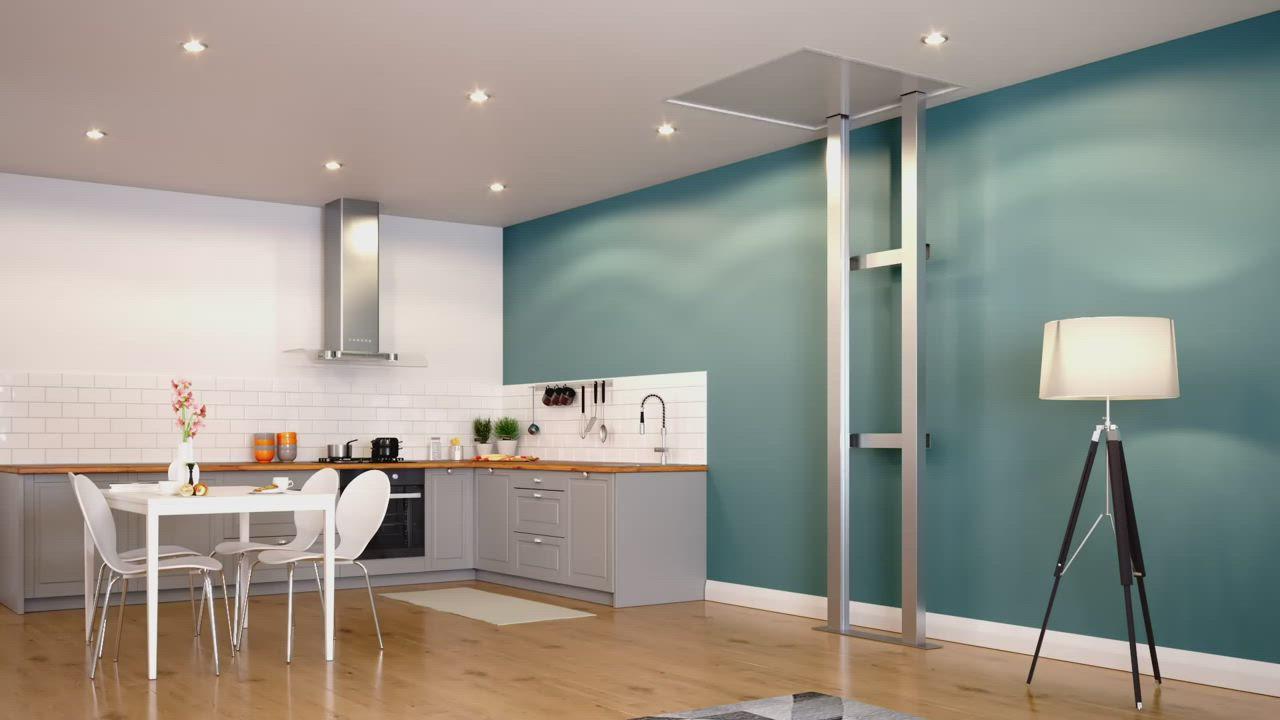
- Shaftless Home Lifts: Compact pods like a Stiltz home lift travel on exposed vertical rails passing through a simple ceiling hole.
- Stair Lifts: In international research, users often encounter Spanish phrases like salvaescaleras sin instalación (stair lifts without structural work). While a mechanical chair bolted to stair treads solves temporary mobility issues, it cannot carry cargo, accommodate wheelchair users independently, or add substantial market value like a true residential elevator.
Evaluating the Stiltz Home Lift and Pneumatic Tubes
While researching the stiltz home lift price (typically $20,000 to $32,000 CAD) can be appealing for homeowners facing severe spatial constraints, you must understand the trade-offs. Shaftless pods generally feature lower weight capacities (350 to 500 lbs), accommodate only one or two standing passengers, remain visible inside your living spaces on both floors, and lack the enclosed privacy and architectural permanence of traditional residential home elevators.

Key Decision Factors: Comfort, Safety, and Accessibility Checklist
Navigating your options becomes straightforward when you evaluate your home through four practical lenses: space, accessibility, safety, and budget.
Elevator Dimensions and Floor Plan Optimization
Before ordering materials, measure your home’s physical parameters. Typical residential elevator dimensions range from:
- Compact Cabs (approx. 36" x 48"): Excellent for single passengers or tight hallway conversions.
- Standard Cabs (approx. 40" x 54"): Comfortable for two passengers, groceries, and laundry baskets.
- Accessible Cabs (approx. 36" x 60" or 48" x 60"): Designed specifically for full wheelchair access and attendant room.
Your architect or contractor can review an elevator installation manual PDF from the manufacturer to check structural requirements, overhead clearance, and pit depths before work begins.
Home Elevators for Seniors and Elderly Accessibility
If your goal is creating an in home elevator for elderly relatives or planning your own forever home with lifts for seniors, focus on universal accessibility:
- Flush Landing Thresholds: Exact floor leveling prevents tripping when stepping in or rolling a walker across the threshold.
- Effortless Door Systems: Power-operated gates and automated swing doors eliminate the awkwardness of wrestling heavy doors while using mobility devices.
- Intuitive Call Stations: Large-format, illuminated buttons—such as an everswitch keypad elevator station—make floor selection easy, even for hands coping with arthritis.
- Emergency Battery Lowering: In a power blackout, the cab should automatically descend to the bottom floor and release the door, ensuring riders are never trapped.
Safety Protocols: How to Childproof an Elevator
A home elevator must be safe for every generation, including energetic children and visiting toddlers. Understanding how to childproof an elevator is a vital priority:
- Keyed Lockout Controls: Allows homeowners to deactivate cab buttons with a master key.
- Digital Access Codes: Many owners consult their everswitch keypad manual to program PIN codes required to call the cab.
- Electromechanical Door Interlocks: Heavy-duty locks ensure outer hoistway doors cannot be opened unless the cab is securely docked at that exact level. It is physically impossible to open a door into an empty shaft.
- Infrared Light Curtains: Invisible beams of light scan the cab entrance. If a child’s hand, a family pet, or an object crosses the threshold while the gate is closing, it instantly reverses direction.
- Dedicated Emergency Dialers: Reliable systems like Kings III elevator phone programming establish an instant two-way voice connection to emergency monitoring services who know your exact address.
Budgeting Wisely: Home Elevator Cost in Canada
Planning your investment requires looking at the total picture: the elevator machinery, cab customizations, and general site carpentry.
Across the country, average home elevator cost canada figures fall between $20,000 and $55,000 CAD, with high-end, custom-glass, multi-stop units reaching higher. While you can find affordable home elevators canada packages, remember that your elevator is a permanent structural appliance. Investing in reliable engineering from established elevator companies pays dividends in longevity and smooth operation.
Comprehensive Comparison: Mechanical Specs & Financial Outlook
To help guide your choice, let's examine technical capabilities and expected investment ranges side-by-side.
| Elevator System Type | Drive Technology | Dedicated Machine Room? | Load Capacity | Ride Quality & Acoustics | Structural Suitability |
|---|---|---|---|---|---|
| Hydraulic Luxury (e.g., Heritage) | Fluid-driven cylinder | Yes (Small cabinet or closet) | 750 – 1,000+ lbs | Whisper-quiet, ultra-smooth | Luxury homes, heavy loads, wheelchair access |
| Cable Traction (e.g., Elmira) | Counterweight & motor | No (Compact overhead/shaft) | 750 – 950 lbs | Crisp, quiet, energy-smart | Multi-level homes seeking low power draw |
| MRL Gearless (e.g., Cambrian) | In-shaft gearless drive | No (100% inside shaft) | 750 – 1,000 lbs | Silky, quiet, modern | Retrofits with tight footprints & zero utility space |
| Compact Shaftless (e.g., Stiltz) | Twin-rail through-floor | No (Self-contained) | 350 – 500 lbs | Moderate mechanical hum | Single-rider tight openings, minimal framing |
Table 2: Estimated Home Elevator Cost and Turnkey Investment in Canada
| Elevator Model / Configuration | Equipment & Tech Costs (CAD) | Site Preparation & Framing (CAD) | Estimated Total Investment (CAD) | Annual Maintenance Estimate |
|---|---|---|---|---|
| Compact Shaftless Pod Lift | $18,000 – $28,000 | $2,000 – $5,000 | $20,000 – $33,000 | $300 – $600 / year |
| Cable-Driven Traction (Elmira) | $25,000 – $38,000 | $4,000 – $10,000 | $29,000 – $48,000 | $400 – $800 / year |
| Hydraulic Luxury (Heritage) | $30,000 – $45,000 | $5,000 – $12,000 | $35,000 – $57,000 | $500 – $1,000 / year |
| Machine-Room-Less (Cambrian) | $35,000 – $50,000+ | $4,000 – $10,000 | $39,000 – $60,000+ | $450 – $900 / year |
Note: Total turnkey costs depend on municipal permit fees, travel height, and architectural millwork. Always request an itemized proposal from certified elevator contractors near me that covers both equipment and general construction.

Why Partner with the Best Home Elevator Company in Canada?
Choosing the right mechanical drive is crucial, but choosing the right manufacturer determines your satisfaction for decades to come.
The Cambridge Elevating Benchmark in Ontario and Across North America
Why is Cambridge Elevating Inc. widely recognized as the Best Home Elevator Company in Canada? Because they don't simply assemble imported overseas parts in a warehouse. They design, engineer, and custom-manufacture their Cambridge elevators right in Cambridge, Ontario, strictly compliant with ASME A17.1 / CSA B44 safety codes.
Here is what local Canadian manufacturing means for you:
- Predictable Lead Times: Your custom cab isn't stuck on an overseas container ship waiting for clearance at a distant port.
- Precision Custom Sizing: Need an irregular cab dimension to fit inside a historic century home? Cambridge Elevating builds custom cabs to your home's exact framing specifications.
- Direct Factory Diagnostics & Parts: If your lift ever requires routine service down the road, local technicians can quickly diagnose cambridge elevator error codes, obtain genuine replacement parts immediately, and restore service without delay.
- Extensive Service Coverage: Whether you are searching for residential elevators near me in Toronto, Ottawa, or Vancouver, or connecting with certified dealer partners in major US markets like Houston or Los Angeles, Cambridge Elevating's network delivers trusted support.
How to Vet Elevator Contractors Near Me
When choosing an installation partner, insist on specialists who focus exclusively on residential mobility. A qualified installer will:
- Conduct an in-depth structural inspection of your home.
- Provide transparent, itemized quotes covering both the elevator and carpentry work.
- Manage all municipal building permits and inspection sign-offs.
- Offer routine maintenance plans to keep your homelift performing smoothly.
Connect with factory-certified installers by visiting the Cambridge Elevating contact page.
The Installation Roadmap: From Architectural Survey to First Ride
Understanding the process removes the mystery and lets you plan your schedule with confidence:
- In-Home Consultation: A technician evaluates your home’s layout, checks load-bearing walls, measures ceiling clearances, and discusses cab finish options.
- Permitting & Engineering: Blueprints are drawn to match your home's exact dimensions and submitted to your local municipality for safety permits.
- Precision Manufacturing: Your elevator cab, rails, and motor are custom-fabricated in a controlled factory setting (typically taking 4 to 6 weeks).
- Shaft Preparation: A general contractor cuts floor openings, frames the hoistway, pours a shallow pit, and roughs in electrical lines (takes about 3 to 5 days).
- Equipment Installation: Certified technicians arrive with your equipment, mount the guide rails, assemble the cab, and wire the controls (takes 3 to 4 days).
- Safety Testing & Certification: Technicians conduct load tests, program emergency phones, test safety backups, and arrange the municipal inspection before handing you the keys!
Conclusion: Reclaim Every Square Foot of Your Forever Home
So, as we bring our journey to a close, let's revisit that core question: what is the best home elevator for my home?
The right answer is the system that fits naturally into your daily routine, complements your architectural style, safeguards your family's future, and fits comfortably within your budget. If you want maximum weight capacity, custom wood cabinetry, and a whisper-quiet ride, the hydraulic Heritage Home Elevator is an extraordinary choice. If you prefer high energy efficiency and a compact footprint, the cable-driven Elmira Home Elevator shines. And if you need to maximize every square inch without constructing a machine room, the MRL Cambrian Home Elevator is a modern engineering triumph.
Your home is where your life unfolds. It should support you through every chapter, milestone, and season. By partnering with dedicated Canadian craftsmen like Cambridge Elevating, you can say goodbye to the frustration of steep stairs and embrace a lifetime of effortless, beautiful vertical living.
Take the first step toward transforming your home today—reach out to a certified residential specialist and book your personal design consultation!
Frequently Asked Questions
1. What is the best home elevator for my home if space is limited?
If space is tight, a Machine-Room-Less (MRL) system like the Cambrian Home Elevator is typically the best choice because all mechanical components are housed inside the shaft, eliminating the need for an external mechanical closet. For ultra-narrow applications, shaftless pod lifts can also be evaluated.
2. How much does a home elevator cost in Canada on average?
Average home elevator cost canada estimates range between $20,000 and $55,000 CAD. This covers equipment manufacturing, cab finishes, mechanical drives, and standard site carpentry. Luxury finishes or complex structural retrofits will increase the total investment.
3. Can you put an elevator in an existing home without major demolition?
Yes! Professional elevator contractors near me routinely retrofit lifts by converting aligned walk-in closets, using an empty room corner, or building an exterior shaft against an outside wall. Active construction inside your living area usually lasts less than a week.
4. How do I childproof my home elevator?
You can childproof a residential elevator by enabling digital security PIN codes on your everswitch keypad elevator, using keyed lockout switches, verifying that automatic door interlocks are active, and utilizing infrared light curtains that prevent gates from closing on obstructions.
5. What is the difference between hydraulic and cable-driven home elevators?
Hydraulic elevators (such as the Heritage) use a fluid-powered piston to push the cab upward, offering whisper-quiet travel and heavy lifting capacity, but require a small remote pump closet. Cable-driven elevators (such as the Elmira) use counterweight cables and electric motors, providing high energy efficiency, no hydraulic fluids, and compact hoistway layouts.


