Transportation Analytics Market Key Trends and Strategic Opportunities
Other |
2026-09-03 12:58:46
 Russian
 English
 Romaian
 Portuguese (Brazil)
 Greek
Greek
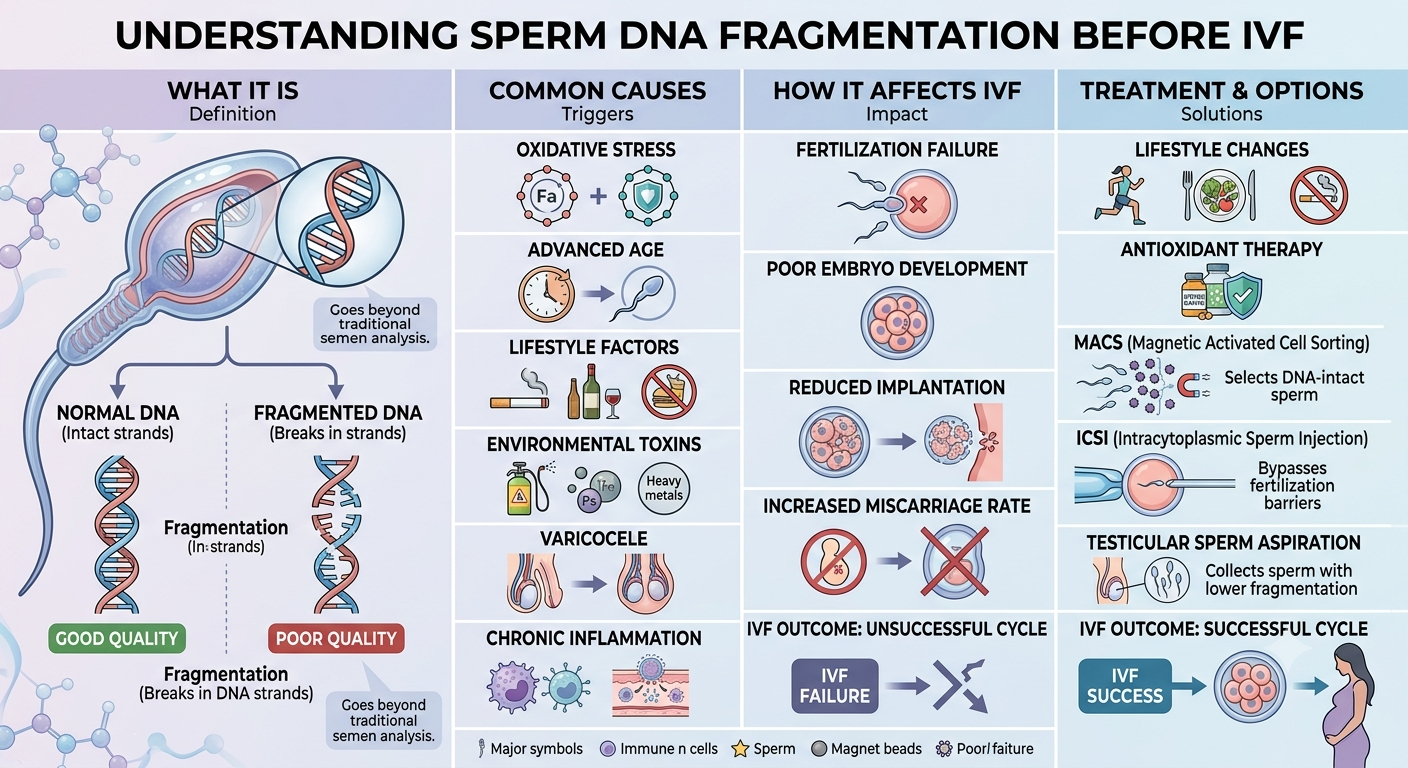
When couples walk into our consultation rooms, they often come with a singular focus: getting pregnant. They've done the research, they've saved the money, they've built up the courage to start IVF. But when we start talking about sperm DNA fragmentation, I can see the confusion on their faces.
It's a term that sounds technical, and it is. But understanding it could be the difference between a cycle that works and one that doesn't.
Let's break this down clearly.
Here’s the simple version, inside every sperm cell is the genetic material , which is DNA. That DNA carries half of the blueprint for your future child. Now sometimes, during the making or transport of sperm, those DNA strands get damaged or break. These breaks are called fragmentation, and you can think of them a bit like a printed page with small tears. The page still looks mostly intact, but the tears mean some words or whole sentences might be missing. In the same way, a sperm with fragmented DNA might still swim and look normal under a microscope, yet it’s carrying genetic material that isn’t fully okay.
Most men with high DNA fragmentation have completely normal semen analysis results. Their sperm count is fine. Their motility is fine. Their morphology is fine. This is what makes it so tricky. Traditional semen analysis won't catch this issue.
During natural conception, the egg has some ability to repair minor DNA damage in sperm. But with IVF, especially ICSI where we inject a single sperm directly into the egg, we bypass many of the natural selection mechanisms.
If we choose a sperm with high DNA fragmentation for ICSI, the egg may not be able to repair the damage. This can lead to:
Lower fertilization rates
Poor embryo quality
Embryos that stop developing before day 3 or day 5
Failed implantation
Higher miscarriage rates
Increased risk of pregnancy loss in the first trimester
I've worked with couples who had multiple failed IVF cycles. They'd done everything right. The embryos looked good. The uterine lining was perfect. Yet they kept failing. When we finally tested for sperm DNA fragmentation, we had our answer. The problem wasn't with the fertility clinic or the protocol. It was with the sperm.
Several factors contribute to DNA damage in sperm.
Oxidative stress is kind of the main issue. Essentially, when there’s an imbalance between reactive free radicals and antioxidants in the body, some cellular harm can show up. It can arise from lifestyle factors too, like smoking, too much alcohol intake, a lousy diet, obesity, and various environmental toxins.
Varicocele – enlarged veins in the scrotum – is another common cause. These veins cause blood to pool and heat to build up around the testicles. Higher temperatures damage sperm DNA. This is why varicocele repair often leads to significant improvements in fragmentation scores.
Age plays a role, too. As men get older, their sperm accumulates more DNA damage. This isn't just about having children later – it's about the quality of the sperm they're producing.Infection, fever, or illness can temporarily increase fragmentation. Even a high fever from the flu can affect sperm quality for up to three months because sperm take that long to develop.
Exposure to environmental toxins – pesticides, heavy metals, industrial chemicals – can cause significant damage. Men working in specific industries, or who happen to live in very polluted zones, may see a higher risk for health issues, more or less.
Higher testicular temperature can happen from wearing tight underwear ,longer sitting periods or even sauna visits more often than you’d think. Basically the testicles are supposed to stay a little cooler than body temperature, because that’s what works best for making healthy sperm.
The test is straightforward. A semen sample is analyzed using specialized equipment that identifies the percentage of sperm with DNA damage.
Results are reported as a DNA fragmentation index or DFI. Generally:
Under 15% is considered excellent
15-30% is moderate
Over 30% is concerning
I've seen men with DFI over 50%. In these cases, we know we need to address the issue before proceeding with IVF.
If we discover high fragmentation, we don't just proceed with standard IVF. We adjust the approach.
Lifestyle modifications are the first step. We'll discuss diet, exercise, supplements like CoQ10 and Vitamin C, reducing alcohol intake, and quitting smoking. These changes take three months to affect sperm quality, so we plan accordingly.
Timing of sperm collection matters. Abstinence periods longer than 3-4 days can actually increase fragmentation. We'll often recommend shorter abstinence windows.
Different sperm retrieval methods can help. Some studies suggest that testicular sperm (retrieved directly from the testicle) has lower fragmentation than ejaculated sperm. In severe cases, we might consider this approach.
Lifestyle optimization can reduce oxidative stress. This includes maintaining a healthy weight, reducing stress, ensuring adequate sleep, and avoiding excessive heat exposure to the testicles.
I know this is hard to hear. Many couples come into IVF feeling like the "problem" is on the female side. When we discover a significant male factor issue, it can be surprising and even distressing.
But I want to emphasize something important: this isn't about blame. It's about information. DNA fragmentation is not a reflection of your masculinity or worth. It's a medical parameter that can often be improved with the right interventions.
Men frequently feel responsible or embarrassed when we discuss sperm quality issues. Please know that you're not alone. This is a biological issue, not a personal failing.
There's been a significant shift in recent decades. More men are having children at older ages. While we often discuss how age affects female fertility, male age also matters.
In fact, the effect of male age on IVF outcomes is sometimes overlooked. The DNA fragmentation rate increases with age. Men over 40 often have higher rates of fragmentation compared to men in their 20s and 30s.
If you're in your late 30s or older and experiencing IVF challenges, DNA fragmentation testing is something to seriously consider.
If you're planning IVF, testing for sperm DNA fragmentation before you start gives you a complete picture. It's a simple test that can save you from unnecessary disappointment.
Based on your results, we can design a tailored approach. Some men may benefit from:
Lifestyle improvements to reduce oxidative stress
Supplements to support sperm health
Addressing underlying varicocele
Shorter ejaculatory abstinence periods
Specialized sperm selection techniques
Choosing the Right Care
IVF can feel like a big emotional , and also a financial push all at once. If you are in Delhi and you’re thinking about IVF then, it helps to pick a clinic that does more than just the procedure , you know. Look for a place that gives a broad checkup approach, with advanced fertility testing included, not only the basic stuff.
You can consult with best IVF Doctor in Preet Vihar Delhi who will assess both partners thoroughly before beginning treatment. A holistic approach to fertility, including male factor evaluation, increases your chances of success.
Similarly, if you're looking for comprehensive women's health services, many clinics offer female infertility treatment Preet vihar, Delhi, providing integrated care that addresses all aspects of fertility. This ensures your journey is supported from every angle.
Sperm DNA fragmentation testing isn't standard at all clinics, which is part of why it's so often missed. At our practice, we've seen couples succeed after six failed cycles once they understood their true issue.
The test itself is simple, the insights are profound, and the potential to save you from repeated failure is real. Before you invest in another IVF cycle, know what you're working with. Knowledge truly changes everything.
If you haven't been tested yet and you've experienced repeated IVF failure or miscarriage, please ask your doctor about it. It could make all the difference.