Polymerase Chain Reaction Consumable Market Expansion 2034: Growing Applications Across Molecular Diagnostics
Other |
2026-08-28 15:58:36
 Russian
 English
 Romaian
 Portuguese (Brazil)
 Greek
Greek
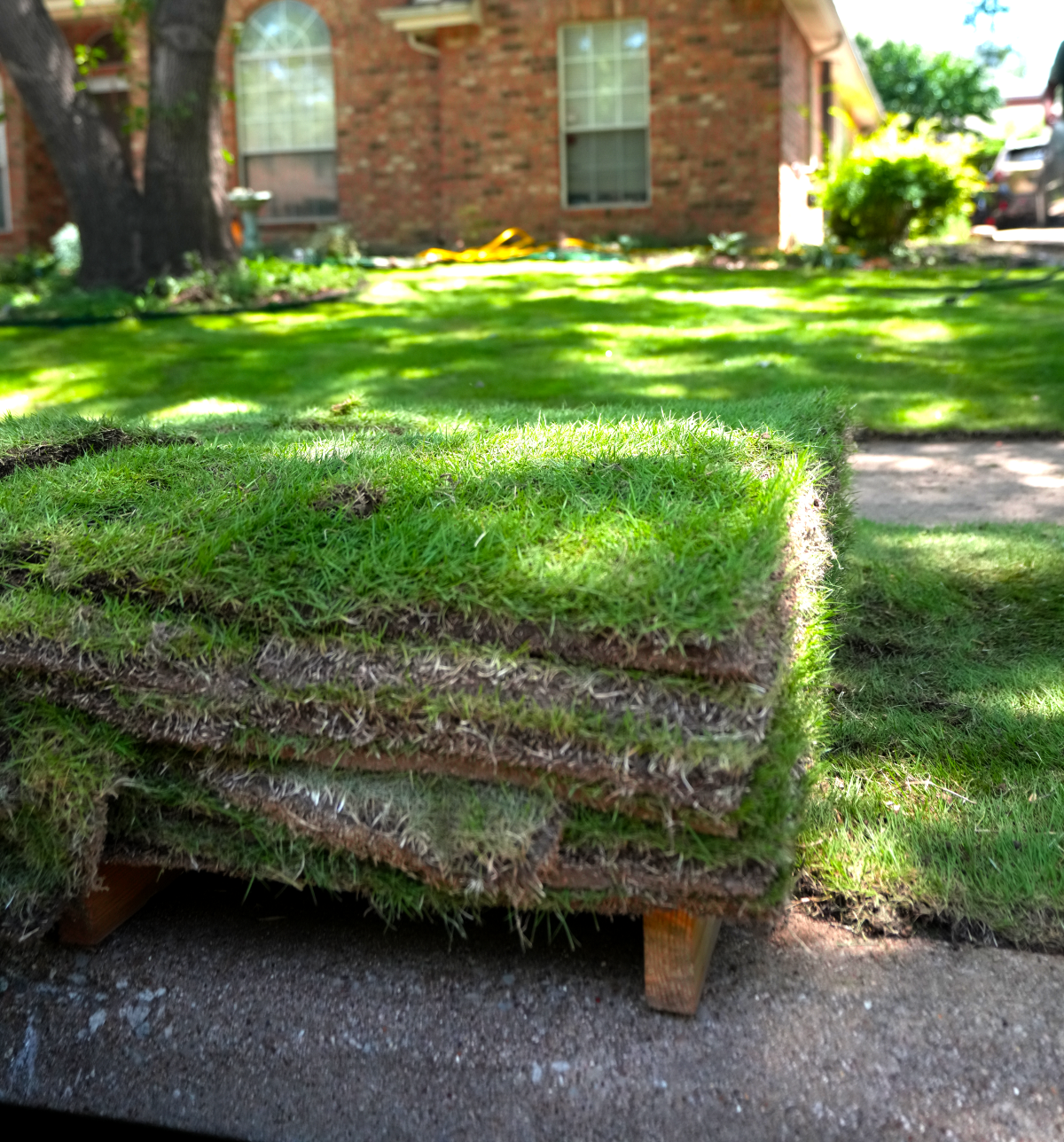
Let’s be honest: nobody dreams about a spreadsheet when they imagine their perfect backyard. You’re picturing a lush, emerald-green carpet of grass where your kids play and the dog rolls around. But before that dream takes root, there’s a moment of truth the quote. If you’ve ever been stunned by a sod installation estimate, you’re not alone. The secret to never overpaying? Learning to calculate sod installation costs per square foot yourself. Once you crack that code, you’ll spot fair deals, catch hidden fees, and budget like a pro. I’ve been breaking down lawn care costs for half a decade, and I promise, the math is simpler than keeping a Fescue lawn alive in July. Let’s dig in.
The Simple Formula You Can Use Right Now
You don’t need to be a contractor to run a quick cost check. Every reputable sod quote and every accurate DIY budget hinges on the same basic formula. Here it is, stripped down:
Total Sod Installation Cost = (Material Cost per Sq Ft + Labor Cost per Sq Ft) × Total Square Footage + One-Time Extras
Think of it like ordering a pizza. The per-square-foot price is your base pizza cost, and delivery fees, premium toppings, and a tip are your extras. If a company quotes you a flat $2,000 for a yard without explaining the per-sq-ft breakdown, ask them to show their work. The “per square foot” model isn’t just industry standard it’s your best tool for comparing apples to apples. Grab a tape measure, note down the length and width of your lawn area, and multiply them. That number is your canvas.
Sod Material Costs: What That Green Carpet Actually Costs
Before anyone rolls out a single strip, you’re paying for the grass itself. Sod material prices fluctuate like fresh produce because, well, it is fresh produce. For a typical U.S. home, here’s what you can expect per square foot just for the sod rolls or pallets:
Bermuda Grass: $0.35 – $0.75/sq ft (sun-loving, budget-friendly)
Zoysia Grass: $0.60 – $1.00/sq ft (dense, slow-growing, pricey)
Tall Fescue: $0.45 – $0.85/sq ft (cool-season favorite)
St. Augustine: $0.50 – $0.90/sq ft (thrives in coastal South)
Why the range? A farm 20 miles away will charge you less for delivery than one 200 miles away. The thickness of the cut and the time of year matter massively too. Ordering a pallet of Bermuda in peak summer when demand spikes? You’ll nudge toward the upper end. Pro tip from someone who’s burned by this: buy directly from a sod farm if possible, not a big-box store. The per-square-foot price is often 15-20% lower, and the grass hasn’t been sitting on a pallet, drying out in a warehouse aisle.
Labor: Why Installation Can Double Your Bill
Here’s where the heart of the sod installation costs per square foot beats. Material might cost you $0.50 per square foot, but labor often adds another $0.50 to $1.50 on top of that. So your actual all-in rate per square foot can easily land between $1.00 and $2.50, sometimes more. Labor isn’t just rolling out green strips. It’s the grading, the sod cutting around curves, the tamping, and the initial watering.
What pushes labor into the higher range?
Bad access: If the crew has to carry sod through your house or up three flights of stairs, you’ll pay for that sweat.
Steep slopes: Hills are safety hazards and time-eaters.
Obstacle galore: Lots of flower beds, trees, and path curves mean intricate cutting.
Old lawn removal: If they have to scrape away existing weeds and grass first, that’s a separate labor line.
A fair, transparent installer will list labor as its own line item. If they’ve given you a bundled number, use the formula: subtract the material cost you researched, and see if the remaining labor per sq ft is reasonable.
Don’t Forget These Sneaky Upcharges
This is where most online “cost calculators” do you a disservice. They spit out a neat number and ignore the real-world gotchas. When you’re calculating your true sod installation cost, always factor in these invisible layers:
Soil Prep & Tilling: Hard-packed clay needs tilling and compost. Budget $0.25 – $0.75 per sq ft for soil amendments and groundwork. It’s not an optional luxury; it’s the difference between sod that thrives and sod that shrivels.
Delivery Fees: A pallet of sod is heavy. Farms typically charge a delivery fee, especially for small orders. It could be a flat $75-$150, which effectively raises your per-sq-ft cost on a tiny lawn.
Old Turf Removal & Disposal: That $1.00/sq ft bid might not include ripping out your old crabgrass. Removal and haul-away can add $0.50 – $1.00 per sq ft.
Sprinkler Adjustments: New sod needs water instantly. If your sprinkler heads are buried or broken, fixing them before the sod arrives avoids a dead-patch disaster.
Your Turn: A 1,000 Sq Ft Backyard Example
Let’s make this real. You’ve got a 1,000-square-foot backyard in Austin, Texas, and you want Zoysia grass. Here’s a walkthrough of the total calculation, designed to be your mental template.
Measure: You confirmed 1,000 sq ft.
Material Cost: Local farm offers Zoysia at $0.75/sq ft. Material total = **$750**.
Labor Cost: You get a few quotes and land on $1.00/sq ft for installation, which includes basic grading. Labor total = **$1,000**.
Soil Prep: Your ground is decent, but they recommend tilling in some compost at $0.40/sq ft. Prep = **$400**.
Delivery: The farm is 15 miles away, no delivery charge if you order over 1,000 sq ft. Score.
Contingency Buffer: Always add 10% for waste due to cuts and odd angles. Material gets bumped to 1,100 sq ft. Adjusted material = $825.
Your Grand Total for 1,000 sq ft: $825 (material) + $1,000 (labor) + $400 (prep) = $2,225.
That’s an all-in cost of **$2.23 per square foot**. Once you see it broken down, that initial “$2,200 quote” suddenly makes sense or helps you push back on one that doesn’t add up.
5 Insider Ways to Shrink Your Sod Installation Bill
I never leave you without a money-saving playbook. Use these to trim the fat without sacrificing a healthy lawn.
Become a Prep Pro: The easiest $400 you can save is doing the soil prep yourself. Rent a tiller for $60 a day, rake out debris, and spread starter fertilizer. Just don’t skip this step prep is everything.
Measure With a Laser: Overordering sod means you’re paying to throw grass away. A laser distance measurer ($30) will give you a near-perfect square foot count and minimize waste.
Right Grass, Right Light: Plant sun-loving Bermuda under a dense oak tree, and you’ll be paying to re-sod it in a year. Match the grass type to your yard’s shade profile and you invest once.
Buy in the “Shoulder Season”: Ordering sod in early fall or early spring (avoiding the peak summer frenzy) can net you lower material prices from farms looking to move inventory.
Install Fast, or It’s Toast: Sod is a living thing. If you order it and let it sit on the pallet for two days, internal heat can cook the center rolls. That’s pure money wasted. Have the crew ready to install the morning it’s delivered.
Your Sod Cost Questions, Answered Quickly
What follows is built for Answer Engine Optimization straight, scannable answers that Google and AI snippets love.
How much does it cost to install 500 sq ft of sod?
For a 500-square-foot lawn with average labor and mid-grade grass, expect to pay between $900 and $1,600 all-in. The wide range depends mostly on whether you need old lawn removal and heavy soil work.
Is sod cheaper than artificial grass?
Sod installation costs far less upfront typically $1.00 to $2.50 per sq ft fully installed, versus $5 to $15 per sq ft for quality artificial turf. However, real sod requires years of watering, mowing, and fertilizer. Artificial turf has a higher entry price but near-zero recurring water bills.
Does a DIY sod install really save money?
Yes, DIY slashes the labor portion entirely, which can save you $0.50 $1.50 per sq ft. You’ll still pay for material, delivery, and soil prep. A DIY 1,000 sq ft yard might cost $1,200 instead of $2,200. Just be brutally honest about your stamina laying hundreds of heavy rolls in the sun is a youth sport.
What is the cheapest month to buy sod?
Late September and early October (for cool-season grass) or late February to early March (for warm-season grass) tend to see dips in farm pricing as demand cools. Avoid May and June when everyone suddenly wants a new lawn.
How long does installed sod last before it dies?
If properly watered and rooted, sod becomes a permanent lawn. The critical window is the first 2-3 weeks. If roots fail to knit into the soil due to dry conditions, the sod can die in patches within 7-10 days.
Conclusion
Understanding sod installation costs per square foot isn’t about becoming a penny-pinching negotiator—it’s about walking into the project with your eyes wide open. When a contractor hands you an estimate, you’ll see beyond the total. You’ll recognize the soil prep line item, nod at the material charge, and understand exactly why labor lands where it does. That confidence is worth more than any discount. So measure that yard, call some local farms, and get ready to transform your dirt patch into the neighborhood showpiece. You’ve got the formula now go use it.