Haptic Interface Market Size, Share, and Trends Analysis by 2032
Other |
2026-06-29 08:02:10
 Russian
 English
 Romaian
 Portuguese (Brazil)
 Greek
Greek
Erectile dysfunction (ED) is a common male sexual health problem in which a man has difficulty getting or maintaining an erection firm enough for satisfactory sexual activity. While many men can manage ED with medicines, lifestyle changes, counseling, injections, or vacuum devices, some continue to experience significant erectile problems despite these treatments.
For these patients, a penile implant, also called a penile prosthesis, may be an option.
A penile implant is a medical device surgically placed inside the penis to provide reliable rigidity when an erection is desired. Unlike tablets or injections, the device does not need to be taken or administered immediately before intercourse. Once healing is complete, the implant can be used according to its design.
This article explains what a penile implant is, how it works, the different types available, who may be a candidate, how surgery is performed, recovery, potential complications, cost considerations, and frequently asked questions.
A penile implant is a prosthetic device placed inside the penis during a surgical procedure to help a man achieve an erection.
The procedure is primarily used for men with erectile dysfunction that has not responded adequately to other treatments or for men who cannot use certain conventional ED treatments.
Unlike a natural erection, which depends on blood entering and remaining within the erectile tissues, a penile prosthesis creates rigidity through the mechanical components of the device.
The implant is completely concealed beneath the skin. There are no external tubes or visible components.
Depending on the type of prosthesis, the patient can either activate an inflatable mechanism or manually position a semi-rigid device.
Erectile dysfunction can have multiple causes.
Some men develop ED because of conditions that affect blood vessels, while others experience erectile problems because of nerve damage or previous pelvic surgery.
Possible causes include:
Diabetes
Cardiovascular disease
High blood pressure
Nerve disorders
Spinal cord injuries
Prostate surgery
Pelvic surgery
Peyronie's disease
Certain medications
Hormonal disorders
Psychological factors
Age-related changes
Not every man with ED needs a penile implant.
In many cases, erectile dysfunction can be managed with less invasive treatments. Penile prosthesis surgery is generally considered when those approaches do not provide satisfactory results or are unsuitable.
A doctor may consider penile implant surgery for a man who:
Has persistent erectile dysfunction
Has tried appropriate non-surgical treatments without adequate improvement
Experiences significant side effects from ED medication
Cannot use certain ED medicines
Does not want to rely on injections or vacuum devices
Has severe ED following prostate or pelvic surgery
Has certain cases of Peyronie's disease combined with erectile dysfunction
Understands the permanent nature of placing a prosthetic device
A complete medical evaluation is necessary before surgery.
The doctor should also determine whether an underlying condition can be treated before considering an implant.
Penile prostheses generally fall into two main categories:
Inflatable penile prostheses
Malleable or semi-rigid penile prostheses
Each type has its own characteristics.
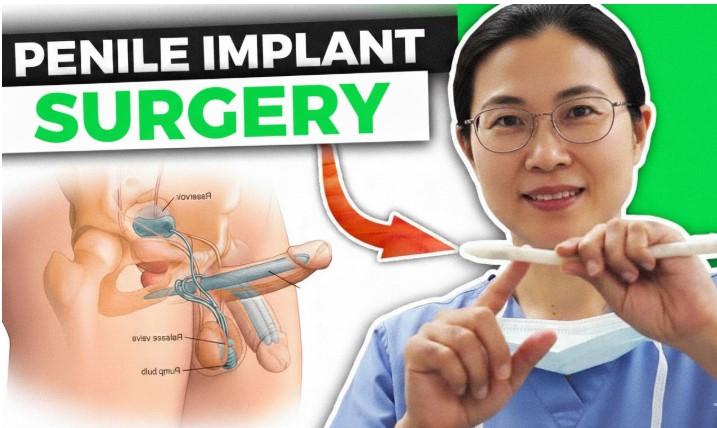
An inflatable penile implant uses fluid to create an erection.
A commonly used three-piece system consists of:
Two cylinders
A fluid reservoir
A pump
The cylinders are placed inside the penis. The pump is positioned within the scrotum, and the reservoir is placed inside the body.
When the patient wants an erection, he squeezes the pump several times. Fluid moves into the cylinders, causing them to expand and produce rigidity.
After sexual activity, a release mechanism allows the fluid to return to the reservoir.
The penis then becomes softer again.
An inflatable prosthesis can offer:
On-demand erections
Control over erection timing
The ability to deflate after intercourse
A concealed system
A softer appearance when deflated
Because the system contains several components, it is mechanically more complex than a malleable prosthesis.
A malleable implant consists of two bendable rods inserted into the erectile chambers.
The rods maintain a degree of firmness at all times.
When an erection is desired, the penis can be manually positioned upward. After sexual activity, it can be positioned downward.
A malleable prosthesis may provide:
A simple mechanical design
No fluid reservoir
No inflation pump
Easy manual operation
Fewer mechanical components
This type may be suitable for some patients who prefer a simpler device or have difficulty operating an inflatable pump.
The implant essentially provides an alternative mechanism for penile rigidity.
With a natural erection, sexual stimulation triggers neurological and vascular changes that increase blood flow to the penis.
With an inflatable penile implant, the patient manually activates the pump. Fluid enters the cylinders and produces rigidity.
The patient can then release the device after sexual activity.
A malleable prosthesis works through flexible rods that remain firm and can be manually positioned.
Therefore, the implant allows a man to achieve functional rigidity even when his natural erectile mechanism is no longer working adequately.
Penile prosthesis surgery is performed by a qualified urologist or surgeon with appropriate experience in penile implant procedures.
The exact surgical technique depends on:
Type of implant
Patient anatomy
Previous surgery
Medical history
Surgeon preference
Whether additional procedures are required
Before surgery, the doctor evaluates the patient's erectile dysfunction and general health.
The consultation may include discussion of:
Duration of ED
Previous treatments
Medical conditions
Medications
Previous pelvic or penile operations
Penile anatomy
Sexual expectations
Available prosthesis options
The surgeon should explain the expected benefits as well as possible complications.
Penile implant surgery is performed under anesthesia.
The surgical team follows sterile surgical practices and takes precautions intended to reduce infection risk.
For an inflatable prosthesis, the cylinders are placed inside the erectile chambers of the penis.
The pump is placed in the scrotum, while the fluid reservoir is positioned inside the body for a three-piece system.
For a malleable prosthesis, the flexible rods are placed inside the erectile chambers.
Before completing the procedure, the surgeon checks the implant to make sure it operates correctly.
The surgical site is then closed and the patient is monitored during recovery.
The duration varies according to the type of prosthesis and individual circumstances.
The procedure may take a few hours.
Patients with previous pelvic surgery, scar tissue, anatomical abnormalities, or other medical considerations may require a more complex procedure.
Some patients can leave the hospital on the same day, while others may stay overnight.
Your surgeon will provide individualized information about the expected surgical and hospital stay.
Recovery is an important part of the treatment process.
During the first few days or weeks, some patients experience:
Swelling
Bruising
Tenderness
Discomfort
Temporary sensitivity
The surgical team may provide pain medication and instructions for wound care.
Patients should follow their surgeon's instructions concerning:
Physical activity
Exercise
Driving
Work
Bathing
Sexual activity
Medication
Device operation
Avoid strenuous activity until your doctor says that it is safe.
The implant generally needs to remain unused while the surgical site heals.
Many patients are instructed to wait around 4 to 6 weeks before sexual activity, although recovery times differ.
The surgeon will determine when the implant can safely be activated and when intercourse can resume.
For appropriately selected men, penile prosthesis surgery can provide several potential benefits.
The implant provides a mechanical method for achieving penile rigidity.
The prosthesis is designed for long-term use and does not require a medication dose before every sexual encounter.
With an inflatable implant, the patient controls when an erection is created and when it is released.
The prosthesis is placed inside the body.
Once healing is complete, there is generally no obvious external indication that an implant has been placed.
Patients with successful implants may no longer need oral ED medication, injections, or vacuum devices to achieve penile rigidity.
A penile implant treats the functional problem of achieving sufficient penile rigidity, but it does not necessarily cure the underlying disease responsible for erectile dysfunction.
For example, diabetes, vascular disease, or nerve damage may continue to affect the patient's overall health.
The implant provides a reliable method of producing an erection despite the underlying erectile dysfunction.
Penile prostheses are designed to restore erectile rigidity rather than increase penis size.
Patients should discuss penile length expectations with their surgeon before surgery.
The appearance and dimensions of the penis can be affected by the severity and duration of ED, scarring, Peyronie's disease, previous surgery, and other factors.
A reputable specialist should provide realistic expectations rather than promising enlargement.
The experience differs among patients.
An inflatable implant can create a firm erection when inflated and allow the penis to become softer after deflation.
However, the sensation and mechanical characteristics may not be identical to those of a natural erection.
The implant primarily addresses rigidity. Sexual sensation depends largely on the nerves and tissues that remain functional.
A penile implant does not normally interfere directly with ejaculation.
A man who could ejaculate before surgery may continue to do so after recovery, provided there is no other condition affecting ejaculation.
However, erection and ejaculation are separate functions.
A penile prosthesis primarily addresses erection.
Many men who were able to experience orgasm before surgery can continue to experience orgasm after recovering from implantation.
The implant does not directly create or eliminate orgasm.
Factors such as nerve function, medications, psychological health, hormonal status, and previous surgery can influence orgasmic function.
Penile prosthesis surgery is intended to restore rigidity rather than eliminate sensation.
Many patients retain penile sensation after surgery.
However, individual results can vary, especially when ED is associated with nerve damage or previous pelvic surgery.
Like any surgical treatment, penile prosthesis implantation carries potential risks.
Possible complications include:
Infection
Bleeding
Swelling
Pain
Bruising
Mechanical failure
Device malfunction
Device erosion
Scar tissue
Changes in sensation
Difficulty using the device
Unsatisfactory cosmetic or functional results
Need for revision surgery
Your individual risk depends on your health, surgical history, implant type, and other factors.
Infection is one of the most serious potential complications of penile prosthesis surgery.
Patients should contact their medical team if they develop symptoms such as:
Fever
Increasing pain
Severe swelling
Redness
Pus
Wound drainage
Wound separation
Other signs of infection
An infected penile prosthesis may require intensive treatment and, in some cases, surgical removal or revision.
Modern penile prostheses are designed for long-term use, but mechanical problems can eventually occur.
Possible problems include:
Pump malfunction
Fluid leakage
Cylinder malfunction
Reservoir problems
Other component failure
A malfunctioning device should be assessed by a qualified urologist.
Depending on the problem, revision or replacement surgery may be necessary.
A penile prosthesis is designed to be a long-term device.
Many implants remain functional for years, but there is no guarantee that a particular implant will last for a specific period.
Device longevity can be affected by:
Mechanical wear
Infection
Patient factors
Device type
Previous surgery
Other complications
Your surgeon can explain the expected longevity of the specific prosthesis being considered.
ED tablets are often used as an initial treatment.
Examples include:
Sildenafil
Tadalafil
Vardenafil
Avanafil
These medicines work by supporting the body's natural erectile process.
A penile implant is different because it provides mechanical rigidity.
Non-surgical
Taken when needed or as prescribed
Requires an appropriate physiological response
May cause side effects
May not work for severe ED
Requires surgery
Remains inside the body
Provides mechanical rigidity
Can be used repeatedly after recovery
May reduce the need for ED medication
The appropriate option depends on the patient's condition and treatment goals.
Penile injections involve administering medication directly into the erectile tissue.
They can be effective for some men but require an injection before sexual activity.
A penile prosthesis eliminates the need for repeated injections after successful implantation.
However, injections avoid the surgery required for an implant.
A vacuum erection device creates negative pressure around the penis, drawing blood into the erectile tissues.
It is non-surgical and may be useful for certain patients.
A penile prosthesis requires surgery but can provide a more integrated long-term mechanical solution.
A doctor can help determine which option is appropriate.
The price of penile implant surgery can vary substantially.
Factors that influence the overall cost include:
Type of prosthesis
Implant manufacturer
Implant model
Surgeon fees
Hospital charges
Anesthesia
Diagnostic testing
Medication
Follow-up care
Geographic location
Additional surgical procedures
Patients should ask for a complete estimate that covers the implant, surgery, hospital or facility charges, anesthesia, and postoperative follow-up.
Men considering penile prosthesis surgery in Pakistan should consult a qualified urologist or andrologist experienced in erectile dysfunction and penile prosthetic procedures.
During an appointment, the specialist can assess the cause and severity of ED and discuss treatment options.
The consultation may cover:
Medical history
Previous ED treatments
Physical examination
Possible underlying causes
Implant options
Surgical technique
Recovery
Potential complications
Expected outcomes
Cost
When choosing a treatment facility, patients should consider the specialist's qualifications and experience, the surgical environment, infection-prevention practices, implant availability, and postoperative follow-up.
Dot Clinics has locations in Lahore and Multan, Pakistan, and provides services related to erectile dysfunction and men's sexual health.
Men dealing with persistent erectile dysfunction can consult the clinic to discuss their symptoms and previous treatment experiences.
Depending on the patient's evaluation, treatment may include appropriate non-surgical ED management or discussion of advanced treatment options.
Patients interested in penile implant surgery should receive a detailed consultation with a suitably qualified specialist. Important topics to discuss include the type of prosthesis, suitability for surgery, expected results, potential complications, recovery period, and follow-up requirements.
Preparation can help patients understand the procedure and reduce avoidable complications.
Before surgery, your doctor may recommend:
A detailed health assessment is performed to determine whether surgery is appropriate.
Tell your doctor about all prescription medicines, over-the-counter drugs, vitamins, and supplements.
Blood tests or other investigations may be recommended depending on your health.
Conditions such as diabetes or cardiovascular disease may need appropriate management before surgery.
Patients should discuss realistic expectations concerning:
Penile rigidity
Penile appearance
Sexual function
Recovery
Device operation
Potential complications
Long-term maintenance
After complete healing, many patients can return to their normal sexual activities.
With an inflatable implant, the patient learns how to operate the pump and release mechanism.
The device should be used according to the instructions provided by the surgical team.
Regular medical follow-up may be recommended, particularly if there are concerns about the device or changes in sexual function.
Before choosing surgery, ask your specialist:
What is causing my erectile dysfunction?
Have I tried all appropriate non-surgical treatments?
Am I a suitable candidate for a penile implant?
Which type of implant is appropriate for me?
Why are you recommending this particular device?
How experienced are you with penile prosthesis surgery?
What complications should I know about?
How long will recovery take?
When can I resume sexual activity?
How long is the device expected to last?
What happens if the device malfunctions?
What is included in the total treatment cost?
How often will I need follow-up appointments?
It is intended to be a long-term solution, but no implant is guaranteed to last forever. Some patients eventually require revision or replacement.
Some pain and discomfort are expected during early recovery. Your surgeon can provide medication and instructions to help manage postoperative discomfort.
Yes. An implant can be surgically removed when medically necessary. Removal may be required in certain cases of infection, complications, or other medical circumstances.
Yes. The implant is specifically designed to provide the rigidity required for sexual intercourse. Sexual activity should wait until healing is complete and the surgeon gives permission.
No. The implant provides rigidity but does not directly increase libido.
A penile implant is not designed to improve fertility. Men with fertility concerns should discuss their reproductive plans with a specialist.
The device is implanted inside the body. Once healing is complete, there is generally no obvious external indication that an implant is present.
The choice depends on your anatomy, medical history, lifestyle, hand function, expectations, and specialist recommendation. Inflatable and malleable implants have different characteristics.
A urologist can examine the device and identify the problem. Depending on the cause, repair or replacement may be required.
A penile implant is an established surgical treatment for men with erectile dysfunction who have not achieved satisfactory results from other treatment options.
Inflatable and malleable prostheses provide different approaches to restoring penile rigidity. Inflatable systems allow the patient to control when the penis becomes rigid and when it returns to a softer state, while malleable devices offer a simpler mechanical design.
Although penile implants can provide reliable erectile function, the procedure should be considered carefully because it involves permanent placement of a medical device and carries potential surgical risks.
A consultation with an experienced urologist or andrologist is the best way to determine whether a penile implant is appropriate. The specialist can evaluate the underlying cause of erectile dysfunction, review previous treatments, explain available prostheses, discuss expected outcomes, and help the patient make an informed treatment decision.