Dicyclopentadiene (DCPD) Market Size, Trends Analysis and Forecast by 2032
Other |
2026-06-30 07:54:45
 Russian
 English
 Romaian
 Portuguese (Brazil)
 Greek
Greek
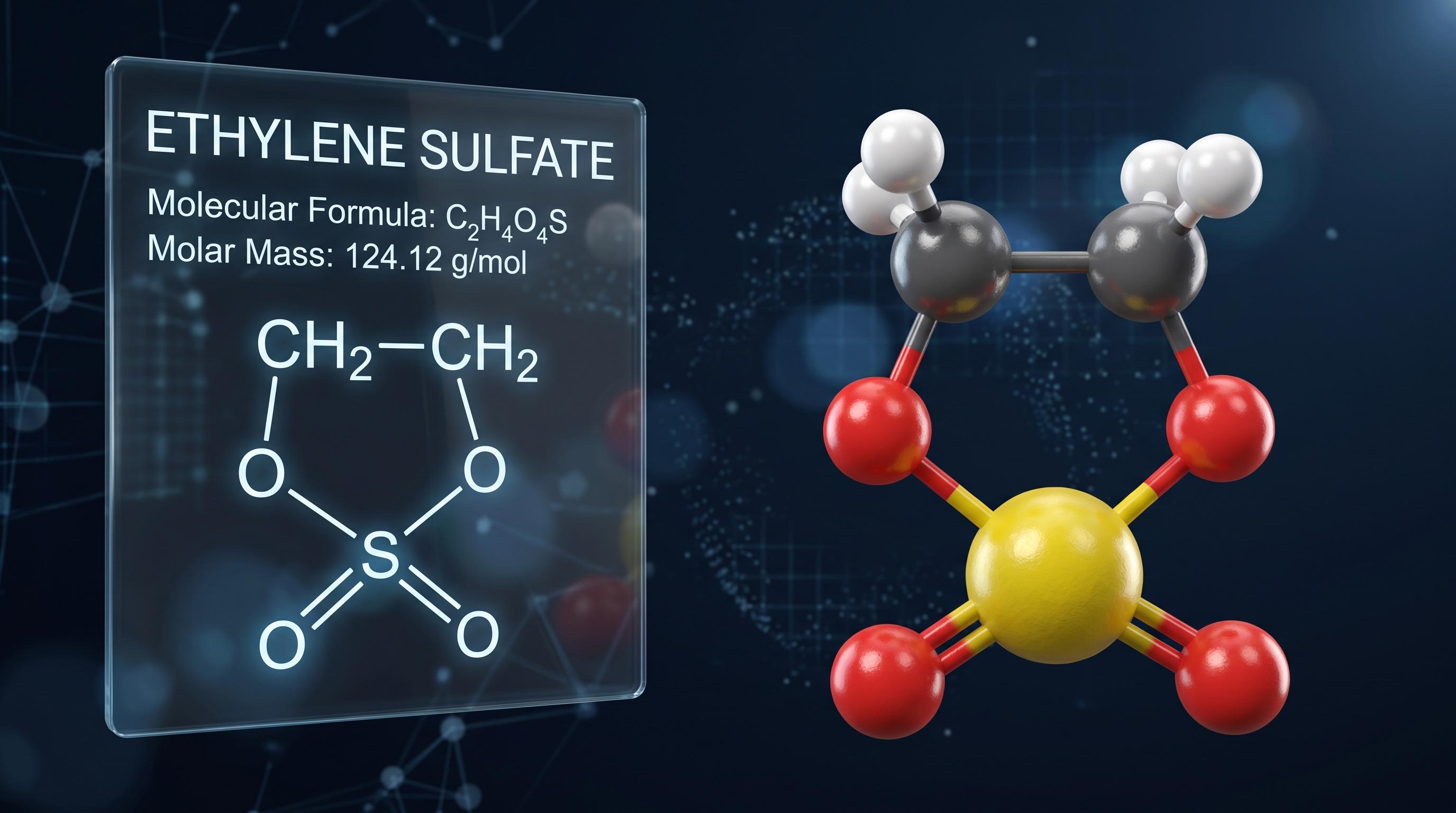
Ethylene sulfate is an important sulfur-containing organic compound used in chemical research and advanced battery technology. It is particularly known for its role as an electrolyte additive in rechargeable batteries, where it can influence electrode stability and help improve battery performance. As energy storage becomes increasingly important in consumer electronics, electric vehicles, and renewable energy systems, researchers continue to investigate chemical additives that can improve battery efficiency, durability, and reliability. Ethylene sulfate has attracted attention because of its ability to participate in reactions at electrode surfaces and contribute to the formation of protective interfacial layers. Its effectiveness depends on the battery chemistry, electrolyte formulation, electrode materials, and operating conditions, making it important to understand both its advantages and limitations.
Ethylene sulfate is an organic sulfur compound classified as a cyclic sulfate ester. It is also known in battery research as DTD, which refers to its chemical structure, commonly described as dioxathiolane dioxide. The compound contains carbon, hydrogen, oxygen, and sulfur, arranged in a cyclic molecular structure that influences its chemical reactivity. Commercial ethylene sulfate may be supplied as a white crystalline powder, although its appearance and quality depend on the product specifications. Its most recognized modern application is in battery electrolyte formulations, where it acts as a functional additive rather than the primary electrolyte solvent. Researchers also study its chemical behavior to understand how sulfur-containing compounds interact with electrode materials and other electrolyte ingredients.
The chemical properties of ethylene sulfate make it useful for specialized industrial and electrochemical applications. Its molecular structure contains a cyclic sulfate group that can participate in chemical and electrochemical reactions under suitable conditions. Its chemical formula is C₂H₄O₄S, and its molecular mass is approximately 124.12 grams per mole. The compound is available in different purity grades, including high-purity materials designed for battery manufacturing and research. Moisture content and other impurities are important considerations because unwanted contaminants can interfere with electrolyte chemistry and affect battery performance. Solubility, melting behavior, stability, and compatibility with other compounds should be evaluated according to the specific grade and intended application.
Ethylene sulfate works as a functional additive by participating in electrochemical reactions at electrode surfaces. In suitable battery formulations, it can react during early charging or other operating stages and contribute to the formation of a protective layer known as the solid electrolyte interphase. This layer develops at the interface between the electrolyte and the negative electrode, helping regulate further reactions between the electrode material and electrolyte components. A well-formed interphase can reduce unwanted electrolyte decomposition and support more stable electrode behavior during repeated charging and discharging. However, the exact reaction pathway and resulting surface composition depend on the battery materials, electrolyte ingredients, and operating conditions, so the performance of ethylene sulfate cannot be assumed to be identical in every battery system.
One of the most important applications of ethylene sulfate is in lithium-ion battery technology. Lithium-ion batteries are widely used in portable electronics, electric vehicles, and energy storage systems because they offer useful energy density and rechargeable performance. Their long-term operation depends partly on the chemical interactions between the electrodes and electrolyte. Ethylene sulfate can be added to selected electrolyte formulations to influence these interactions and support the development of more stable electrode interfaces. By modifying interfacial chemistry, the additive may help limit unwanted reactions that contribute to capacity loss and performance degradation. Its effectiveness depends on the battery design, electrode composition, electrolyte salt, solvent mixture, additive concentration, and temperature.
Battery performance depends on several factors, including energy efficiency, capacity retention, internal resistance, charging behavior, and long-term stability. Ethylene sulfate may contribute to these characteristics by changing how the electrolyte interacts with the electrode surfaces. When the additive helps produce a suitable protective interphase, it can reduce some unwanted reactions and support more consistent electrochemical behavior. This can be beneficial in battery systems that experience repeated charge and discharge cycles. Nevertheless, adding ethylene sulfate does not automatically improve every performance measure. An unsuitable formulation may increase resistance or introduce other disadvantages, so battery developers must evaluate the complete electrolyte mixture rather than judging the additive in isolation.
The main benefit of ethylene sulfate is its potential to improve electrode and electrolyte compatibility in suitable battery formulations. By participating in interphase formation, it can help reduce certain unwanted chemical reactions and support better capacity retention during battery operation. It may also contribute to improved interface stability, which is important for maintaining predictable battery behavior over time. Another advantage is its compatibility with selected electrolyte formulations that contain other functional additives. Researchers can investigate combinations of additives to balance electrode protection, ionic transport, and stability. The actual benefits vary according to the battery chemistry, and laboratory testing is necessary to determine whether ethylene sulfate provides a meaningful improvement in a particular application.
Ethylene sulfate is primarily associated with battery manufacturing and electrochemical research, where its chemical behavior makes it useful as an electrolyte additive. Battery developers use carefully formulated electrolyte mixtures to control reactions at electrode surfaces and support reliable cell operation. High-purity ethylene sulfate may therefore be used in research laboratories, battery material development, and specialized manufacturing processes. Its importance is linked to the growing demand for rechargeable energy storage and the need to improve the performance of existing battery chemistries. Other potential uses may be investigated in specialized chemical research, but its suitability for any industrial process depends on the required purity, reaction conditions, compatibility, and safety requirements.
Battery life is influenced by the gradual deterioration of electrode materials, electrolyte decomposition, changes in internal resistance, and other chemical or physical processes. Ethylene sulfate can help address some of these challenges by influencing the protective layer that forms on the electrode surface. A suitable interphase can limit direct contact between reactive electrode materials and the electrolyte, potentially reducing the rate of certain degradation reactions. This may support improved capacity retention over repeated use. However, battery life is also affected by charging habits, operating temperature, depth of discharge, cell design, and manufacturing quality. Ethylene sulfate should therefore be viewed as one part of a broader battery optimization strategy rather than a standalone solution.
Ethylene sulfate and ethylene sulfite are related sulfur-containing compounds, but they are chemically distinct and should not be treated as interchangeable names. Ethylene sulfate is a cyclic sulfate ester, whereas ethylene sulfite belongs to the cyclic sulfite family. The difference in their sulfur oxidation state and molecular structure influences their chemical reactions and electrochemical behavior. Both compounds have been investigated for applications involving battery electrolytes, but they may form different interfacial products and produce different results depending on the electrode and electrolyte system. Correct identification is important when purchasing chemicals, preparing electrolyte formulations, interpreting research results, or following laboratory procedures.
Advanced battery research focuses on improving energy storage, extending service life, increasing reliability, and developing materials for different operating environments. Ethylene sulfate is relevant to this work because researchers can study how it influences interfacial reactions and electrode stability. Scientists may evaluate it alongside other additives to determine whether combinations offer better performance than individual compounds. Research can include testing capacity retention, electrochemical efficiency, impedance, gas generation, and stability under different temperatures or charging conditions. Results from one battery chemistry may not apply directly to another, which is why formulation-specific testing remains important. Continued investigation of sulfur-containing additives helps researchers understand how small changes in electrolyte composition can influence the behavior of rechargeable batteries.
Ethylene sulfate should be handled as a potentially hazardous laboratory chemical. Depending on the product classification, it may present risks associated with harmful exposure, serious eye damage, skin irritation or corrosion, skin sensitization, or suspected long-term health effects. Workers should consult the supplier's safety data sheet for the exact material before use and follow the recommended handling procedures. Appropriate chemical-resistant gloves, protective clothing, and eye protection should be selected according to the product's hazards. Avoid breathing dust and prevent direct contact with the skin and eyes. Handling should take place in a suitable, well-controlled workspace, and contaminated materials should be managed according to established laboratory procedures. The chemical should never be assumed safe simply because it is used in battery manufacturing.
Proper storage helps maintain the quality of ethylene sulfate and reduces unnecessary exposure risks. The material should be kept in a compatible, tightly closed container under the storage conditions specified by its supplier. Moisture contamination should be minimized, particularly when the chemical is intended for battery electrolyte preparation, because trace impurities can influence electrochemical reactions. The storage area should be appropriate for hazardous laboratory chemicals and should protect the product from incompatible substances, accidental damage, and unauthorized access. Product-specific guidance should always take priority over general storage recommendations because packaging, purity, and formulation may differ between suppliers.
Selecting ethylene sulfate requires attention to purity, moisture content, chemical specifications, packaging, and intended use. Battery research and manufacturing often require high-purity material because trace contaminants may affect electrolyte performance. Buyers should check the certificate of analysis and safety data sheet to understand the product's composition, quality requirements, and handling precautions. Compatibility with the selected electrolyte and electrode materials should also be considered before the chemical is incorporated into a formulation. Reliable documentation and appropriate storage conditions are particularly important when consistent experimental results or manufacturing quality are required. Choosing a grade based on the intended application helps reduce the risk of using material that does not meet technical requirements.
Ethylene sulfate is mainly used as a functional electrolyte additive in selected rechargeable battery systems. It can influence electrode surface chemistry and contribute to the formation of a protective interphase that may improve stability and capacity retention.
The chemical formula of ethylene sulfate is C₂H₄O₄S. This formula represents the carbon, hydrogen, oxygen, and sulfur present in its molecular structure.
Yes, ethylene sulfate is used in certain lithium-ion battery electrolyte formulations. Its purpose is to influence electrode and electrolyte interactions, although the results depend on the battery chemistry and complete formulation.
Ethylene sulfate can participate in reactions that form a protective interphase on an electrode surface. This layer may help reduce unwanted electrolyte decomposition and support more stable battery operation under suitable conditions.
No, ethylene sulfate and ethylene sulfite are different chemical compounds. They have different molecular structures and may behave differently during electrochemical reactions, so they should not be substituted for each other without technical evaluation.
Ethylene sulfate may present significant health hazards, depending on its classification and product grade. Users should review the safety data sheet, wear appropriate protective equipment, avoid direct exposure, and follow proper chemical-handling procedures.
It should be stored in a compatible, tightly closed container under the conditions recommended by the supplier. Moisture contamination should be minimized, especially when the material is intended for battery electrolyte applications.
No, ethylene sulfate does not guarantee longer battery life. It may improve interfacial stability in a suitable formulation, but the overall result depends on electrode materials, electrolyte composition, temperature, charging conditions, and cell design.
Purity is important because unwanted impurities, particularly moisture, can interfere with electrolyte chemistry and influence battery performance. The appropriate purity specification depends on the intended research or manufacturing application.
No, ethylene sulfate is not suitable for every battery chemistry or electrolyte formulation. Its compatibility and effectiveness must be evaluated for the specific electrodes, electrolyte components, operating conditions, and performance requirements.
Ethylene sulfate is a valuable chemical for battery research because of its ability to influence electrode and electrolyte interactions. Its most recognized application is as a functional additive in selected lithium-ion battery electrolytes, where it can contribute to the formation of a protective interphase and help improve electrochemical stability. Its benefits depend on the complete battery formulation, including electrode materials, electrolyte composition, operating temperature, and charging conditions. Understanding its chemical properties, applications, limitations, storage requirements, and safety precautions is essential for researchers, manufacturers, and chemical professionals. When selected carefully and used under appropriate conditions, ethylene sulfate can play a useful role in developing more reliable rechargeable battery systems.