Membrane Bioreactor Market Share Landscape to Reach USD 8.21 Billion by 2032 Amid Regional and Segment Expansion
Other |
2026-08-24 10:32:09
 Russian
 English
 Romaian
 Portuguese (Brazil)
 Greek
Greek
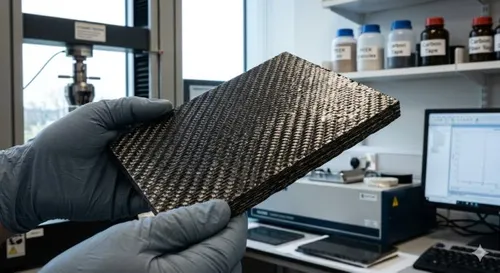
Carbon fiber reinforced thermoplastics combine carbon fibers with a thermoplastic polymer matrix to create materials that are lightweight, strong, corrosion-resistant, and suitable for advanced manufacturing. Unlike conventional thermoset composites, thermoplastic-based materials can soften when heated and solidify again during cooling. This behaviour supports faster processing, reshaping, welding, repair, and potential material recovery across several industrial applications.
A recent study by MarkNtel Advisors highlights that the global carbon fiber reinforced thermoplastics outlook was valued at USD 1.25 billion in 2025. It is projected to grow from USD 1.35 billion in 2026 to USD 2.17 billion by 2032, registering a CAGR of 8.22% during 2026–2032. Expansion reflects demand for lightweight components, faster production processes, durable materials, and recyclable composite solutions.
Reducing component weight can help transportation manufacturers improve energy efficiency, vehicle range, payload capacity, and overall performance. CFRTP components provide high strength and stiffness relative to their weight, making them relevant for automotive, aerospace, railway, and mobility applications.
These materials may be used in structural parts, seat components, brackets, interior panels, battery enclosures, body structures, and other weight-sensitive applications. A recent review of CFRTP joining technologies identifies high specific strength, corrosion resistance, rapid formability, and recyclability among the material’s principal advantages for lightweight transportation.
Aircraft manufacturers require materials that can withstand demanding mechanical and environmental conditions without adding unnecessary weight. CFRTP materials are being considered for clips, brackets, access panels, interior structures, and selected load-bearing components.
Thermoplastic composites can often be processed more quickly than thermoset systems because they do not require lengthy chemical curing cycles. Heat and pressure can consolidate the material, while suitable joining techniques allow components to be welded rather than relying entirely on mechanical fasteners or adhesives. NASA research notes continuing interest in advancing thermoplastic composites for aerospace and automotive applications.
Automotive applications require more than high mechanical performance. Manufacturers must also achieve repeatable quality, short production cycles, and cost control across large production volumes. CFRTP materials can be processed through techniques such as compression moulding, thermoforming, automated tape placement, and injection-based manufacturing for suitable component designs.
Heating allows thermoplastic composite sheets or tapes to be reshaped before cooling into the required form. This process can support shorter manufacturing cycles, although tooling cost, fibre orientation, temperature control, and material handling remain important considerations.
The thermoplastic matrix determines several characteristics of the final composite, including operating temperature, chemical resistance, moisture behaviour, toughness, and processing requirements. Common matrix materials include polyamide, polypropylene, polyether ether ketone, polyetherketoneketone, and polyphenylene sulphide.
Manufacturers select polymers according to the intended application. High-performance aerospace parts may require materials capable of operating under elevated temperatures, while automotive components may prioritise cost, impact resistance, processing speed, and compatibility with high-volume production equipment.
Thermoplastic composites can be joined using heat-based processes such as induction, resistance, ultrasonic, and laser welding. These techniques locally soften the polymer matrix, allowing two components to bond as the material cools.
Welding can reduce dependence on metallic fasteners, which may add weight and create local stress concentrations. Thermoplastic components may also be reheated for reshaping or repair in certain circumstances. However, reliable joints require precise control of temperature, pressure, surface condition, and heating duration.
The ability to remelt thermoplastic matrices gives CFRTP materials potential advantages in recycling and production-waste recovery. Manufacturing offcuts may be processed into shorter-fibre compounds, while some components may be remoulded or reused in secondary applications.
Research published in npj Materials Sustainability indicates that developing circular manufacturing systems for carbon-fiber thermoplastic composites remains an important technical objective. Fibre length, contamination, polymer degradation, separation costs, and quality requirements can all affect the value of recovered material.
CFRTP materials offer a combination of lightweight performance, rapid processing, durability, and potential recyclability. However, carbon fiber cost, specialised machinery, technical expertise, quality inspection, and component certification can restrict wider adoption.
Future development will depend on automated manufacturing, improved joining technologies, lower material costs, recycling infrastructure, and reliable design standards. As industries seek lighter and more adaptable components, carbon fiber reinforced thermoplastics are positioned to play a growing role across transportation, aerospace, energy, industrial equipment, and high-performance consumer applications.