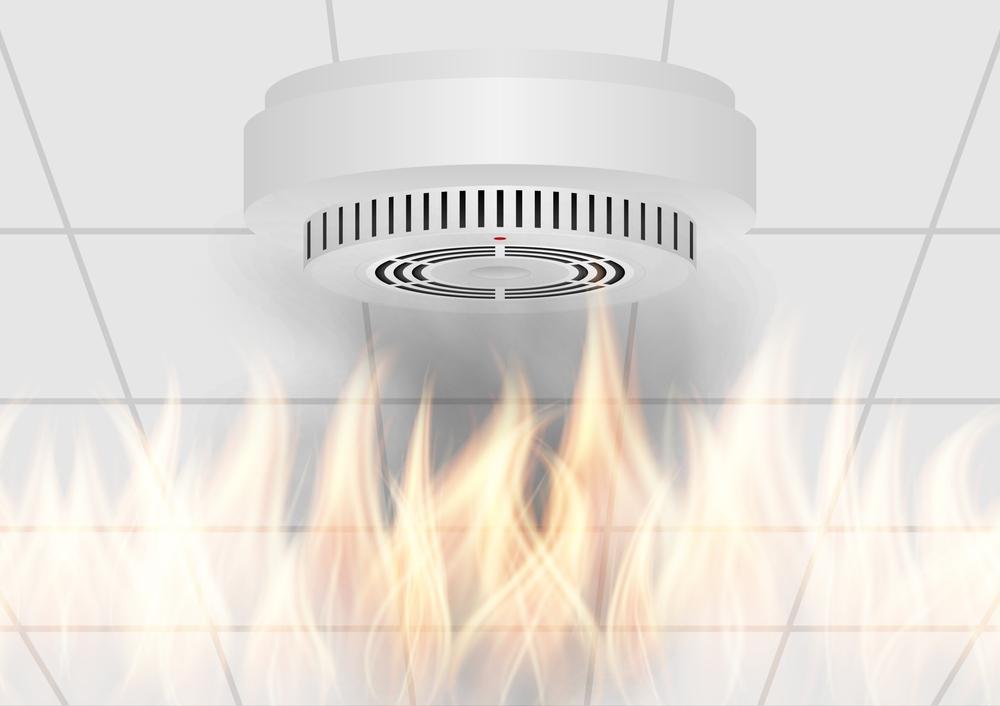
A fire may begin long before anyone notices flames. An overheated electrical component, smouldering material, or unattended heat source can produce early warning signs while nearby people remain unaware of the danger. Detecting these signs quickly can give occupants more time to respond and leave the building safely.
A
smoke detector identifies smoke particles in the air and triggers a warning when it meets its detection conditions. Installed in suitable locations and maintained correctly, it can provide an important early alert in homes, offices, commercial properties, and industrial facilities.
What Happens Inside a Smoke Detector When Smoke Appears?
Smoke detectors use sensing technology to recognise changes associated with smoke. Many common models use photoelectric sensing, while others use different detection methods or combine multiple technologies.
In a photoelectric detector, smoke entering the sensing chamber changes how light reaches a sensor. The device can then activate its alarm when the detected condition reaches its operating threshold.
This process helps identify a potential fire before flames become obvious. However, detection time varies according to the fire, airflow, detector type, placement, and maintenance condition.
Why Is Early Warning Important in Different Buildings?
The value of early detection depends partly on how people use a building and how quickly they can recognise and respond to an alarm.
In a home, an alert during sleeping hours can wake occupants. In an office, it can notify staff about a developing incident in a storage room or another area. In a commercial building, early warning can support evacuation procedures and help responsible personnel initiate the emergency plan.
Buildings with visitors, unfamiliar occupants, or complicated layouts need particular attention to audible warnings, clear escape routes, and suitable emergency arrangements.
Which Areas Need Careful Detector Placement?
Installing detectors in convenient locations does not always provide reliable coverage. Smoke movement, room layout, ventilation, ceiling shape, and potential sources of unwanted alarms all affect placement decisions.
Areas that may require assessment include:
- Bedrooms and sleeping accommodation
- Corridors and escape routes
- Offices and meeting rooms
- Storage areas containing combustible materials
- Rooms with electrical equipment
- Shared spaces where occupants may not immediately notice smoke
The correct arrangement should follow the building's fire-risk assessment, manufacturer instructions, and applicable local requirements. Kitchens, bathrooms, and dusty industrial areas may need particular care because normal activities or environmental conditions can cause unwanted alarms or affect detector performance.
How Can Detector Technology Influence Fire Recognition?
Different detection technologies respond to different conditions. Photoelectric models are often useful for detecting smoke associated with smouldering fires, while other technologies may be selected for different fire characteristics.
The best choice depends on the hazards present rather than a single rule for every room.
When selecting equipment, consider:
- The materials and activities in the protected area
- The likely way a fire could develop
- Ambient dust, humidity, and temperature
- Air movement and ventilation
- Compatibility with the building's alarm system
- Manufacturer specifications and relevant approvals
Professional assessment is especially valuable in buildings with industrial processes, unusual environmental conditions, or complex fire protection requirements.
How Should a Smoke Alarm Work With Other Fire Safety Equipment?
Detection provides a warning, but it does not automatically remove the fire hazard. A complete safety plan may also include alarm notification devices, emergency lighting, evacuation arrangements, suitable extinguishers, and fixed suppression equipment where required.
For example, a
fire extinguisher cylinder may be suitable for a particular fire class, but its presence does not replace early warning or safe evacuation. The extinguishing agent must match the hazard, and people should only attempt to control a small fire when they are trained, conditions are safe, and an escape route remains available.
Each component serves a different purpose, so the equipment should be selected as part of a coordinated fire safety plan.
What Can Cause a Detector to Miss an Early Warning?
A detector may not provide the expected warning if it is poorly positioned, damaged, unsuitable for the environment, or not maintained.
Smoke may also take time to reach a sensor, particularly when airflow carries it away from the device. Closed doors, room partitions, high ceilings, and ventilation patterns can affect how smoke travels.
Other issues include disconnected power, depleted batteries, sensor contamination, and faults that have gone unnoticed.
A detector should never be assumed to provide complete coverage simply because one is installed somewhere in the building. Placement and performance need to be assessed for the actual space.
Why Do False Alarms Need Proper Attention?
Repeated unwanted alarms can cause occupants to lose confidence in the warning system. Some people may begin to ignore the sound, which can create serious problems during a genuine emergency.
Common causes include cooking fumes, steam, dust, aerosols, unsuitable placement, and equipment faults.
If unwanted alarms occur frequently, the cause should be investigated rather than disabling the device. Relocating a detector or selecting a more appropriate type may be necessary, but changes should follow the manufacturer's instructions and applicable fire safety requirements.
The goal is to reduce unwanted activations without weakening protection.
How Often Should Detectors Be Checked?
Inspection and testing help identify faults before the equipment is needed. The correct schedule depends on the detector model, the building's risk profile, manufacturer instructions, and applicable requirements.
Routine attention may include:
- Testing the alarm using the manufacturer's recommended method
- Checking battery or power status
- Looking for damage or visible contamination
- Keeping the surrounding area clear
- Confirming that warning sounds can be heard where needed
- Arranging servicing or replacement when required
A detector that produces an alarm during a test is not necessarily free from every possible fault. Testing should be carried out as directed, and any persistent fault should be addressed promptly.
How Can Occupants Respond When an Alarm Activates?
An alarm should prompt a clear, rehearsed response rather than confusion. Occupants should follow the building's emergency procedure, leave by the designated route, and proceed to the assigned assembly area.
They should not delay evacuation to investigate an uncertain source of smoke or retrieve belongings. If smoke or heat makes a route unsafe, they should follow the site's emergency instructions and contact emergency services.
Regular drills and clear instructions help people understand what to do before an actual fire occurs.
Frequently Asked Questions
Can a detector identify a fire before flames appear?
It can detect smoke before flames are visible in some situations. The timing depends on the fire's development, detector technology, placement, and environmental conditions.
Does every room need the same type of detector?
No. The appropriate detector type and placement depend on the room's use, likely fire hazards, environmental conditions, and applicable requirements.
Why should a detector never be disabled because of repeated false alarms?
Disabling it can leave an area without the intended warning. Repeated unwanted alarms should be investigated so the underlying cause can be corrected safely.
Can a detector replace a fire extinguisher?
No. A detector provides a warning, while an extinguisher is intended for controlling certain fires when its rating and the circumstances permit safe use. They serve different roles.
What should happen if a detector fails a test?
Follow the manufacturer's instructions, investigate the fault, and arrange appropriate repair or replacement. Alternative safety measures may be needed while required protection is unavailable.
Conclusion
Early fire detection depends on more than installing a device on a ceiling. Suitable technology, correct placement, environmental conditions, regular testing, and a clear emergency response all affect how effectively occupants are warned.
A detector cannot prevent every fire or guarantee that every incident will be identified immediately. It can, however, provide valuable warning when selected, installed, and maintained appropriately.
The strongest approach combines reliable detection with evacuation planning, suitable firefighting equipment, and regular review of the building's changing risks.

 Russian
 English
 Romaian
 Portuguese (Brazil)
 Greek
Greek