Russian
 English
 Romaian
 Portuguese (Brazil)
 Greek

Printed Circuit Board Assembly Market Forecast: Predicting the Future of Electronics Manufacturing
Networking |
2026-05-20 07:23:06
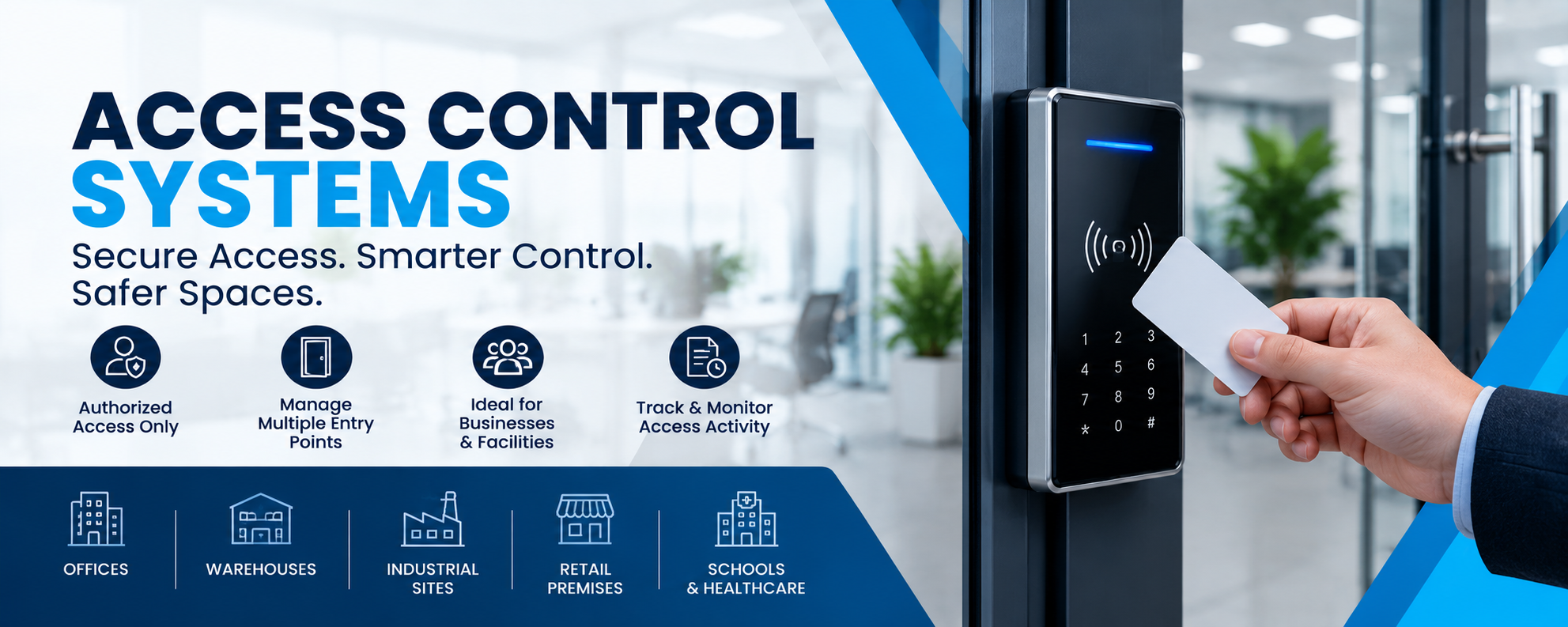
Protecting business premises from unauthorised access is an essential part of modern security management. Offices, warehouses, retail stores, industrial facilities, and commercial buildings often contain valuable equipment, sensitive information, and restricted areas that require reliable protection.
Traditional locks and keys provide basic security, but managing physical access becomes increasingly difficult as businesses grow. Lost keys, employee turnover, unauthorised duplication, and multiple entry points can create unnecessary security risks.
Access control systems provide a modern solution by allowing businesses to manage who can enter specific areas, when access is permitted, and how entry activity is recorded.
From keycard readers and PIN authentication to biometric identification and cloud based management, these systems help organisations improve security while making daily access more convenient.
This guide explains how access control systems work, their different types, benefits, installation requirements, costs, and important considerations for UK businesses.
Access control systems are electronic security solutions designed to restrict entry to authorised individuals while preventing unauthorised access to protected areas.
Instead of relying entirely on traditional keys, these systems use digital credentials such as access cards, PIN codes, biometric identification, or mobile applications.
When someone attempts to enter a restricted area, the system checks their credentials against configured access permissions.
If the credentials are valid, the system unlocks the door or activates the relevant entry mechanism. If access is denied, the door remains secured, and the system may record the unsuccessful attempt.
Modern systems can also provide centralised management, detailed access logs, remote administration, and integration with compatible security technologies.
Access control is particularly useful for businesses that require different security permissions for employees, contractors, visitors, and management personnel.
One of the main benefits of access control systems is reducing the risk of unauthorised individuals entering protected areas.
Businesses can restrict access to sensitive locations such as server rooms, stockrooms, warehouses, management offices, and equipment storage facilities.
Unlike traditional locks, electronic access systems allow administrators to remove individual credentials without replacing door hardware.
This provides greater flexibility when employees leave the organisation or access requirements change.
Access control technology helps businesses create safer working environments by managing movement through designated entry points.
For example, visitors may receive temporary access to reception and meeting areas without being permitted into operational or restricted spaces.
Industrial facilities can also use controlled entry to prevent unauthorised individuals from accessing potentially hazardous areas.
These arrangements help businesses manage security risks while supporting organised movement throughout their premises.
Managing physical keys across large properties can become complicated and time consuming.
Access control systems simplify administration by allowing authorised managers to issue, update, or deactivate credentials through a central platform.
Permissions can be assigned according to employee roles, departments, or working schedules.
This is particularly valuable for organisations with multiple locations, changing personnel, or frequent contractor visits.
Many modern access control systems provide activity records showing when credentials were used at designated entry points.
These logs can support security investigations, operational reviews, and access management.
However, credential records do not always prove the identity of the individual entering, particularly when cards or codes are shared.
Businesses should combine access control technology with appropriate security procedures to improve accountability.
Keycard systems use electronic cards containing compatible identification technology.
Employees present their assigned cards to a reader, which communicates with the access control system.
If permission is granted, the associated door unlocks.
Keycard access control is commonly used in offices, corporate buildings, hotels, and commercial facilities because credentials can be managed without issuing traditional keys.
Biometric systems verify individuals using physical characteristics such as fingerprints, facial features, or iris patterns.
These technologies can provide additional identity verification for highly restricted areas.
However, biometric access requires careful consideration of data protection obligations, user accessibility, and privacy rights.
Businesses should assess whether biometric processing is necessary and proportionate before adopting it.
PIN based systems allow authorised users to enter a numerical code through an electronic keypad.
They are often installed in small offices, storage rooms, staff entrances, and other controlled spaces.
Individual PINs can provide better accountability than shared codes, provided users follow appropriate security procedures.
Mobile access systems allow authorised individuals to use compatible smartphones as digital credentials.
Depending on the technology, access may be granted through an application, Bluetooth, or near field communication.
Mobile credentials can be convenient for businesses that regularly update employee permissions or manage multiple premises.
Centralised platforms allow security administrators to manage multiple doors, users, and locations through one system.
This helps organisations maintain consistent permissions and respond quickly when access requirements change.
Some cloud connected systems allow authorised managers to update permissions remotely.
Businesses can issue temporary credentials, revoke access, and review activity without physically attending the building.
Remote management should use secure authentication and carefully controlled administrative permissions.
Access control technology can restrict entry according to predefined schedules.
For example, cleaning contractors may receive access outside normal operating hours, while temporary workers may only enter during assigned shifts.
This reduces unnecessary access to protected areas.
Compatible access control platforms can integrate with CCTV cameras, intruder alarms, and building management technologies.
This allows businesses to associate entry events with relevant security information and support incident investigations.
Integration capabilities depend on the equipment and system configuration.
Professional installation begins with assessing the property and understanding its security requirements.
Installers review entrances, exits, existing locks, restricted areas, building occupancy, and daily operational activities.
The assessment should also consider emergency evacuation, fire safety, accessibility, and door compatibility.
After identifying security requirements, suitable equipment can be selected.
This may include card readers, electronic locks, control panels, biometric devices, access management software, and supporting network infrastructure.
The system should provide appropriate protection without creating unnecessary inconvenience for authorised users.
Technicians install electronic locking hardware and connect the relevant control equipment.
They then configure credentials, access permissions, schedules, and any agreed integrations.
Emergency exit arrangements must remain suitable, and electrically controlled doors must comply with applicable fire safety and building requirements.
After installation, technicians test entry permissions, locking mechanisms, access logs, and emergency operating procedures.
Security administrators should receive guidance on credential management, troubleshooting, and routine system checks.
Intraguard provides professional access control installation and management services for businesses and properties across the UK.
Its solutions are tailored to the security requirements of commercial, industrial, and other suitable premises.
Services include keycard and biometric access systems, remote management capabilities, access monitoring, system upgrades, and integration with compatible security technologies.
Intraguard also supports customised security planning to help organisations identify suitable entry points and access restrictions.
By combining electronic access technology with practical security management, businesses can develop systems that support safer premises and more efficient daily operations.
The cost of access control systems depends on the number of doors, equipment specifications, authentication technology, and installation complexity.
A basic single door keypad or card access system may cost several hundred pounds, while larger commercial installations can require several thousand pounds or more.
Biometric readers, centralised management platforms, complex wiring, and advanced integrations can increase overall project costs.
Businesses should also consider software subscriptions, replacement credentials, maintenance, and future system expansion.
A professional assessment and detailed quotation provide the most reliable basis for understanding installation expenses.
Businesses using access control systems must consider relevant safety and data protection requirements.
Where personal information is collected through access logs or identification systems, organisations must comply with applicable UK data protection legislation.
Biometric identification can involve special category personal data, requiring additional legal safeguards.
Businesses must also ensure controlled doors do not compromise emergency escape routes, accessibility requirements, or fire safety arrangements.
Professional planning is essential for balancing effective security with legal and operational responsibilities.
Regular maintenance helps access control systems operate reliably.
Door readers, electronic locks, controllers, and communication equipment should be checked periodically.
Businesses should review access permissions, remove inactive credentials, install relevant software updates, and investigate unusual system activity.
Battery backup arrangements and emergency release mechanisms should also be tested where applicable.
Proper maintenance helps reduce equipment failures and supports dependable access protection.
Choosing the right system depends on building size, occupancy, security risks, and operational needs.
Smaller offices may benefit from straightforward keypad or keycard systems, while larger commercial buildings may require networked access control with centralised administration.
Organisations should consider how frequently permissions change, whether remote management is necessary, and whether the system needs to integrate with existing CCTV or alarm equipment.
Working with experienced security professionals can help businesses select equipment that meets current requirements while allowing for future expansion.
The main purpose is to restrict access to authorised individuals while protecting buildings, employees, and valuable assets. These systems help organisations manage entry permissions and monitor access activity.
Common options include keycard systems, PIN keypads, biometric readers, mobile credentials, and centrally managed electronic access platforms.
Yes. Compatible access control systems can integrate with CCTV cameras and other security technologies to support monitoring and incident investigations.
Costs depend on the number of controlled doors, equipment specifications, and installation requirements. Small installations may cost hundreds of pounds, while complex commercial systems can cost several thousand pounds.
Biometric systems can provide strong identity verification when properly designed and managed. However, organisations must protect biometric information and comply with applicable data protection requirements.
Many systems can operate locally without an active internet connection. However, cloud based management and remote administration features generally require connectivity.
System behaviour depends on the locking hardware and backup power arrangements. Some doors remain locked from the outside while allowing safe exit, while others release according to their safety design.
Maintenance requirements vary according to equipment and usage. Regular inspections, permission reviews, software updates, and professional servicing help maintain reliable performance.
Access control systems are an essential part of modern property security, helping businesses prevent unauthorised entry, protect sensitive areas, and manage access more efficiently.
From keycard readers and PIN authentication to biometric technology and cloud based management, organisations can choose solutions that match their security requirements.
However, effective access control depends on professional installation, appropriate equipment, secure configuration, and regular maintenance.
For businesses across the UK, investing in a properly designed access control system can strengthen building protection, improve operational efficiency, and create a safer environment for employees, visitors, and valuable assets.