

Shockwave Therapy in Plano for Plantar Fasciitis and Stubborn Heel Pain: What I Want Every Runner and On-Your-Feet Worker to Know
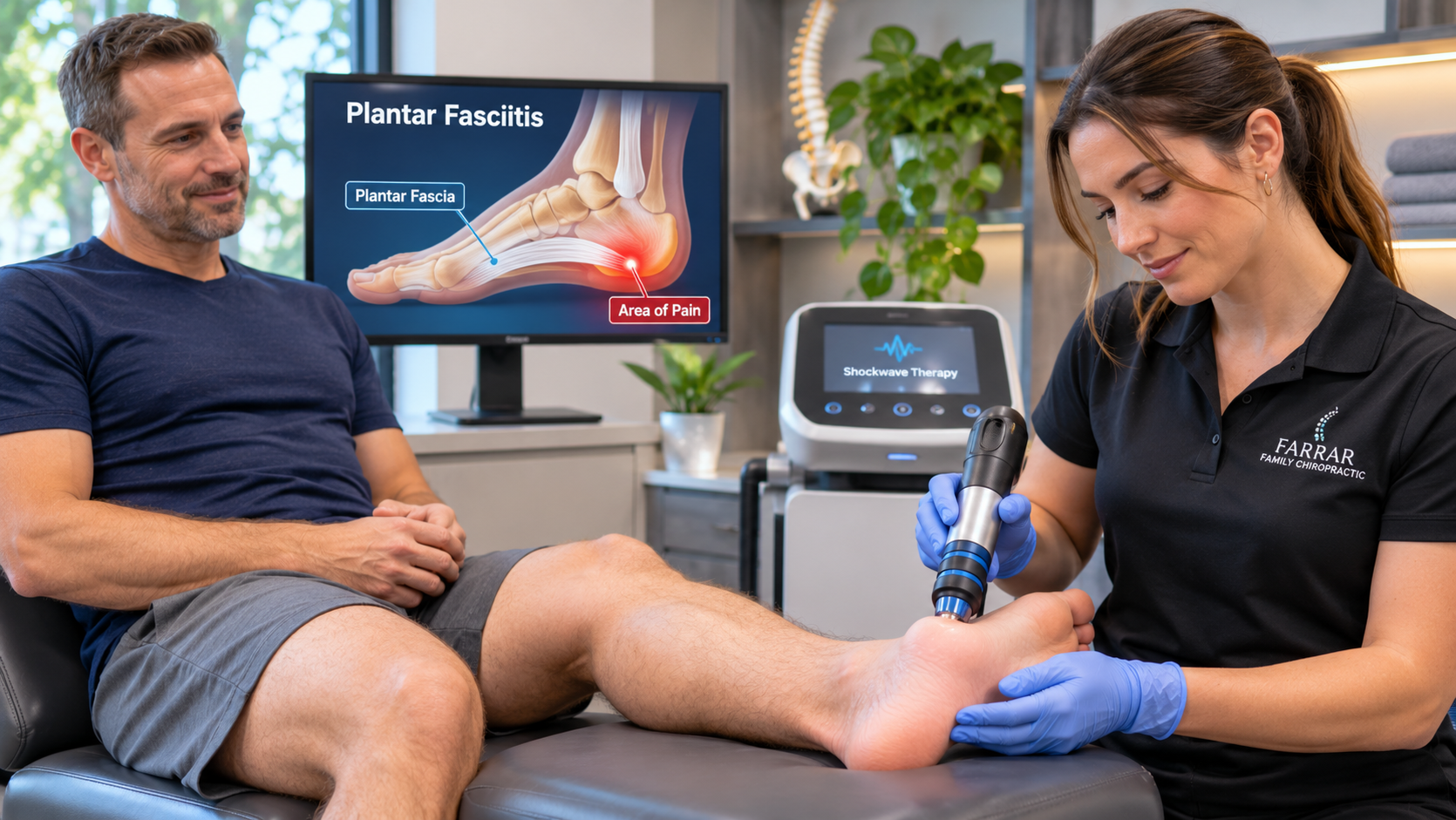
There is a very specific kind of pain that greets people with plantar fasciitis every morning. You swing your legs out of bed, put your foot on the floor, and the first step feels like stepping on a tack. It eases a bit as you walk around the kitchen, then comes roaring back after you sit through a long meeting or a drive home on the Dallas North Tollway. If that sounds like your life right now, you have probably already tried the usual list: new shoes, stretching, rolling a frozen water bottle under your arch, maybe a night splint. When those stop helping, many people around Collin County start asking about shockwave therapy in Plano and whether it is worth trying.
In my experience researching foot and soft tissue care, heel pain is one of the most frustrating problems people deal with, mostly because it touches everything. It changes how you walk, whether you can exercise, and even how patient you feel by the end of the day. It also tends to drag on for months, which makes people wonder whether anything will ever actually fix it.
This article is my attempt to explain plantar fasciitis in plain language, show where focused shockwave therapy fits, and help you figure out whether it makes sense for your feet. I am not going to promise a miracle. I am going to walk you through how the treatment works, who it tends to suit, what the sessions are like, and what you can do at home to help it work.
What Plantar Fasciitis Actually Is
The plantar fascia is a thick band of tissue that runs along the bottom of your foot, from your heel bone to the base of your toes. It supports your arch and acts a little like a bowstring every time you take a step, absorbing load and springing you forward.
When that tissue is stressed over and over, faster than it can recover, it becomes irritated and painful, usually right where it attaches to the heel. The American Academy of Orthopaedic Surgeons explains the causes and risk factors of plantar fasciitis and notes that it is most common among people aged 40 to 60. The same page lists new or increased activity and obesity among the factors that can make someone more prone to it, and explains that most people who have heel spurs do not actually have heel pain.
That last point surprises a lot of people. If an X-ray shows a heel spur, it is easy to assume the spur is the villain. In reality, the irritated fascia is usually the source of the pain, and the spur is often just along for the ride.
Common signs of plantar fasciitis
- Sharp or stabbing pain at the bottom of the heel
- Pain that is worst with the first steps in the morning
- Pain that returns after sitting or resting for a while
- Tenderness just in front of the heel bone
- Tight calves that make it hard to bring your toes toward your shin
- Pain that flares after long periods of standing or after a run
Who tends to get it
In my experience, the stories cluster around a few groups:
- Runners and walkers who increased mileage quickly or switched surfaces
- People who stand all day, such as teachers, nurses, retail staff and warehouse workers
- Weekend athletes who go from a quiet week to a hard pickleball or soccer session
- People who recently gained weight or changed their footwear
- Anyone with tight calves or very high or very flat arches
Why Heel Pain Becomes Chronic
Here is the part I wish more people understood early. Plantar fasciitis often starts as an irritation, but if it goes on for months, the tissue can shift into a more stubborn, degenerative state. Instead of a simple flare that settles with rest, you end up with tissue that has poor circulation, thickened areas and disorganized repair. That is one reason why rest alone stops working after a certain point.
Think of it like a construction site where the crew keeps getting interrupted. Every time the tissue starts to heal, another long shift on your feet or another run sets the work back. Eventually, the healing process stalls.
This is exactly the stage where people start looking into regenerative options, and where shockwave therapy in Plano comes up in conversation.
How Focused Shockwave Therapy Works
Shockwave therapy uses acoustic energy, essentially high-energy sound waves, delivered into injured tissue through a handheld applicator. Farrar Family Chiropractic describes its Pulse Wave system as a non-invasive, regenerative treatment that delivers focused acoustic energy into injured tissue, with adjustable depth so the provider can control how deep the energy reaches.
According to the clinic's page, the therapy is designed to:
- Break up scar tissue and adhesions that can build up in chronically irritated tissue
- Stimulate circulation and nutrient delivery to an area that tends to have limited blood flow
- Activate cellular repair mechanisms so the body restarts a stalled healing process
- Reduce chronic inflammation that keeps the area sensitive
- Improve tissue mobility and flexibility so the fascia can glide and stretch better
- Accelerate recovery from stubborn injuries that have stopped improving
I like to explain it as a reset button for tissue that has gotten stuck. The goal is not to numb the pain for a few hours. The goal is to encourage the body to pick up the healing work it abandoned.
Focused versus radial shockwave
You may see two kinds of shockwave mentioned online. Farrar's FAQ explains the difference clearly: focused shockwave targets a specific depth and location, while radial shockwave spreads energy over a broader area and may not penetrate as deeply. For a problem like plantar fasciitis, where the irritated tissue sits at a particular spot near the heel bone, the ability to aim the energy is a big part of the appeal.
What a Session Is Like
People who are new to shockwave therapy in Plano are often nervous before their first appointment because the word "shockwave" sounds dramatic. In reality, sessions are short and fairly simple.
Here is what Farrar describes:
- A handheld applicator is placed against the treatment area.
- Focused pulse waves are delivered into the affected tissue.
- Sessions typically last 10 to 15 minutes.
- Most patients require no downtime after treatment.
You will feel the pulses as a tapping or pulsing sensation. The area being treated is often tender, so it may feel uncomfortable at times, especially over the most irritated spot. The provider can adjust the settings as you go. Speak up if anything feels like too much.
Afterward, most people go straight back to work or home. In my experience reading patient guidance from many clinics, some people notice the area feels a little achy for a day or so, which is something to mention at your next visit.
What Happens at Your First Visit
A good first visit is mostly about figuring out exactly what is going on. Before anyone picks up an applicator, you should expect a conversation and an exam that answer a few key questions.
Your history. When did the pain start? Did you change shoes, training or work hours around that time? What makes it better or worse? What have you already tried? Being specific here saves time.
Your exam. The provider will usually press along the bottom of the heel and arch, check how far your ankle bends, look at your calf flexibility, and watch how you stand and walk. They may also check your knees and hips, since problems higher up can change how your foot lands.
Ruling out other causes. Heel pain can come from a stress fracture, a pinched nerve, arthritis or a problem with the Achilles tendon. If something does not add up, your provider may refer you for imaging or to a medical doctor.
The plan. Once the picture is clear, you should hear whether shockwave therapy in Plano is recommended for you, how many sessions are likely, what else will be part of your care, and what you can do at home.
My advice: write down your answers to the history questions before the appointment. People in pain tend to forget details, and those details often point straight to the cause.
How Many Sessions You Might Need
The clinic's FAQ states that most people see improvement with the first session and that healing requires 6 to 12 treatments, with a plan set around your individual needs. The page also notes that the number of sessions depends on the condition, how severe the symptoms are, and how the body responds.
With plantar fasciitis and shockwave therapy in Plano specifically, I always remind people that tissue remodeling takes time. You may feel early changes, but the deeper healing continues over the following weeks. That is why the home program and footwear changes matter so much between sessions.
Who Shockwave Therapy Tends to Suit
Based on what Farrar lists, the people most likely to benefit from shockwave therapy in Plano include:
- Active adults with persistent injuries or chronic pain
- Athletes dealing with overuse injuries or tendon strain
- Workers with repetitive strain injuries
- People with chronic soft tissue pain who have already tried rest, stretching or conservative care
- Anyone looking for a non-invasive way to support healing
For heel pain specifically, I would add a few signs that someone may be a good fit:
- Heel pain that has lasted more than a few months
- Pain that improved a little with home care and then plateaued
- A clear diagnosis of plantar fasciitis or a related soft tissue problem
- A strong desire to avoid repeated injections or surgery
- Willingness to follow a home program between visits
When to get checked by a medical doctor first
Not all heel pain is plantar fasciitis. Stress fractures, nerve entrapment, arthritis and other conditions can mimic it. Seek medical care promptly if you notice severe swelling, pain after a fall or impact, numbness or burning that spreads, a heel that is red and hot, fever, or pain that keeps you from bearing weight at all.
Other Foot and Lower Leg Problems It May Help
Farrar's shockwave page lists several foot and ankle conditions beyond plantar fasciitis, including:
- Achilles tendonitis and tendinopathy, the stubborn pain at the back of the heel or lower calf
- Shin splints, the aching along the shin that often hits runners
- Non-acute stress fractures, which should always be evaluated first
- Chronic muscle tightness in the calves and lower leg
Because these problems often travel together, especially in runners, a provider offering shockwave therapy in Plano will usually look at the whole lower leg, not just the spot that hurts most.
Why Shockwave Works Best as Part of a Plan
One thing I have seen again and again: people who expect a device to do all the work are usually the ones who end up disappointed. Shockwave can kickstart healing, but it cannot change how you walk, how tight your calves are, or how many hours you stand on concrete.
Farrar's page says shockwave is rarely used alone and is combined with chiropractic care, rehabilitation and other therapies when appropriate. For heel pain, that combination often includes corrective exercise and rehabilitation in Plano to strengthen the foot and calf, plus attention to how the ankle, knee and hip move.
Here is how I think the pieces fit together:
- Shockwave restarts healing in tissue that has stalled.
- Rehab exercises build strength in the foot, calf and hip so the fascia is not overloaded.
- Mobility work loosens tight calves and ankles.
- Footwear and load changes reduce the daily strain that keeps reloading the problem.
- Joint care addresses stiffness higher up the chain that changes how you land.
A Note on Combining Shockwave With Other Care
Many people with heel pain also have something else going on, such as a stiff low back, a nagging knee, or hips that do not move well after years of desk work. That matters, because the body works as a chain. A provider who offers shockwave therapy in Plano should look beyond your heel and ask how the rest of your body is moving. Sometimes the fastest way to calm a stubborn heel is to fix the way your ankle, knee or hip handles each step. When the whole chain moves better, the fascia stops taking all the strain, and the healing work started by each shockwave session has a better chance to stick.
Daily Habits That Help Your Heel Heal
Whether or not you choose shockwave therapy in Plano, these habits are worth building. They are simple, but they make a real difference.
Morning routine
- Before getting out of bed, gently pull your toes toward you with a towel or strap to stretch the arch and calf.
- Avoid walking barefoot on hard floors first thing.
- Keep supportive slippers or shoes next to the bed.
During the day
- Break up long periods of standing with short walks or by shifting your weight.
- If you sit for long stretches, gently move your ankles before standing up.
- Use a cushioned mat if you stand in one spot at work.
Footwear
- Choose shoes with good arch support and a cushioned heel.
- Replace worn-out running shoes before they collapse.
- Avoid going barefoot or wearing flat, unsupportive sandals for long walks.
Training load
- Increase running or walking distance gradually.
- Cross-train with cycling or swimming during flare-ups.
- Avoid sudden jumps in hill work or speed sessions.
Strength and mobility
- Calf raises, done slowly and with control, build calf and foot strength.
- Toe curls and arch-strengthening drills help the small muscles of the foot.
- Calf stretches against a wall, held gently, ease tension on the fascia.
Your provider should tailor these to your situation, but the theme is the same: reduce the load that keeps irritating the tissue and build the capacity to handle it.
Common Mistakes That Keep Heel Pain Around
Before anyone starts shockwave therapy in Plano, I like to talk through the habits that quietly keep plantar fasciitis going. These are the ones I see most often:
- Pushing through the pain. Running through sharp heel pain week after week tends to keep the tissue irritated.
- Resting completely, then jumping back in. Total rest followed by a sudden return to full training often triggers another flare.
- Wearing worn-out shoes. Running shoes and work shoes lose support long before they look worn.
- Only treating the foot. Tight calves, weak hips and stiff ankles all change how load reaches the heel.
- Stopping home exercises once it feels better. The strength you build is what protects you from the next flare.
- Waiting too long. The longer heel pain lingers, the more stubborn the tissue can become.
Avoiding these mistakes will not fix plantar fasciitis on its own, but it will help any treatment you choose, including shockwave therapy in Plano, work far better.
Heel Pain and the Plano Lifestyle
There is a reason heel pain is such a common complaint around here. Collin County is full of active people who walk the trails at Arbor Hills, play pickleball on weekends, run with neighborhood groups, and coach their kids' soccer teams. It is also full of people who spend long shifts on their feet in hospitals, schools, restaurants and retail stores along the busy corridors of Plano and McKinney.
Both groups tend to load their feet hard, often on hard surfaces, and often without much time to recover. That combination is a recipe for plantar fasciitis. If that describes you, it does not mean you need to give up the things you enjoy. It means your feet need a plan, and for some people with stubborn pain, shockwave therapy in Plano becomes part of that plan.
A Realistic Timeline
People often expect heel pain to vanish quickly once treatment starts. In my experience, recovery looks more like a slow climb with a few bumps along the way:
Early weeks. You may notice the first steps in the morning are a little less sharp, or that pain settles faster after sitting.
Middle weeks. Pain becomes less frequent. You can stand or walk longer before it starts. Some activities that used to hurt become comfortable again.
Later weeks. The focus shifts to strength, gradual return to running or sport, and preventing the next flare.
Good days and harder days are both normal. Watch the trend over several weeks, not each individual morning.
How Shockwave Compares With Other Heel Pain Options
To decide whether shockwave therapy in Plano is the right next step, it helps to see where it sits among other options.
Rest, ice and stretching. These are the starting point and help many people early on. When pain has lasted months, they often stop being enough on their own.
Orthotics and night splints. These can reduce strain on the fascia and are worth discussing. They work best alongside other care.
Steroid injections. Given by medical doctors, injections can calm pain for some people. They are a medical procedure with their own considerations, so they should be discussed with a physician.
Surgery. Surgery is usually reserved for people who have not improved after a long period of conservative care. Most people never need it.
Shockwave sits in the non-invasive category. For many people with chronic plantar fasciitis, it is a reasonable step to explore after basic home care has stopped helping and before more invasive options.
Questions to Ask Before You Start
If you book an evaluation for shockwave therapy in Plano, these questions will help you get clear answers:
- Is my heel pain definitely plantar fasciitis, or could it be something else?
- Why do you think shockwave is a good fit for me?
- How many sessions do you expect I will need, and how often?
- What else will be part of my plan?
- What should I change at home, at work or in training?
- How will we measure progress?
- What happens if I am not improving?
- What will the full plan cost?
A provider who answers these clearly and patiently is usually one you can trust.
Where to Get Evaluated Locally
Farrar Family Chiropractic has two offices that offer focused shockwave therapy. The Plano office is at 6300 Stonewood Dr, Suite 100, Plano, TX 75024, and the McKinney office is at 8400 Stacy Rd, Suite 400, McKinney, TX 75070. Both list hours Monday to Thursday from 8 am to 6 pm and Friday from 8 am to 12 pm.
My Honest Take on Shockwave Therapy in Plano
After spending a lot of time studying how people recover from heel pain, here is where I land. Shockwave therapy in Plano is not a magic fix, and it will not undo months of overload in a single visit. But for someone with chronic plantar fasciitis or Achilles pain that has stalled despite rest and stretching, it is a sensible, non-invasive option worth a serious conversation.
The best first step is a proper evaluation. Make sure you know what is causing your pain, understand the plan, and commit to the home habits that help the tissue heal. If shockwave fits, you will start with clear goals. If it does not, you will know what to try instead.
Frequently Asked Questions
1. Does shockwave therapy in Plano hurt?
You will feel a tapping or pulsing sensation, and it can feel uncomfortable over very tender spots. Providers can adjust the settings during the session. Farrar describes treatments as generally well tolerated.
2. Can shockwave therapy help plantar fasciitis?
Plantar fasciitis is one of the conditions Farrar lists for focused shockwave therapy. It is most often considered when heel pain has lasted for months and has not improved with rest, stretching or other conservative care.
3. How long is each shockwave session?
Farrar's clinic lists sessions at 10 to 15 minutes. Your total visit may be longer if other care, like rehab exercises or adjustments, is included in the same appointment.
4. How many shockwave treatments will I need?
The clinic's FAQ says healing requires 6 to 12 treatments, with a personalized plan. The exact number depends on your condition, how severe it is and how your body responds.
5. Is there downtime after shockwave therapy?
Farrar states that most patients require no downtime after treatment. Many people return to work or daily activities right away, though you may be advised to ease off hard training for a short period.
6. What is the difference between focused and radial shockwave?
Focused shockwave targets a specific depth and location in the tissue. Radial shockwave spreads energy over a broader area and may not penetrate as deeply, according to Farrar's explanation.
7. Can shockwave therapy help Achilles pain?
Achilles tendonitis and tendinopathy are listed among the foot and ankle conditions Farrar evaluates for shockwave therapy. A proper exam is needed first to rule out a tear or other injury.
8. Do heel spurs need to be removed to fix heel pain?
Usually not. The American Academy of Orthopaedic Surgeons explains that most people with heel spurs do not have heel pain, and plantar fasciitis pain can be treated without removing the spur.
9. Should I keep running during shockwave treatment?
It depends on your symptoms. Many people reduce mileage or cross-train during care. Your provider should give you clear guidance on training load based on your exam.
10. When should heel pain be checked by a medical doctor?
See a medical doctor promptly for heel pain after a fall or impact, severe swelling, redness and heat, fever, spreading numbness or burning, or pain that prevents you from bearing weight.