

Pediatric Chiropractic Care in Carlsbad: An Age-by-Age Guide for Parents, From Newborns to Teens
Pediatric chiropractic care in Carlsbad is gentle, hands-on care adapted for babies, children and teenagers. It looks very different from adult chiropractic. The pressure is much lighter, the visits are shorter and the focus changes with your child's age. A newborn visit is mostly gentle assessment and fingertip pressure. A teen visit can look a lot like sports care for a young athlete.
I wrote this guide for parents who are curious but cautious. Maybe a friend mentioned that her baby saw a chiropractor. Maybe your 9-year-old keeps complaining about a sore neck after school, or your teen has started getting back pain from soccer. In my experience, parents make better decisions when they know what a visit actually looks like at each age, what chiropractic care can realistically help with and which symptoms belong with the pediatrician first.
So below, I walk through the basics, then each age group in turn: infants, toddlers, school-aged children and teenagers. I finish with safety, how to choose a pediatric chiropractor and the questions parents ask most.
What pediatric chiropractic care is
Pediatric chiropractic care is chiropractic care adapted for growing bodies. A licensed chiropractor checks how a child's spine, joints and muscles move, looks at posture and movement and uses gentle, age-appropriate techniques where they are appropriate.
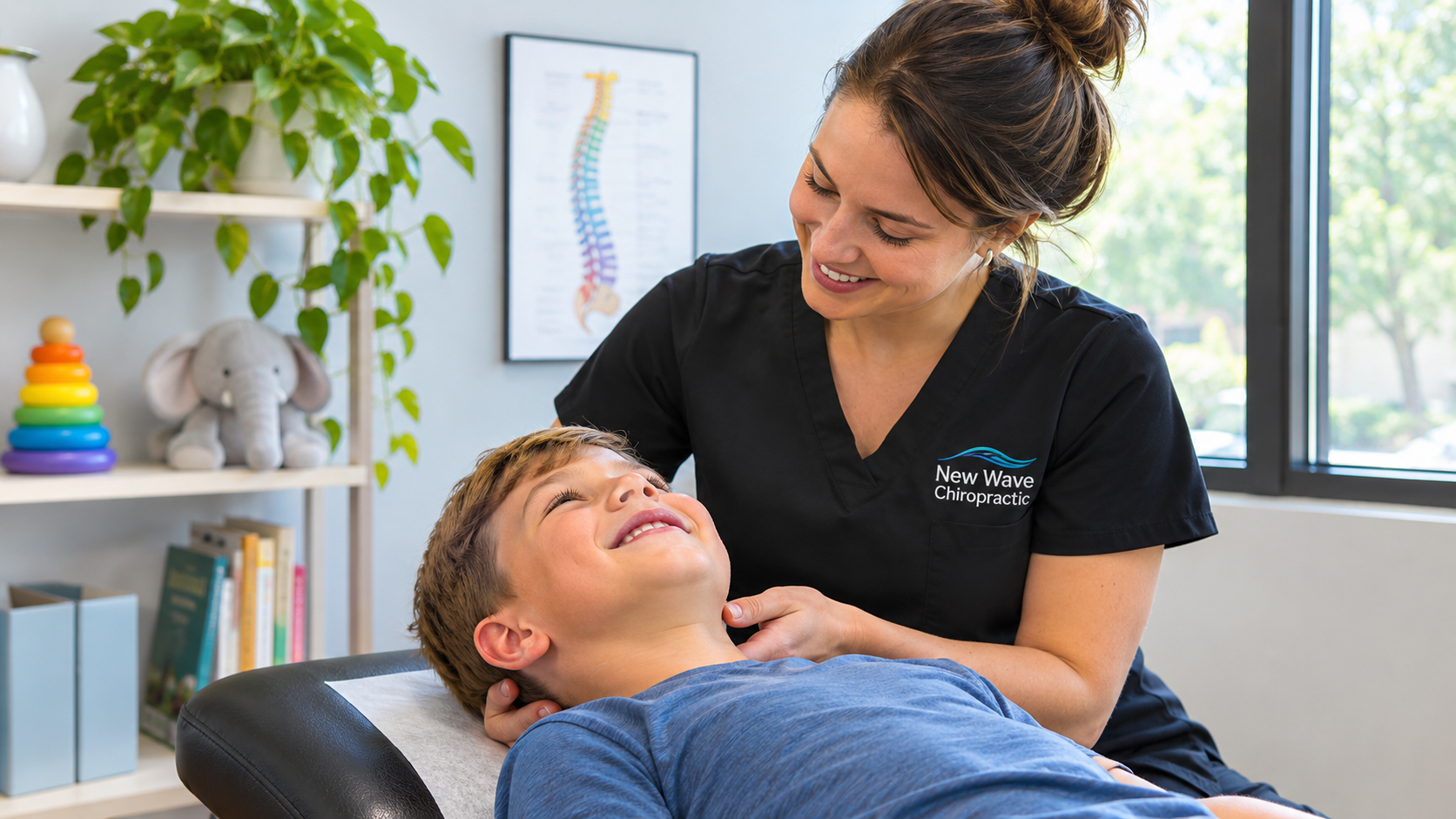
The biggest difference from adult care is force. Children's spines are more flexible, their bones are still growing and babies in particular are very small. A pediatric adjustment uses light, precise pressure. New Wave Chiropractic in Carlsbad, for example, compares the pressure used with infants to checking the ripeness of a peach. Many techniques use only fingertip pressure, and some use small handheld instruments.
Visits are also built around the child. Toddlers may be checked while sitting on a parent's lap. Babies are often examined in a parent's arms. Older children and teens are treated more like adults, though still with gentler methods.
If you want to see how one local clinic describes its approach, the page on pediatric chiropractic care in Carlsbad at New Wave Chiropractic explains how care is adapted for infants, toddlers, school-aged children and teens, and what a family visit includes.
How common is chiropractic care for kids?
More common than many parents realize. Survey data cited by the U.S. National Center for Complementary and Integrative Health shows that around 3.5% of U.S. children saw a chiropractor in 2012 and 3.4% in 2017, with older children (ages 12 to 17) more likely to go than younger ones. A 2025 review of evidence and safety of chiropractic care in children, published in Clinical Pediatrics, notes that chiropractic is one of the most commonly used complementary therapies among children and adolescents.
That same review is honest about the research: data are limited, findings vary and there is often no definite conclusion. I think every parent deserves to know that before booking. It does not mean chiropractic care has no place. It means you should go in with clear, realistic goals and keep your pediatrician in the loop.
Infants (birth to 12 months)
The first year is a period of huge change. Babies go from lying still to rolling, sitting, crawling and sometimes walking, all in a few months.
Why parents bring babies in
Parents usually come in with practical concerns, such as:
- A baby who always turns their head one way or has a tight neck (torticollis)
- A flat spot developing on one side of the head
- Difficulty latching or feeding more comfortably on one side
- Fussiness, gas or trouble settling
- A long or difficult birth, including assisted delivery
- General peace of mind after birth
Of these, positional and movement concerns, like a baby favoring one side, are where gentle hands-on care makes the most sense. For colic, reflux and constipation, the research on chiropractic care is limited and mixed. Some parents feel it helps. Others notice no change. I would treat those as conversations with your pediatrician first.
What a visit looks like
A chiropractic visit for a baby is calm and short. Expect:
- A detailed history of the pregnancy, birth, feeding and sleep
- A gentle check of head turning, neck movement and how your baby lies and moves
- Light fingertip pressure on tight or restricted areas
- Your baby staying in your arms or on a soft surface the whole time
- Advice on tummy time, positioning and alternating feeding and carrying sides
Many babies stay relaxed or even sleep through the visit.
What to clear with your pediatrician
Talk to your pediatrician before any chiropractic visit for a young baby, and get medical care first for:
- Fever in a baby under three months
- Poor feeding, fewer wet diapers or signs of dehydration
- Vomiting that is forceful, green or bloody
- A baby who is unusually floppy, stiff, sleepy or hard to wake
- Any fall or injury
These need a medical evaluation, not a chiropractic visit.
Toddlers (1 to 3 years)
Toddlers are busy. They are learning to walk, run, climb and fall, often many times a day.
Why parents bring toddlers in
- Bumps and tumbles while learning to walk
- An unusual walking pattern or favoring one leg
- Posture habits, such as always sitting in a "W" position
- Neck or back stiffness after a fall
- Sleep difficulties linked to discomfort
- Peace of mind during a period of fast growth
What a visit looks like
Toddler visits are flexible and playful. A good pediatric chiropractor will:
- Let your child explore and get comfortable first
- Watch how they walk, squat, climb and play
- Check the spine and joints, often while your child sits on your lap
- Use very gentle pressure or a small instrument
- Keep the visit short, since toddlers have limited patience
Distraction helps. Many offices keep toys and books around, and some chiropractors adjust while a toddler is playing.
What to clear with your pediatrician
A limp that does not go away, a fall followed by refusal to walk, swelling, fever or a child who seems unwell needs a medical evaluation first. Fractures in toddlers can be subtle, so do not assume a limp is just a bump.
School-aged children (4 to 12 years)
Once kids start school, a new set of physical demands shows up: heavy backpacks, long hours sitting at a desk, organized sports and screens.
Why parents bring school-aged children in
- Neck, back or shoulder pain, often after school or sports
- Headaches, especially tension-type headaches
- Posture concerns, like rounded shoulders or forward head posture
- Minor sports injuries, sprains and strains
- Growing pains in the legs
- Scoliosis concerns noticed by a parent or school screening
For musculoskeletal complaints such as back and neck pain, posture problems and minor sports strains, chiropractic care fits more naturally. The New Wave Chiropractic page also lists concerns such as ADHD, anxiety, ear infections and bedwetting. For those, the evidence for chiropractic care is limited, and they should always be managed with your pediatrician and other specialists.
What a visit looks like
For school-aged children, a visit looks more like an adult visit, with gentler techniques:
- A history that includes school, sports, sleep and screen time
- A posture check and movement tests
- A check of backpack habits and how your child sits to do homework
- Gentle adjustments and soft tissue work where appropriate
- Simple exercises and posture habits to practice at home
I like when a chiropractor talks directly to the child at this age. Kids understand more than adults give them credit for, and they are far more likely to follow advice they understand.
What to clear with your pediatrician
Back pain in young children is less common than in adults and deserves a closer look. See your pediatrician first for back pain with fever, night pain that wakes your child, weight loss, numbness or weakness, pain after a significant injury or pain that lasts more than a few weeks. Scoliosis concerns should also be checked by a pediatrician or orthopedic specialist, who can arrange imaging and monitoring.
Teenagers (13 to 18 years)
Teens are the age group most likely to see a chiropractor, and teen visits make up a big share of pediatric chiropractic care in Carlsbad and elsewhere. It is easy to see why. Growth spurts, competitive sports, heavy school workloads and hours on phones and laptops all load the spine.
Why parents bring teens in
- Low back and neck pain
- Sports injuries and recovery
- Posture changes from screen use ("tech neck")
- Tension headaches
- Pain during growth spurts
- Menstrual cramps or pelvic discomfort
- Scoliosis monitoring alongside medical care
What a visit looks like
A teen visit is very close to adult chiropractic care, adjusted for a growing body:
- A full history, including sport, training load, school stress and sleep
- Posture and movement assessments, including sport-specific movements
- Adjustments, soft tissue work and mobility work
- Exercise programs for strength and flexibility
- Advice on study setup, phone use and recovery
Teens often want privacy and some say in their care. A good pediatric chiropractor will talk to your teen directly, explain their reasoning and respect their comfort.
What to clear with your pediatrician
Teens should see a medical doctor first for back pain with fever, weight loss, night pain, numbness or weakness, bladder or bowel changes, or after a major injury such as a hard fall or car accident. Sudden severe headaches or headaches with vision changes also need medical attention.
What every first visit should include
Whatever your child's age, the first visit for pediatric chiropractic care in Carlsbad should follow a clear structure. Expect:
- A thorough history. Birth history, development, illnesses, injuries, medications and current concerns.
- A conversation about goals. What you have noticed, what worries you and what you hope care will help with.
- An age-appropriate exam. Posture, movement, gentle joint checks and, for older children, simple neurological tests like reflexes.
- An explanation. What the chiropractor found, in plain words.
- A plan or a referral. A clear plan with a way to measure progress, or a referral to your pediatrician if something needs medical attention.
Imaging is not routine for children. A careful chiropractor orders X-rays only when the history or exam suggests it would change the plan. New Wave Chiropractic, for instance, says it uses digital imaging only when clinically appropriate and shares findings in a personalized video report before recommending care.
If you want to see how one local office runs this process step by step, New Wave Chiropractic explains what to expect at your first chiropractic visit in Carlsbad.
How to prepare your child for a first visit
A little preparation makes the first appointment easier for everyone, especially with toddlers and anxious kids.
Pick the right time. Book around naps and meals for babies and toddlers. A tired or hungry child is harder to examine.
Explain it simply. For young children, something like "the doctor is going to check how your back and neck move" is enough. Avoid words like "crack" or "pop," which can sound scary.
Bring comfort items. A favorite toy, blanket or snack helps a toddler settle.
Write down your questions. Parents often forget half of what they wanted to ask once a visit starts.
Bring records. Birth details, any imaging and notes from your pediatrician help the chiropractor build a full picture.
Stay close. You should be allowed to hold your baby or stay in the room with your child for the whole visit. If an office asks you to leave a young child alone, that is a red flag.
For older kids and teens, let them lead part of the conversation. When children help describe what hurts and what they want to get back to, pediatric chiropractic care in Carlsbad tends to feel like something done with them, not to them.
Signs it may be worth a check
Every child is different, but these are common reasons parents start looking into pediatric chiropractic care in Carlsbad:
- Your baby strongly prefers turning their head one way
- Your child often complains of neck, back or shoulder pain after school
- Your teen gets frequent tension headaches during exam season
- Your child had a tumble from a bike, trampoline or playground and seems stiff, once a medical cause has been ruled out
- A sport is causing recurring aches, such as low back pain in gymnastics or shoulder pain in swimming
- You notice uneven shoulders or posture changes during a growth spurt (after a pediatrician checks for scoliosis)
None of these automatically means your child needs chiropractic care. They are reasons to ask questions, starting with your pediatrician.
Is pediatric chiropractic care in Carlsbad safe?
Safety is the first question most parents ask, and it deserves a straight answer.
Reviews of published cases have found that serious adverse events in infants and children receiving chiropractic and other manual therapies are rare. A 2015 review in the Journal of Manipulative and Physiological Therapeutics also found that many of those rare cases involved an underlying condition that had not been identified. At the same time, a 2020 rapid review concluded that the true risk of moderate and severe adverse events in children under 10 is unknown, because good data are lacking.
My honest takeaway is this:
- Gentle, age-appropriate techniques from a trained pediatric chiropractor are generally considered low risk.
- The biggest safety issue is missing a medical problem. A careful history and exam, and quick referral when something does not add up, matter more than anything else.
- Chiropractic care should never replace medical care for illness, fever, infection or developmental concerns.
- Your pediatrician should know about any chiropractic care your child receives.
Mild soreness or fussiness after a visit can happen and usually settles within a day. Call your pediatrician if your child seems unwell, develops a fever or shows any new weakness, numbness or unusual sleepiness.
How to choose a pediatric chiropractor in Carlsbad
Not every chiropractor works with children regularly, so it pays to be choosy about pediatric chiropractic care in Carlsbad. These are the things I would look for.
Pediatric training and experience. Ask about specific training in pediatric care and how many children they see each week. Membership in a pediatric chiropractic association shows interest in the area, but experience matters more.
Age-appropriate technique. Ask how they adapt care for babies, toddlers and teens. You should hear words like light pressure, fingertip contact and instrument-assisted care.
A thorough history and exam. If a chiropractor adjusts your child without a full history and exam, walk away.
Honest communication. Be cautious of anyone who promises to fix colic, ear infections, ADHD or other conditions. Good chiropractors describe goals, not guarantees.
Respect for your pediatrician. A good pediatric chiropractor welcomes coordination with your child's doctor and refers out when needed.
Child-friendly environment. A calm space, patience and permission for a parent to stay with the child at all times.
How often will my child need care?
There is no set schedule. It depends on your child's age, the concern and how they respond. Some families come for a single check after birth or after a fall. Others come for a few weeks while a sports strain settles, then stop. Some choose occasional wellness visits.
The right plan should be explained clearly, with check-ins along the way. If you are not seeing the change you hoped for after a few weeks, say so. The plan can change, or another provider may be a better fit for that concern. Children should never be signed up for long prepaid care plans on the first visit.
Simple habits that support a growing spine
Whatever their age, a few everyday habits help kids' bodies more than any single visit.
For babies: Regular supervised tummy time, alternating sides for feeding and carrying, and limiting long stretches in car seats and swings when not traveling.
For toddlers: Plenty of free movement, barefoot play on safe surfaces and gentle encouragement to sit in different positions.
For school-aged kids: A light, well-fitted backpack worn on both shoulders, a homework setup where their feet touch the floor and active play every day.
For teens: Breaks from screens, a study setup with the screen at eye level, enough sleep and sensible training loads in sport.
Carlsbad makes the active part easy. Beach days, bike rides and playgrounds are some of the best "therapy" a growing body can get.
What chiropractic care is not
It helps to be clear about the limits too. Chiropractic care is not a replacement for vaccines, antibiotics when they are needed, developmental assessments, speech or occupational therapy, or mental health care. It does not treat infections, and it cannot diagnose conditions such as ADHD or autism.
When I see a clinic list a long range of childhood conditions, I read that as "conditions families come in with," not "conditions chiropractic care treats." The best pediatric chiropractors I have come across are the first to say when something is outside their scope, and they are quick to send a family back to the pediatrician. That honesty is one of the clearest signs you are in good hands.
My final thoughts
Pediatric chiropractic care in Carlsbad can be a gentle, reasonable option for families, especially for musculoskeletal concerns such as neck and back pain, posture problems and sports strains in older children and teens. For babies, it can offer a careful check of movement and positioning. For many other conditions, the research is limited, so keep expectations realistic and your pediatrician involved.
Choose a chiropractor with real pediatric experience, who examines carefully, explains clearly, uses age-appropriate techniques and works alongside your child's doctor. Trust your instincts as a parent. If something does not feel right, ask questions, and if you are not getting clear answers, look elsewhere.
Frequently Asked Questions
1. At what age can a child see a chiropractor?
Chiropractors see children of all ages, including newborns, using techniques adapted for each stage. For babies, care uses very light fingertip pressure. Talk to your pediatrician first, especially for young infants, and make sure the chiropractor has specific pediatric training and experience before the first visit.
2. Is chiropractic care safe for babies?
Reviews of published cases suggest serious adverse events in infants and children are rare, but good data on risk are limited. Safety depends heavily on gentle, age-appropriate technique and a careful history and exam. Always involve your pediatrician, and seek medical care first for fever, feeding problems or any baby who seems unwell.
3. Does chiropractic care hurt children?
It should not. Pediatric techniques use far less pressure than adult adjustments, often just fingertip pressure. Many babies stay relaxed or sleep through visits. Older children may feel pressure or a stretch. Mild soreness afterward can happen and usually settles within a day.
4. Can chiropractic care help with colic?
The research on chiropractic care for infant colic is limited and mixed, and reviews have not found convincing evidence that it shortens colic. Some parents feel it helps. Talk with your pediatrician first, since persistent crying can have medical causes that need treatment.
5. Do kids need to be in pain to see a chiropractor?
No. Some families bring children in for posture checks, sports concerns or a check after a fall. However, there is limited evidence that routine chiropractic visits benefit healthy children with no symptoms. Discuss your goals with the chiropractor and decide together whether care is worthwhile.
6. Will my child be adjusted the same way as an adult?
No. Children are adjusted with much less force than adults. Babies and toddlers receive very gentle fingertip pressure or instrument-assisted care. Teens may receive care closer to adult techniques, but still adapted for a growing body. A good pediatric chiropractor will explain each step before doing it.
7. Can a chiropractor help with my child's posture?
A chiropractor can assess posture, ease stiffness in the neck and upper back and teach exercises and habits that support better posture. Changes in daily habits, such as backpack use, screen time and study setup, usually make the biggest difference. Scoliosis concerns should also be checked by a medical doctor.
8. Should I tell my pediatrician about chiropractic care?
Yes. Your pediatrician knows your child's full medical history and can tell you if anything calls for caution. Keeping both providers informed helps make sure nothing is missed. A good pediatric chiropractor will ask about your pediatrician and coordinate with them when needed.
9. How long is a pediatric chiropractic visit?
First visits usually take longer, often 30 to 60 minutes, because they include a full history and exam. Follow-up visits are often much shorter, especially for babies and toddlers. Ask the clinic when you book so you can plan around naps, school and activities.
10. Can teenagers see a chiropractor for sports injuries?
Yes. Many teens see chiropractors for back pain, neck pain and minor sports strains. Care often combines gentle adjustments, soft tissue work and exercise programs. Serious injuries such as suspected fractures, head injuries or injuries with numbness or weakness need medical evaluation first.