

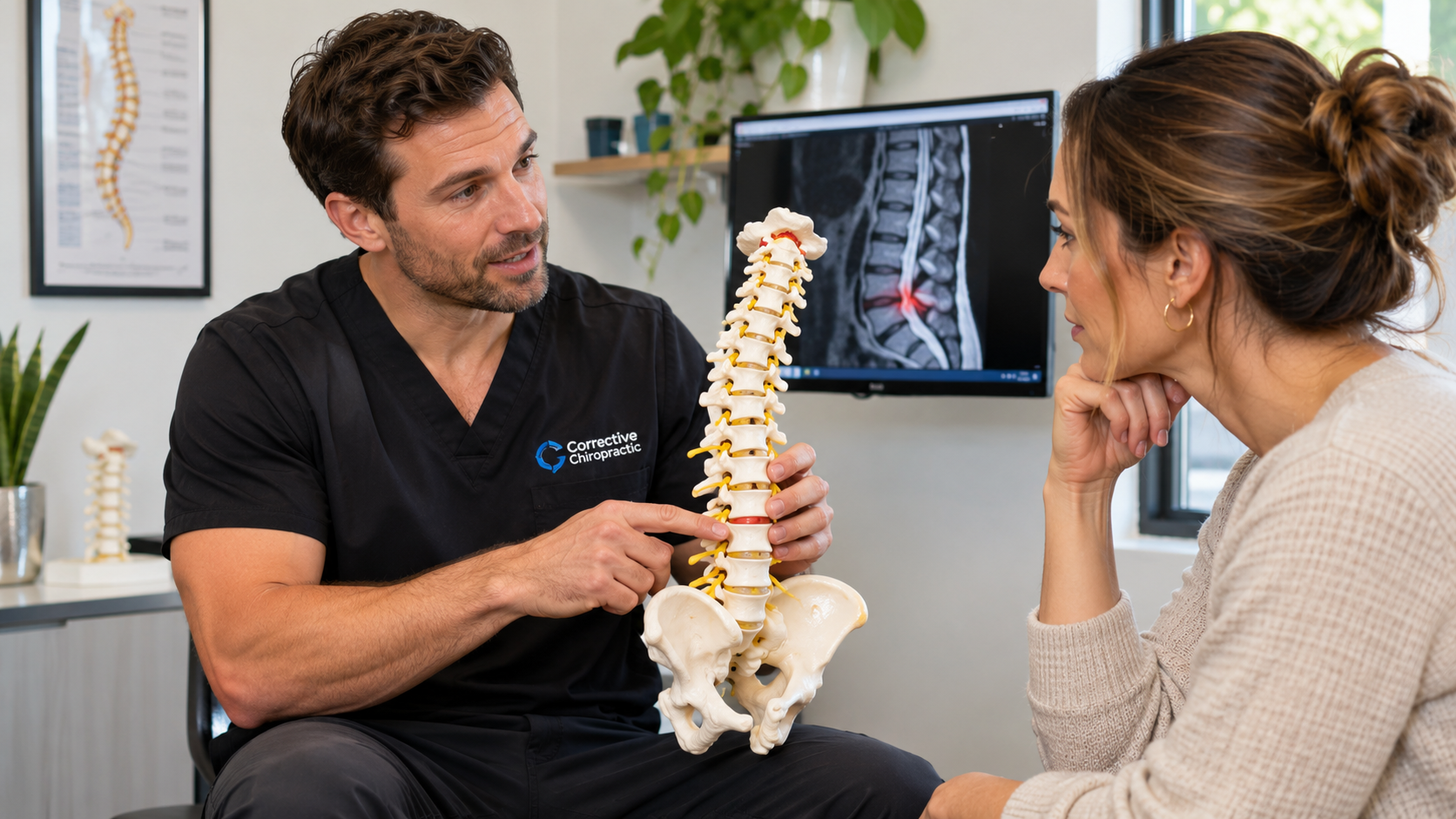
Spinal Decompression Therapy in Atlanta vs Traction vs Surgery: How to Choose the Right Next Step
Spinal decompression therapy in Atlanta is a non-surgical, computer-controlled treatment that gently reduces pressure within the spine, while traditional traction applies a steadier pull with weights, pulleys or gravity, and decompression surgery physically removes the bone or disc tissue pressing on a nerve. Which one fits depends on your diagnosis, how severe your symptoms are and what you have already tried.
I've noticed that the word "decompression" causes a lot of confusion. Some people hear it and picture surgery. Others think of the inversion table in a friend's garage. And some are thinking of the gentle, table-based treatment offered at chiropractic clinics. They all share the same goal, taking pressure off the spine's nerves, but they are very different experiences with very different risks.
When I started comparing options, I found most articles were either selling one choice or scaring people away from another. So in this post I'll lay them out side by side in plain words: what each option is, who it tends to suit, what the trade-offs are and which questions help you decide. If spinal decompression therapy in Atlanta is on your list, this should help you see where it fits. And if your symptoms feel more like a nerve problem than a back problem, Corrective Chiropractic's page on pinched nerve symptoms and treatment is a useful companion read, because nerve involvement shapes which option makes sense.
What "spinal decompression" actually means
Spinal decompression is an umbrella term for treatments that aim to relieve pain by taking pressure off the nerves in your spine. It includes non-surgical approaches like computer-controlled decompression tables and traction, as well as surgical procedures that remove bone or disc tissue.
Cleveland Clinic uses the term this broadly. Their overview of spinal decompression treatments explains that the group includes alternative therapies and surgery, and that the right one depends on your health history and how severe the problem is.
Why does pressure on spinal nerves matter so much? Your spinal cord and the nerve roots leaving it pass through narrow openings formed by bone, discs and ligaments. If a disc bulges, a bone spur grows or those openings narrow, nerves can get squeezed. That can cause pain, numbness, tingling or weakness in your back, neck, arms or legs.
The conditions most often linked with decompression include:
- Herniated or bulging discs
- Degenerative disc changes
- Pinched nerves
- Sciatica
- Spinal stenosis, a narrowing of spaces in the spine
Option one: non-surgical spinal decompression
Non-surgical spinal decompression uses a specialized, computer-controlled table to apply gentle, varying pulling forces to a targeted area of the spine while you lie comfortably, with settings matched to your condition and tolerance. It needs no incisions, anesthesia or recovery time.
At Corrective Chiropractic, which has offices across metro Atlanta, decompression is described as a non-surgical approach designed to reduce pressure within the spine and support better function. The clinic explains that modern systems use controlled protocols that target specific areas and vary the forces applied during a session.
What a session usually involves:
- You lie on a padded table, on your back or stomach.
- Straps or supports are positioned around your hips, torso or neck.
- The table slowly applies a gentle pull, holds it, then releases it, in cycles.
- You feel a controlled stretch, and you can tell staff if anything feels wrong.
Who it tends to suit: people with disc-related back or neck pain, sciatica or nerve irritation who have tried basic care like rest, stretching or medication without lasting relief, and who have no red flag symptoms. Suitability is always decided after an evaluation.
The main trade-offs: it takes a series of visits, results vary from person to person, and the research on these specific tables is more limited than for some other conservative treatments.
Option two: traditional traction
Traditional spinal traction stretches the spine with a steadier pull using weights, pulleys, a traction table or gravity, as with an inversion table. It shares the same basic goal as decompression but is generally less targeted and less adjustable.
Cleveland Clinic describes traction as using pulleys, weights and a traction table to stretch the spine, and notes that inversion therapy is a type of traction that uses gravity, with the table tilting your body to relieve pressure.
So what is the difference from decompression? The clinic's own answer is useful: both stretch the spine, but modern decompression systems use controlled, targeted protocols with varied forces, while traditional traction tends to use a steadier, less specific pull.
Who it tends to suit: some people use traction under a physical therapist's or chiropractor's guidance as part of a wider plan. Home inversion tables are popular, but I'd talk to a professional before trying one, especially if you have high blood pressure, eye conditions like glaucoma, heart problems or are pregnant, since hanging upside down is not safe for everyone.
The main trade-offs: less control over where the force goes, and home devices come with no supervision or screening.
Option three: decompression surgery
Decompression surgery relieves pressure on spinal nerves by removing the tissue causing it, such as part of a herniated disc, a portion of bone or bone spurs. It is usually reserved for severe or worsening symptoms, nerve damage, or cases where non-surgical care has not worked.
Cleveland Clinic lists several surgical options, including:
- Diskectomy: removing part of a disc to take pressure off a nerve.
- Laminotomy or laminectomy: removing part or all of the bony arch over the spinal canal.
- Foraminotomy or foraminectomy: widening the openings where nerve roots leave the spine.
- Osteophyte removal: removing bone spurs.
- Corpectomy: removing a vertebra or disc, often with a spinal fusion.
Cleveland Clinic notes that surgical cases can have a high success rate for relieving pain, but surgery may not fix every degenerative issue and symptoms can return. Risks include infection, bleeding, blood clots and nerve or tissue damage.
Who it tends to suit: people with significant or progressive weakness, loss of bladder or bowel control, severe pain that does not respond to other care, or specific conditions where surgery has clear benefits. Mayo Clinic notes that for a herniated disc, surgery may be recommended if symptoms don't improve after about six weeks, or if there is ongoing serious pain, numbness or significant weakness, trouble standing or walking, or loss of bladder or bowel control.
The main trade-offs: it is the most invasive option, with real surgical risks, recovery time and cost. It is also sometimes the right and necessary choice, and nothing in this post is meant to talk anyone out of surgery their doctor recommends.
Side by side: how the three compare
Non-surgical decompression and traction are low-risk, non-invasive options that take a series of visits and work best for mild to moderate problems, while surgery is invasive, carries surgical risks and is usually saved for severe, worsening or unresponsive cases. The right choice depends on your diagnosis and symptoms.
Here is the simplest way I can put it:
Non-surgical spinal decompression
- How it works: computer-controlled, targeted, varying pull on the spine
- Invasiveness: none
- Typical candidate: disc-related pain or nerve irritation without red flags
- Downtime: none
- Main limitation: needs several visits, results vary
Traditional traction
- How it works: steadier pull using weights, pulleys, a table or gravity
- Invasiveness: none
- Typical candidate: part of a supervised plan for back or neck pain
- Downtime: none
- Main limitation: less targeted, home devices are unsupervised
Decompression surgery
- How it works: removes disc tissue, bone or spurs pressing on nerves
- Invasiveness: high
- Typical candidate: severe, worsening or unresponsive symptoms, nerve damage
- Downtime: weeks of recovery
- Main limitation: surgical risks, cost, not every issue is fixed
The red flags that change everything
Loss of bladder or bowel control, numbness in the inner thighs or groin area, quickly worsening weakness in an arm or leg, or new trouble walking are red flags that need urgent medical care and may require surgery. Non-surgical options are not appropriate until these are assessed.
This is the most important section in the whole post. If you have any of these signs, skip the comparison shopping and contact a doctor or emergency department right away:
- Trouble controlling your bladder or bowels
- Numbness in the saddle area: inner thighs, groin, around the rectum
- Weakness in a leg or arm that is getting worse
- New difficulty standing or walking
- Back pain with fever, unexplained weight loss or a history of cancer
A responsible chiropractor screens for every one of these before recommending spinal decompression therapy in Atlanta, and will refer you on if any are present.
Why many people start with conservative care
Most disc and nerve problems improve with time and conservative, non-surgical care, so many people start there and move toward surgery only if symptoms are severe, worsening or not responding. For many herniated discs without nerve damage, long-term outcomes are similar whether people choose surgery or not.
That last point surprised me. A Mayo Clinic neurologist explained that when there is no nerve damage, the long-term outcome for surgical and non-surgical treatment of a herniated disk is generally the same when measured two years after symptoms begin. Surgery can relieve symptoms faster, which matters a lot for some people, but it isn't automatically the better long-term choice.
Mayo Clinic also notes that most people with a herniated disk do not need surgery and that symptoms often improve over time. That's why the usual path looks like a ladder:
- Self-care, activity changes and short-term pain relief
- Conservative care, which may include chiropractic care, decompression, physical therapy and exercise
- Injections in some cases
- Surgery when it is clearly needed
The ladder is not a race to the top. Plenty of people stay on the first or second rung and recover well. Others move up quickly because their symptoms demand it. Neither path is a failure. What matters is that each step is chosen for a reason, with a clear way to measure whether it is working, and that you are part of every decision.
Where you start on that ladder depends on your symptoms. Someone with progressive weakness may go straight to a surgical consult. Someone with recurring lower back pain and mild leg symptoms usually starts lower.
How a pinched nerve fits into the decision
A pinched nerve happens when a disc, bone spur or other tissue presses on a nerve root, causing pain, numbness, tingling or weakness along that nerve's path. How severe the compression is, and whether nerve function is changing, strongly shapes which decompression option makes sense.
If your main symptoms are radiating pain, pins and needles or numbness, a pinched nerve is often part of the story. A good exam looks at nerve compression directly, through strength, reflex and sensation tests, before anyone suggests a specific option.
What decides the next step is usually:
- Whether strength, reflexes or sensation are changing
- How long symptoms have lasted
- Whether symptoms are improving, stable or getting worse
- What imaging shows, if imaging is needed
Pain alone, even severe pain, is not always a reason for surgery. Changing nerve function is a different story, and it needs prompt medical attention.
What to expect from a good evaluation
A good evaluation for any decompression option includes a detailed history, a physical exam of spinal movement, strength, reflexes and sensation, red flag screening and imaging when it would change the plan, followed by a clear explanation of the options. You should leave knowing why one option is being recommended over another.
Corrective Chiropractic describes a three-step process: a conversation about your symptoms, daily impact, prior treatments and goals; an exam of your spine, posture, movement and function, with digital X-rays or further spinal analysis when appropriate; and a personalized plan if chiropractic care looks right.
In my view, the best sign of a trustworthy clinic is that they will tell you when they are not the right fit. If your exam suggests you need a surgical opinion, a good chiropractor says so. If it suggests conservative care is reasonable, they explain why and how progress will be measured.
Making decompression work if you choose it
If you choose non-surgical decompression, it works best alongside home exercises, posture and lifting changes, breaks from long sitting and scheduled progress reviews, rather than as a standalone fix. Tracking symptoms weekly makes those reviews much more useful.
Here is what I'd do from day one:
- Set a clear goal. "Sit through a full workday" or "walk around Piedmont Park without leg pain."
- Keep a weekly log. Pain from 0 to 10, how far pain travels, any numbness, how long you can sit.
- Do the home work. The exercises between sessions matter.
- Change the daily load. Lumbar support in the car, breaks from sitting, smarter lifting.
- Expect honesty. If nothing improves after a fair trial, the plan should change, which may mean a referral.
Spinal decompression therapy in Atlanta is most useful when it's treated as part of a plan with checkpoints, not a long string of visits with no review.
Time, cost and insurance: the practical questions
Non-surgical decompression and traction usually mean a series of shorter visits with no time off work, while surgery means a hospital or surgery center stay, recovery time and higher overall costs. Insurance coverage varies widely, so ask for specifics before committing to any option.
Money and time are not the most important factors in a health decision, but they are real, and pretending otherwise doesn't help anyone. I'd want clear answers to these before choosing:
- How many visits are expected, and over how long? For non-surgical decompression, the clinic should explain the expected frequency and when the first progress review happens.
- What does each visit or the full plan cost? Ask for this in writing. A trustworthy clinic is open about pricing.
- What does my insurance cover? Coverage for decompression, traction and surgery differs between plans. Call your insurer and ask specifically.
- How much time off work would surgery need? Your surgeon can give you a realistic estimate for your procedure and job.
- Will I need help at home? After some surgeries, you may need someone to help with driving, lifting or daily tasks for a while.
I'd also be cautious about pressure to prepay for a long block of sessions before your exam findings have been explained. A plan should earn your commitment by showing progress at each review.
What happens after each option
After non-surgical decompression, the focus usually shifts to home exercises, posture and daily habits that protect your progress. After surgery, recovery typically includes a period of rest, then gradual return to activity and often physical therapy. In every case, the habits that stressed the spine still matter.
This is the part that gets overlooked in most comparisons. No option makes your spine immune to the daily pressures that contributed to the problem. Mayo Clinic notes that a diskectomy, for example, does not fix the reason the disc became injured in the first place, and that some people have symptoms again after surgery.
So whichever path you choose, the same long-term basics apply:
- Stay active. Regular movement and core strength support the spine.
- Break up sitting. Long periods in a chair or car keep pressure on lower back discs.
- Lift with your legs. Keep loads close and avoid twisting while lifting.
- Keep a healthy weight. Extra weight adds stress to the discs.
- Don't smoke. Mayo Clinic notes smoking may reduce blood flow to discs and speed up their breakdown.
When I think about spinal decompression therapy in Atlanta specifically, I see these habits as half the plan. The sessions may ease pressure, but your daily routine decides how well that progress holds.
Questions to ask before choosing any option
Before choosing decompression, traction or surgery, ask what is causing your symptoms, whether nerve function is affected, why a particular option suits you, what the risks and recovery look like, how success will be measured and what happens if it doesn't work. The answers should be specific to you.
My list for any provider:
- What exactly is causing my pain?
- Is there any sign of nerve damage or worsening nerve function?
- Why is this option better for me than the others?
- What are the risks, and what does recovery look like?
- How many sessions or how much recovery time should I expect?
- How will we know if it is working?
- What is the next step if it doesn't?
If you're talking to a surgeon, it's also fair to ask whether conservative care is still reasonable. If you're talking to a chiropractor, it's fair to ask at what point they would send you for a surgical opinion.
Who should be cautious with non-surgical decompression
People who are pregnant, have had spine surgery or implants, have a fracture, tumor, infection, severe osteoporosis or any red flag symptoms should be fully evaluated and speak with their doctor before non-surgical decompression or traction. Suitability is decided case by case.
The clinic itself says suitability depends on the location and nature of the problem, your symptoms, your health history and your exam findings. Share everything during your history, including medications and past surgeries. The more complete the picture, the safer your plan.
The Atlanta reality: fitting care into real life
Choosing a decompression option in Atlanta also means thinking about practical things: how many visits you can realistically make with your commute, how much time off work surgery would need, and which habits in your daily routine keep putting pressure on your spine.
Practical questions matter. A plan with regular visits only works if you can actually get to them through Atlanta traffic. Surgery needs recovery time away from work and, for some people, help at home. Decompression needs consistency over several weeks.
I'd look for a clinic close to home or work, on a route you already drive. Corrective Chiropractic has offices in Buckhead, Sandy Springs, Chamblee, Decatur, Marietta and Woodstock, among others, which makes it easier to fit spinal decompression therapy in Atlanta into a normal week.
My honest take
Spinal decompression therapy in Atlanta is a sensible middle option for many people with disc or nerve-related back and neck pain: more targeted than basic traction, far less invasive than surgery, and best used after a careful evaluation and inside a plan with clear checkpoints. Surgery remains the right call when red flags or worsening nerve function are present.
If I had to boil it down: start with an honest diagnosis, rule out the red flags, try the least invasive option that fits your situation, and measure progress so you know when to move up the ladder. You deserve to choose with clear information, not pressure from any direction.
Frequently Asked Questions
1. What is spinal decompression therapy in Atlanta?
Spinal decompression therapy in Atlanta is a non-surgical treatment that uses a computer-controlled table to gently apply and release a pulling force on a targeted area of the spine, aiming to reduce pressure on discs and nerves.
2. Is spinal decompression the same as traction?
Both stretch the spine. Modern decompression systems use controlled, targeted protocols with varying forces, while traditional traction usually applies a steadier, less specific pull with weights, pulleys or gravity.
3. Is non-surgical decompression the same as decompression surgery?
No. Non-surgical decompression involves no incisions or anesthesia. Decompression surgery removes disc tissue, bone or bone spurs to relieve pressure on nerves and requires recovery time.
4. When is surgery the better choice?
Surgery is usually considered for loss of bladder or bowel control, progressive weakness, nerve damage, trouble walking, or severe pain that doesn't respond to conservative care. Your doctor will guide that decision.
5. Are inversion tables safe to use at home?
They are not safe for everyone. People with high blood pressure, heart conditions, glaucoma or other eye conditions, or who are pregnant should avoid them unless a doctor approves. Talk to a professional first.
6. Do most herniated discs need surgery?
No. Most people with a herniated disc do not need surgery, and symptoms often improve over time with conservative care. Surgery is reserved for specific situations.
7. Who should not have non-surgical decompression?
People who are pregnant, have had spine surgery or implants, or have fractures, tumors, infections, severe osteoporosis or red flag symptoms should be fully evaluated and speak with their doctor first.
8. How many decompression sessions will I need?
There is no fixed number. It depends on your condition, how long you've had it, your exam findings and how you respond. A good plan includes scheduled progress reviews.
9. Can I try decompression before considering surgery?
Many people start with conservative care when there are no red flags, but the decision depends on your diagnosis and symptoms. A proper evaluation will tell you whether that is a safe and reasonable choice.
10. What symptoms mean I should see a doctor right away?
Seek urgent care for loss of bladder or bowel control, numbness in the inner thighs or groin area, rapidly worsening weakness, new trouble walking, or back pain with fever or unexplained weight loss.