

How to Set Up a Hot-Fill Juice Bottling Plant in India: Equipment, Process and Planning
Launching a juice bottling facility requires careful planning of processing equipment, packaging, production capacity, and quality-control procedures. With growing interest in fruit-based drinks, flavored beverages, and ready-to-drink products, Indian manufacturers are exploring production technologies that support hygienic processing and convenient packaging.
Hot-fill technology is one option for manufacturing selected non-carbonated beverages. It uses controlled thermal processing followed by filling and sealing at elevated temperatures. When the process is correctly designed and validated, it can help manufacturers produce suitable beverages without adding artificial preservatives.
For businesses planning a new beverage facility, understanding the machinery, production sequence, and operational requirements is essential before investing in a complete plant.
1. Understand the Hot-Fill Production Process
A hot-fill production line connects several operations into one manufacturing workflow. The process generally starts with beverage preparation, where ingredients are blended according to the required formulation. The prepared liquid then enters a pasteurization system for controlled thermal treatment.
After pasteurisation, the hot beverage moves towards the filling machine. Compatible bottles are filled at the specified temperature and immediately capped. Some systems include an inversion stage in which sealed bottles are turned so that the hot product contacts the internal closure surface and headspace.
The containers then pass through a cooling tunnel. Their temperature is gradually reduced before they move towards labelling, inspection, and final packaging. Each operation must be coordinated to maintain consistent production conditions.
2. Select Machinery According to Your Beverage
The equipment configuration should be based on the actual product rather than a standard machine specification. Clear fruit juices, pulp-based drinks, nectars, herbal beverages, and flavoured drinks can have different processing characteristics.
For example, low-viscosity beverages may be suitable for plate heat exchangers, while products containing pulp or fibre may require tubular heat-transfer arrangements. Transfer pumps, pipelines, filling valves, and cleaning systems should also match the product characteristics.
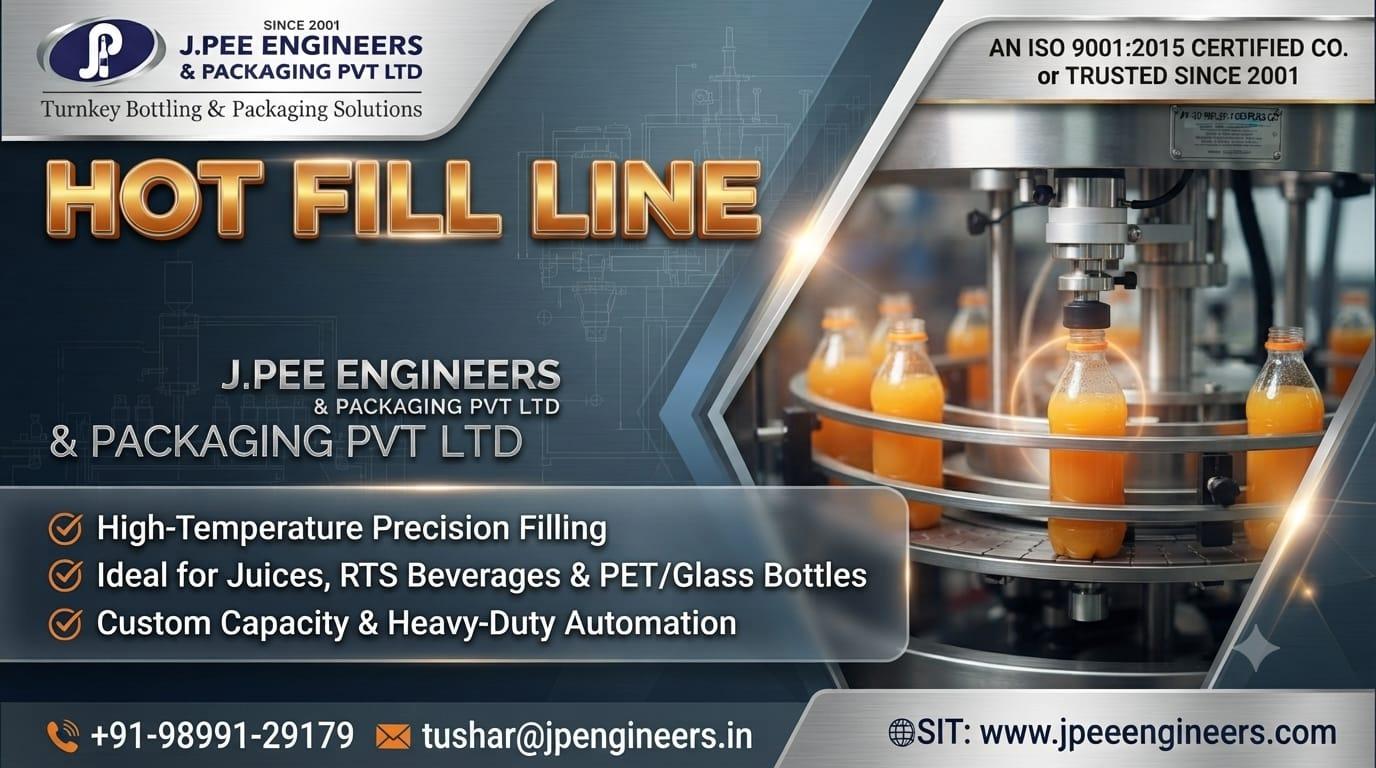
A properly planned Hot Fill Line can integrate processing, filling, capping, inversion, and cooling according to the manufacturer's production requirements. Buyers should discuss the beverage formulation and packaging format before finalising the equipment configuration.
3. Choose Suitable Bottle Packaging
Packaging selection is an important decision because containers must withstand the thermal conditions of hot filling. Heat-set PET bottles and compatible glass bottles are commonly considered for different beverage applications.
Before approving a packaging format, manufacturers should examine bottle dimensions, material specifications, neck finish, closure compatibility, and resistance to thermal stress. Packaging trials can help identify deformation, leakage, or handling issues.
The selected bottle should also support the brand's commercial requirements. A premium juice range may use glass packaging, while a high-volume beverage business may consider compatible PET formats for distribution and handling convenience.
4. Evaluate the Pasteurisation and Cooling Sections
Pasteurisation plays a central role in the hot-fill process. Controlled heating helps reduce microorganisms that may affect product safety and shelf stability. The required processing temperature and holding time depend on the formulation, acidity, viscosity, and packaging conditions.
Cooling is equally important after filling and sealing. A cooling tunnel helps bring containers to suitable handling temperatures. Its design should account for bottle size, packaging material, production speed, water circulation, and temperature-control requirements.
Manufacturers should ensure that the pasteurisation section, filler, capper, and cooling tunnel have compatible operating capacities. Otherwise, a slower section may restrict the output of the complete plant.
5. Plan Production Capacity and Automation
Production capacity should reflect realistic business demand. A startup may require a smaller production arrangement, while an established beverage company may need a higher-output automated system.
JPEE Engineers describes hot-fill configurations ranging from 500 LPH to larger capacities of 10,000–20,000+ LPH, depending on project requirements. Buyers should confirm the actual configuration and output suitability for their intended beverage.
PLC-based automation can support coordinated equipment operation and process monitoring. Semi-automatic and fully automatic configurations may be evaluated according to production volume, workforce availability, and maintenance capability.
6. Compare Machinery Suppliers Before Purchasing
Selecting Hot Fill Line Manufacturers requires more than comparing machine speed. Buyers should examine engineering experience, equipment specifications, hygienic construction, process integration, installation, and technical support.
JPEE Engineers provides information about hot-fill solutions for fruit juices, nectars, ready-to-drink teas, sports drinks, and functional beverages. Its described systems combine pasteurisation, filling, capping, inversion, and cooling with food-grade stainless-steel construction and PLC-based process controls.
When evaluating Hot Fill Production Line Suppliers, manufacturers should request a process flow diagram, technical specifications, utility requirements, equipment layout, and commissioning details. Operator training, preventive maintenance, and spare-parts availability should also be discussed.
7. Establish Hygiene and Maintenance Procedures
A well-designed production line needs appropriate cleaning and maintenance practices. Product-contact surfaces, pipelines, filling components, and transfer connections should allow effective cleaning and inspection.
Operators should follow documented procedures for equipment cleaning, process monitoring, and routine maintenance. Manufacturers must also verify applicable FSSAI and other regulatory requirements for their specific beverage and facility.
Preventive maintenance helps identify equipment issues before they interrupt production. Staff training and suitable operating records further support consistent manufacturing practices.
8. Prepare for Future Business Expansion
A beverage plant should be planned with both present and future requirements in mind. New flavours, packaging formats, and higher production targets may require changes to the manufacturing setup.
Scalable equipment configurations, suitable changeover arrangements, and coordinated production capacity can provide greater operational flexibility. Manufacturers should also consider plant layout, utility availability, storage, and downstream packaging requirements before installation.
Conclusion
Setting up a hot-fill juice bottling plant involves several connected decisions, from product formulation and pasteurisation to packaging, filling, cooling, and automation. Evaluating these requirements together helps manufacturers select machinery that matches their actual production objectives.
For Indian beverage businesses, a carefully planned hot-fill production system can support the manufacture of suitable fruit juices, nectars, and flavored beverages. Technical evaluation, validated processing conditions, hygienic equipment design, and reliable machinery support are essential foundations for long-term operations.
Frequently Asked Questions
1. What is a hot-fill juice bottling plant?
It is a beverage manufacturing setup that uses controlled thermal processing to heat suitable juices before filling them into compatible bottles and sealing them.
2. Can hot filling be used for fruit juice without preservatives?
Yes, suitable formulations can be processed through validated hot-fill systems without adding artificial preservatives. Product safety and shelf stability depend on the complete processing and packaging conditions.
3. Which machinery is required for a hot-fill production line?
A typical system may include beverage preparation equipment, a pasteurization unit, transfer arrangements, filling and capping machines, inversion equipment, conveyors, and a cooling tunnel.
4. What is the role of a bottle inversion system?
It turns sealed containers so that the hot beverage contacts the internal closure surface and headspace as part of the intended package-treatment process.
5. Which bottles are suitable for hot filling?
Compatible heat-set PET bottles and suitable glass containers may be used after verifying their thermal resistance, dimensions, and closure specifications.
6. How do manufacturers select the capacity of a hot-fill plant?
Capacity selection depends on beverage type, bottle size, daily output requirements, operating hours, market demand, and the capacity of each connected machine.
7. What should buyers check before selecting a hot-fill machinery supplier?
They should review technical experience, processing technology, filling accuracy, hygienic design, packaging compatibility, automation, installation, commissioning, maintenance, and after-sales support.