

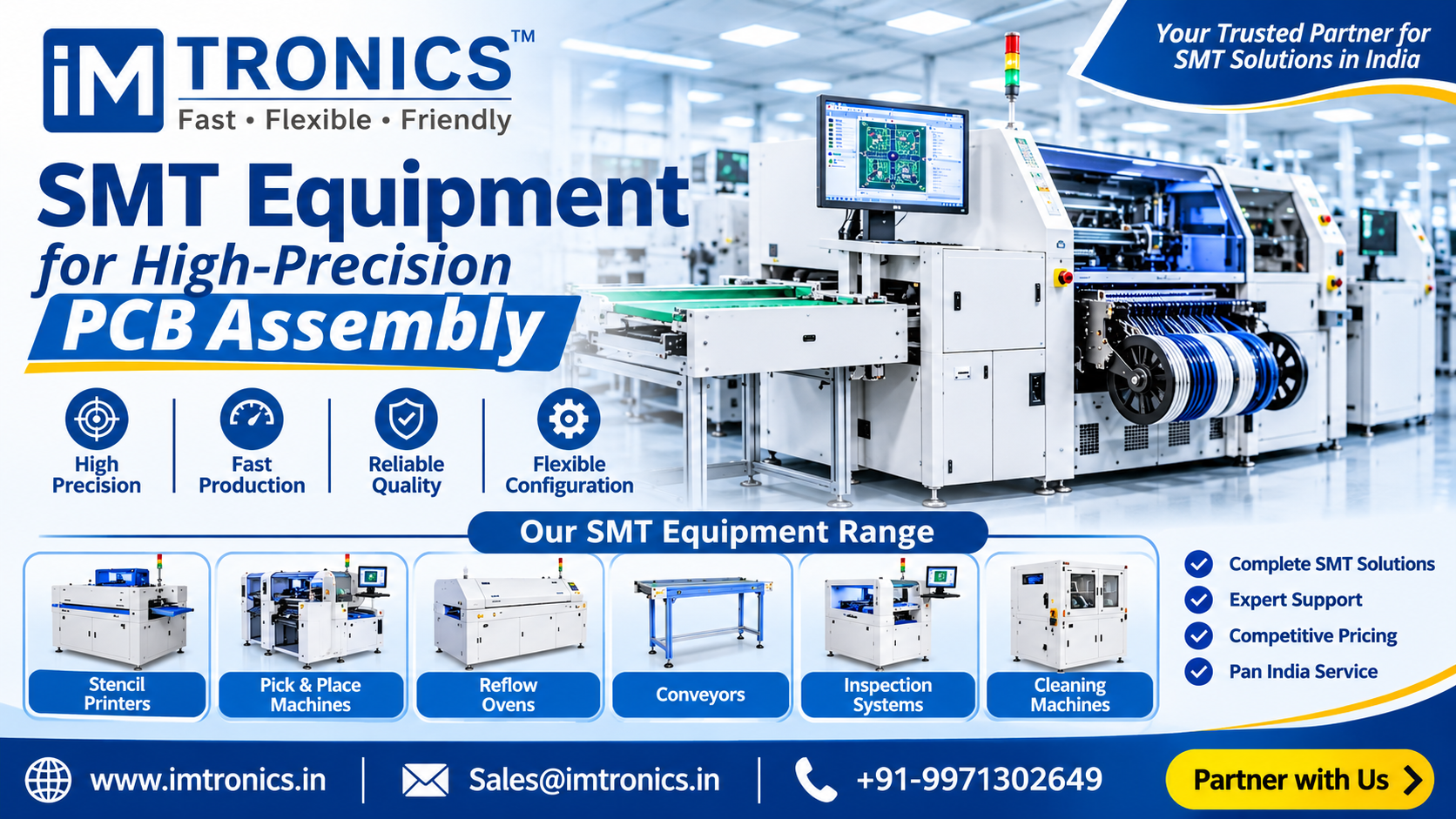
Modern electronics manufacturing requires a production process that can handle small components, detailed PCB layouts and changing product requirements. Surface Mount Technology (SMT) has become an important part of electronics assembly because it allows components to be mounted directly onto printed circuit boards. To manage this process effectively, manufacturers use specialized machines that perform printing, component placement, soldering and inspection.
A production line is not simply a collection of machines. Each stage needs to work in coordination with the next one. Equipment selection, production planning, machine configuration and operator training all contribute to an organized manufacturing environment.
Product Specifications
The technical requirements of an SMT production line depend on the products being manufactured and the expected production volume. Common equipment categories include solder paste printers, pick-and-place machines, reflow ovens, conveyors, automated optical inspection systems and solder paste inspection machines.
When evaluating equipment, manufacturers should consider automation level, placement accuracy, component range, throughput, feeding system and control system. Some machines may use tape feeders or tray feeders, while other configurations support different component handling methods. Conveyor integration is another consideration when connecting machines into an inline production setup.
Heating requirements are relevant when selecting a reflow oven, while printing requirements influence the choice of stencil printer. Inspection compatibility should also be considered when planning quality control stages. The exact capabilities depend on the selected model and configuration.
Businesses can explore the SMT Equipment range from IMTronics Technology to understand the different equipment categories used in PCB assembly. Final technical specifications should always be checked against the actual production application.
Objective
The objective of an SMT production line is to move PCBs through a planned sequence of manufacturing operations while maintaining process control and assembly quality.
The process usually starts with solder paste application. A stencil printer deposits paste onto selected PCB pads. The board then moves to the pick-and-place stage, where components are positioned according to the board design and machine programming. After placement, the board enters a reflow process that uses controlled heating to form solder joints.
Inspection systems can help identify placement or soldering issues, depending on the inspection technology and process setup. Conveyors connect production stages and support board movement. Line balancing is important because a delay at one stage can affect the overall production flow.
Benefits
A well-planned SMT production line can support efficient manufacturing, improved process consistency and better coordination between production stages. Automated placement systems can handle repetitive component positioning tasks, while digital controls and inspection systems support monitoring and quality checks.
Another advantage is the ability to plan production around different product requirements. Flexible programming and suitable feeder arrangements can help manufacturers manage multiple PCB designs. The actual level of flexibility depends on machine capability, setup time, operator skills and the production process.
Businesses comparing SMT Equipment Dealers should consider the full purchasing and support experience. Machine specifications, installation assistance, commissioning, training and access to technical support are all relevant factors. A supplier who understands the production requirement can help buyers evaluate which equipment categories may be suitable.
IMTronics Technology provides information on SMT machines, tools and consumables for electronics manufacturing applications. Manufacturers and procurement teams can review the SMT Equipment Manufactures page and contact the company to discuss their equipment requirements.
Availability
SMT equipment availability may depend on the machine category, selected configuration and order requirements. Buyers should confirm the exact model, technical specifications, included accessories and expected delivery schedule before making procurement decisions.
For a new production line, it is useful to discuss the facility layout, board dimensions, component requirements, expected production volume and automation preferences. These details can help establish which machines and supporting systems need to be considered.
Manufacturers should also clarify installation and commissioning arrangements, operator training, maintenance requirements and after-sales support. Confirming these details in advance can help reduce uncertainty during production planning.
About Us
IMTronics Technology supports customers looking for SMT equipment, electronics manufacturing tools and consumables. Its product categories include solder paste mixers, solder paste printers, pick-and-place machines, reflow ovens, stencil cleaning machines, nozzle cleaning machines, dry cabinets and other supporting equipment. Customers can contact the company to discuss their PCB assembly and production requirements.
Conclusion
An efficient SMT production line depends on selecting suitable machines and ensuring that every manufacturing stage is properly coordinated. Printing, placement, reflow, inspection and board handling each contribute to the overall assembly process. By reviewing equipment specifications, planning line integration and confirming support requirements, electronics manufacturers can make more informed decisions for their production facilities.
FAQs
1. What is an SMT production line?
It is a sequence of machines used to assemble electronic components printed onto circuit boards through operations such as printing, placement, soldering and inspection.
2. What is the role of a stencil printer?
A stencil printer applies solder paste to selected PCB pads before electronic components are placed.
3. What is automated optical inspection?
Automated Optical Inspection (AOI) uses imaging technology to examine PCB assemblies and identify certain visible defects.
4. Why is line balancing important?
Line balancing helps coordinate the operating capacity of different machines and reduce bottlenecks in the production process.
5. What factors affect SMT line throughput?
Throughput can depend on machine type, component mix, board design, machine configuration, process settings and production-line coordination.
6. Can an SMT line support different PCB designs?
Some equipment supports flexible programming and changeovers, but the actual capability depends on the machine configuration and production requirements.