
Cold Laser Therapy in Albuquerque: What It Is, How It Feels and What to Expect
The first time I heard the words "laser therapy" connected to back pain, I pictured something out of a science fiction movie. Bright beams, maybe a little smoke, definitely some pain. So I was honestly surprised when I learned that the type of laser many chiropractic clinics use does not burn, does not cut and, for most people, does not feel like much of anything at all.
In my experience, a lot of people in Albuquerque are curious about laser treatment but too unsure to ask. They have heard it mentioned by a friend or seen it listed on a clinic website, and they wonder: Is it real? Is it safe? Does it actually help? And what is it going to feel like?
In this guide, I want to answer those questions as plainly and honestly as I can. I will explain what cold laser therapy is, how it is thought to work, what a session looks like, who it tends to help, what the research really says, and how to decide whether cold laser therapy in Albuquerque is worth trying for your pain.
Key Takeaways
- Cold laser therapy, also called low-level laser therapy (LLLT) or photobiomodulation, uses low-intensity light to support tissue healing and ease pain without heat or cutting.
- Most people feel nothing, or only mild warmth, during treatment. Sessions are usually short.
- It is commonly used for soft tissue injuries, joint pain, neck and back pain, tendonitis and post-injury recovery.
- Research is promising for several types of musculoskeletal pain, but results vary with device settings, condition and number of sessions.
- It works best as part of a broader plan that may include chiropractic adjustments, manual therapy and rehab exercises.
- Pregnant people, those with certain cancers and anyone on light-sensitizing medications should talk to their provider first.
Why So Many People in Albuquerque Are Curious About Laser Treatment
I think there are a few reasons laser therapy gets so much interest here.
An active, outdoor population. Albuquerque has a strong outdoor culture. People hike the Sandia foothills, bike the Bosque trails, run, climb, ski up at the crest and play pickleball year-round. That lifestyle brings sprains, strains and tendon irritation, exactly the kinds of problems people often ask about laser treatment for.
Long hours at desks and behind the wheel. Plenty of people sit all day at work and then sit again on I-25 or I-40 for the commute. That combination feeds neck and back pain.
Physically demanding jobs. Nurses, teachers, tradespeople, warehouse workers and restaurant staff spend long shifts on their feet. Over time, joints and tendons feel it.
Interest in drug-free options. Many people I talk to want to manage pain without relying on daily pain relievers, or they cannot take certain medications. A gentle, non-invasive option naturally appeals to them.
Aging joints. As we get older, arthritis and stiffness become more common, and the dry high-desert climate does not do stiff joints any favors in winter.
When I put all of that together, it is easy to see why cold laser therapy in Albuquerque keeps coming up in conversations about pain.
What Is Cold Laser Therapy?
Here is the simplest definition I can give: cold laser therapy is a non-invasive treatment that uses low-intensity red or near-infrared light to stimulate healing in injured or irritated tissue, without heating or damaging the skin.
It goes by several names, which can be confusing:
- Cold laser therapy, because it does not heat tissue the way surgical lasers do
- Low-level laser therapy (LLLT), because the power output is low
- Photobiomodulation (PBM), the scientific term, meaning light that changes biological activity in cells
All three describe the same basic idea: shining specific wavelengths of light on an area of the body so the cells there respond in helpful ways.
This is very different from the lasers used in surgery, hair removal or tattoo removal. Those are designed to cut, heat or destroy tissue. Cold lasers are designed to do the opposite: nudge tissue toward repair.
How Is It Thought to Work?
I will keep this as simple as possible, because the underlying biology is genuinely fascinating but can get technical fast.
When the laser light reaches your tissue, particles of light called photons are absorbed by structures inside your cells, especially the mitochondria. Mitochondria are often described as the energy centers of your cells.
When they absorb this light, they are thought to produce energy more efficiently. That extra cellular energy may support several things:
- Tissue repair, as cells have more resources to rebuild
- Reduced inflammation, by influencing the chemical signals involved in swelling and irritation
- Improved circulation to the treated area
- Pain relief, possibly by calming overactive nerve signals
In my experience, the most helpful way to think about it is this: cold laser therapy does not force anything. It gives your body's own healing processes a bit of a boost in a specific spot.
Cold Laser vs. Other Types of Laser Treatment
People often ask me how cold lasers compare to other lasers they have heard of. Here is a quick, plain-language rundown.
Surgical and cosmetic lasers are high-powered and intended to cut, burn or remove tissue. They are not what we are talking about here.
High-intensity laser therapy uses more power and can produce noticeable warmth. Some clinics use these for deeper tissue, but they work differently and have different safety considerations.
Cold or low-level lasers use low power and produce little or no heat. They are generally considered gentle and are commonly used in chiropractic and rehabilitation settings.
LED light therapy uses light-emitting diodes rather than lasers. It is related, and some research groups both under the umbrella of photobiomodulation, but the light characteristics differ.
When you are looking at cold laser therapy in Albuquerque, it is reasonable to ask a clinic exactly what type of device they use and why.
What a Cold Laser Session Looks Like
Let me walk you through what a typical first visit usually involves. Details vary from clinic to clinic, but the flow is generally similar.
Step 1: Health History and Consultation
You will fill out forms about your symptoms, injuries, medical conditions and medications. This step matters a lot for laser treatment. Certain medications can make your skin more sensitive to light, and some conditions mean laser therapy should be avoided over specific areas.
Step 2: Evaluation
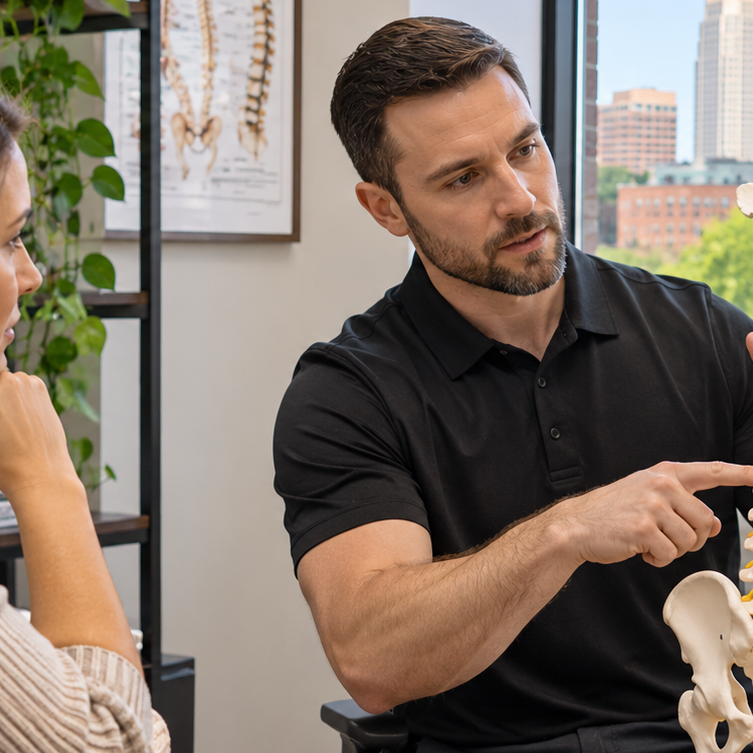
Your provider will ask about your pain, check your movement and examine the area. This helps them decide whether laser therapy makes sense and where exactly to apply it.
Step 3: Preparing for Treatment
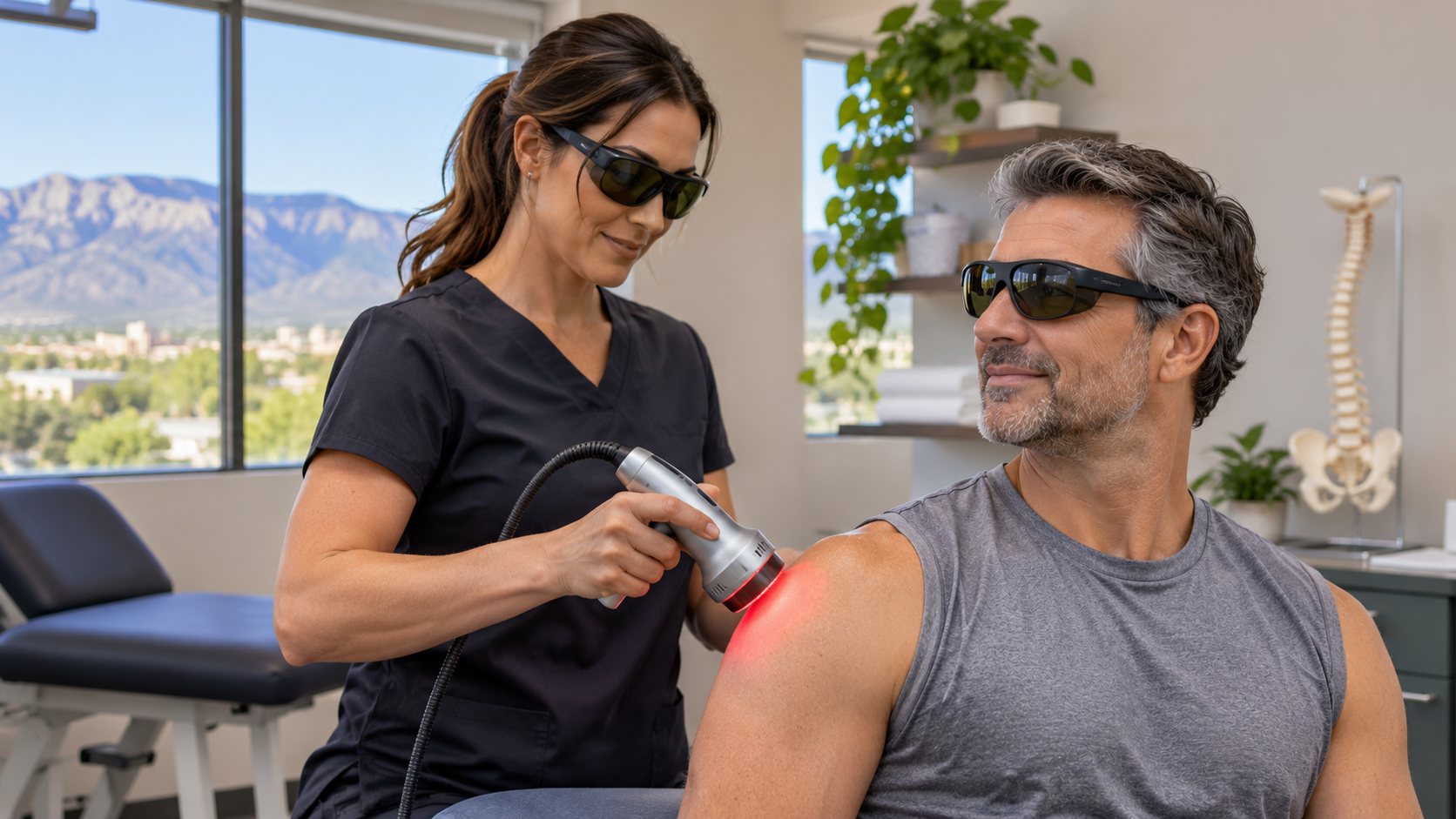
You will usually sit or lie comfortably with the area to be treated exposed. Because the laser should never be pointed into the eyes, you and your provider may wear protective glasses.
Step 4: The Treatment
The provider holds the device directly over or against the skin of the target area. The light passes through the skin into the tissue below. Many people feel nothing at all. Some notice mild warmth or a slight tingling.
Step 5: Duration
Cold laser sessions are usually short. Blessing Chiropractic, for example, describes each treatment as lasting roughly 5 to 20 minutes, depending on the area and condition.
Step 6: After Treatment
There is typically no downtime. Most people go straight back to work, errands or their normal day.
If you want to see how a local clinic describes the process, a page on cold laser therapy in Albuquerque can give you a good sense of what to expect before your first appointment.
Does Cold Laser Therapy Hurt?
This is probably the question I hear most, so I want to answer it directly: no, for most people it does not hurt.
Cold lasers are designed not to heat tissue, so there is no burning sensation. There is no needle, no incision and no pressure beyond the device resting gently on your skin. Some people find it so uneventful that they are surprised the session is already over.
That said, if the area being treated is already very tender, having anything touch it can feel a little uncomfortable. Let your provider know, and they can adjust how they position the device.
Common Conditions People Treat With Cold Laser Therapy
Here are the kinds of problems people most often bring to providers offering cold laser therapy in Albuquerque:
- Neck and back pain, including pain related to herniated discs and sciatica
- Joint pain, including arthritis in the knees, hips, hands and shoulders
- Tendonitis and bursitis, such as in the shoulder, elbow or hip
- Sports injuries like sprains, strains and muscle tears
- Soft tissue injuries from everyday accidents
- Auto accident injuries, including whiplash-related discomfort
- Chronic pain conditions such as fibromyalgia
- Post-surgical recovery, when cleared by your surgeon
- Plantar fasciitis and carpal tunnel symptoms, which some clinics also treat
If your pain falls into one of these categories, it may be worth asking whether laser therapy could be part of your plan.
Common Myths About Cold Laser Therapy
Because the word "laser" sounds so intense, a lot of myths float around. Here are the ones I hear most.
Myth: It burns or cuts the skin. Cold lasers are designed not to heat or cut tissue. That is the whole point of calling them "cold."
Myth: You will feel it working right away. Most people feel little or nothing during treatment. Changes usually show up over several sessions, not in the moment.
Myth: One session will fix everything. Light therapy effects tend to build over time. A single visit rarely solves a long-standing problem.
Myth: It replaces everything else. Cold laser therapy works best alongside other care like adjustments, manual therapy and exercise. It is a helpful tool, not a stand-alone cure.
Myth: It is only for athletes. Athletes do use it, but so do desk workers, older adults with arthritis and people recovering from car accidents.
Myth: Every laser device is the same. Devices differ in wavelength, power and design. Settings matter, which is one reason research results vary.
What the Research Honestly Says
I always want to be straightforward about evidence, because health topics attract a lot of hype.
The research on photobiomodulation has grown a lot over the past few decades. A review published in the National Library of Medicine notes that photobiomodulation therapy can reduce pain intensity in several conditions, including non-specific knee pain, osteoarthritis, fibromyalgia, neck pain and low back pain.
At the same time, researchers also point out that study results have not always been consistent, often because studies used different wavelengths, power levels, doses and treatment schedules. That means the device, the settings and the provider's experience all matter.
Here is how I interpret all of that: cold laser therapy is a legitimate, research-supported tool for certain types of pain, especially musculoskeletal pain. But it is not magic, it does not work the same for everyone, and it tends to work best as part of a broader plan rather than on its own.
Why Cold Laser Pairs Well With Chiropractic Care
In my experience, cold laser therapy really shines when it is combined with other hands-on care.
Think about a stiff, painful neck. There may be joints that are not moving well, muscles that are tight and guarded, and tissue that is inflamed. Each of those problems responds to different tools:
- Chiropractic adjustments help restore joint motion
- Manual therapy helps release tight, protective muscles
- Cold laser therapy may help calm inflammation and support tissue repair
- Rehab exercises build strength and stability so the problem is less likely to return
If you are curious how these fit together, reading about how a clinic approaches chiropractic care for neck and back pain in Albuquerque can help you see where laser therapy fits in a full treatment plan.
When I talk to people who have tried laser treatment alone versus as part of combined care, the combined approach almost always comes out ahead.
Is Cold Laser Therapy Safe?
For most people, cold laser therapy in Albuquerque is considered very low risk when it is performed by a trained provider. It is non-invasive, does not involve medication and does not heat or damage the skin.
The most important safety rule is simple: the laser light should never be directed into the eyes. That is why protective eyewear is often used.
Who Should Talk to Their Provider First
Laser therapy may not be suitable for everyone. Check with your provider before treatment if you:
- Are pregnant, especially regarding treatment near the abdomen
- Have cancer or a history of certain cancers, since lasers are generally not applied over known tumors
- Take medications that increase light sensitivity, such as certain antibiotics or acne medications
- Have a light-sensitivity condition
- Have a pacemaker or other implanted device in or near the treatment area
- Have thyroid conditions, if treatment would be near the neck
A good provider will ask about all of these at your first visit. If they do not, ask yourself.
Signs Cold Laser Therapy Might Be Worth Trying
Not sure whether laser treatment fits your situation? Here are some signs that, in my experience, make it worth asking about:
- You have a soft tissue injury, like a strain or sprain, that is healing more slowly than you expected
- You live with joint pain or arthritis and want to add a gentle, drug-free option to your routine
- You have tendonitis or bursitis that flares with certain activities
- You are recovering from a car accident and still have lingering soreness
- You prefer to limit pain medication, or you cannot take certain medications
- You are already getting chiropractic care or manual therapy and want to support those results
If one or more of these sound familiar, cold laser therapy in Albuquerque may be worth discussing with a provider at your next visit.
How Many Sessions Will I Need?
There is no single answer for how many sessions of cold laser therapy in Albuquerque you will need, because it depends on:
- What condition you are treating
- How long you have had it
- How severe it is
- How your body responds
- Whether laser therapy is combined with other care
Some people notice a difference after a few sessions. Chronic conditions often need a longer series. Your provider should give you a rough estimate after your evaluation and adjust it based on how you respond.
What matters most is progress. You should notice some improvement in pain, movement or function within a reasonable number of visits. If you do not, your provider should reassess your plan.
A Realistic Picture of Progress
I think one of the most helpful things anyone can have going into treatment is a realistic sense of how progress usually looks. Here is the general pattern I have seen people describe.
The first few visits. Most people feel very little during these early sessions. Some notice slightly less soreness or stiffness afterward. Others notice nothing yet, which is completely normal. This is also when your provider is learning how your body responds.
The middle stretch. As sessions add up, many people start to notice small but meaningful changes: getting out of bed with less stiffness, turning their head more easily, walking farther before a joint starts to complain, or sleeping through the night more often.
Later in the plan. By this point, the focus often shifts from calming pain to building strength and preventing flare-ups. Laser sessions may space out while exercises and other care take a bigger role.
When progress stalls. If you plateau or nothing changes after a reasonable number of visits, that is useful information too. A good provider will reassess, adjust the plan, try a different combination of treatments or refer you to another specialist.
Progress is rarely a straight line. Good days and bad days are normal, especially with chronic pain. What matters is the overall direction over several weeks, not how you feel on any single afternoon.
How to Get the Most From Your Treatment
Here is what I have learned about making laser therapy count:
Be consistent. Light therapy effects tend to build over multiple sessions. Skipping appointments can slow your progress.
Stay active within your limits. Gentle movement supports circulation and healing. Ask your provider what is safe.
Do your rehab exercises. Laser therapy may ease pain, but strength and mobility work help keep it from coming back.
Hydrate. Albuquerque's dry, high-altitude climate makes it easy to fall behind on water, and well-hydrated tissue tends to recover better.
Protect the area between sessions. If a specific activity reliably flares your pain, scale it back for a while instead of pushing through it every day.
Track your symptoms. A quick note on your phone about pain levels and activity helps you and your provider see what is working.
Tell your provider about changes. New medications, new symptoms or new injuries can all affect your plan.
Questions to Ask Before You Book
Before committing to cold laser therapy in Albuquerque, I would ask any clinic these questions:
- What type of laser device do you use?
- Who performs the treatment, and what training do they have?
- What conditions do you most often treat with laser therapy?
- How do you decide how many sessions I need?
- Do you combine laser therapy with other treatments?
- What does each session cost, and do you offer payment options?
Clear, confident answers are a good sign. Vague answers or pressure to prepay for a large package before your evaluation are not.
What About Cost and Insurance?
Coverage for laser therapy varies widely. Some insurance plans cover it as part of a broader treatment plan, while others do not cover it at all. Auto insurance may cover laser treatment after a car accident. Many clinics also offer cash rates or packages.
My advice: call your insurance company first and ask specifically about low-level laser therapy coverage, then ask the clinic for their pricing so you know exactly what to expect.
Final Thoughts
Cold laser therapy is one of those treatments that sounds intimidating but turns out to be surprisingly gentle. No heat, no needles, no downtime, and for many people, no sensation at all.
If you are dealing with joint pain, a lingering sports injury, neck or back pain, or slow recovery after an accident, cold laser therapy in Albuquerque may be worth exploring, especially as part of a plan that also includes hands-on care and the right exercises. Go in with realistic expectations, ask good questions, share your full health history, and give your body a fair chance to respond.
If you decide to try it, start with an honest evaluation, ask what results the provider expects for your specific condition, and agree on how you will measure progress together. That simple conversation sets you up for a much better experience.
Sometimes the most effective help is also the quietest.
Frequently Asked Questions
1. What is the difference between cold laser therapy and regular laser treatment?
Cold lasers use low-intensity light that does not heat or cut tissue. Surgical and cosmetic lasers use high power to cut, burn or remove tissue. Cold lasers aim to support healing instead.
2. Does cold laser therapy hurt?
Most people feel nothing or only mild warmth or tingling. There are no needles or incisions. If the area is already very tender, tell your provider so they can adjust the device position.
3. How long does a cold laser therapy session take?
Sessions are usually short, often between 5 and 20 minutes depending on the area and condition being treated.
4. How many cold laser sessions will I need?
It depends on your condition, how long you have had it and how you respond. Some people notice changes after a few sessions, while chronic problems may need a longer series.
5. Is cold laser therapy safe?
It is generally considered low risk when performed by a trained provider. The laser should never be pointed into the eyes, and certain people should check with their provider before treatment.
6. Who should avoid cold laser therapy?
People who are pregnant, have certain cancers, take light-sensitizing medications or have specific medical conditions should talk with their provider before treatment.
7. Can cold laser therapy help arthritis pain?
Research suggests photobiomodulation can reduce pain in some types of arthritis, including knee osteoarthritis. Results vary, so it often works best alongside exercise and other care.
8. Is there any downtime after cold laser therapy?
No. Most people return to their normal activities right after a session.
9. Can cold laser therapy be combined with chiropractic adjustments?
Yes. Many clinics combine laser therapy with adjustments, manual therapy and rehab exercises to address joints, muscles and inflammation together.
10. Does insurance cover cold laser therapy?
Coverage varies. Some plans include it as part of a treatment plan, and auto insurance may cover it after an accident. Check with your insurer and ask the clinic about pr