

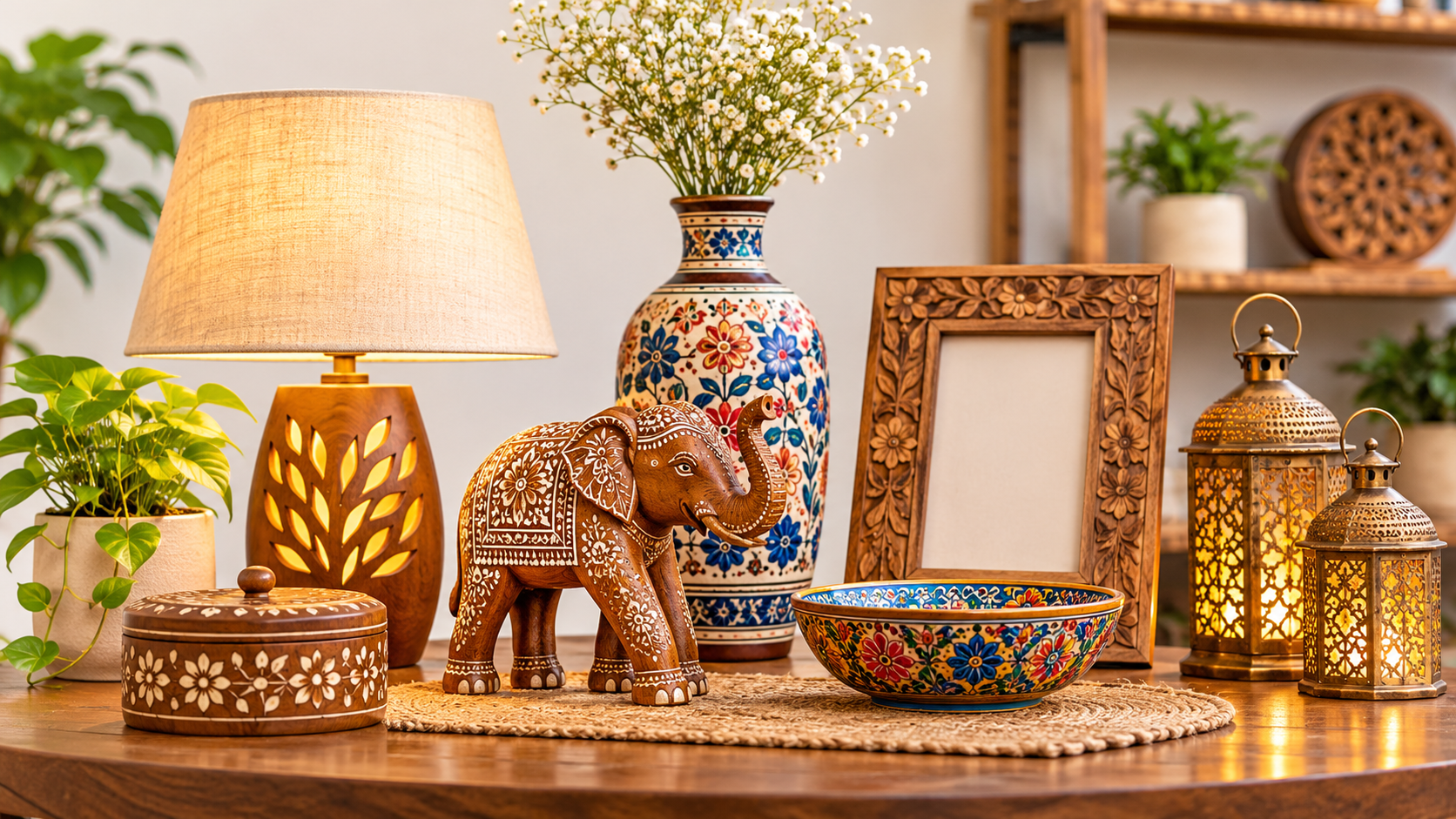

A customer walks into a home decor store looking for something different. They may need a mirror for their living room, a candle holder for their dining table, or a decorative item for their office. The product's design attracts their attention, but its quality often determines whether they buy it.
For retailers, choosing the right Home Decor & Decorative Accessories is about more than selecting attractive products. Materials, craftsmanship, pricing, packaging, and supplier reliability all affect the success of a retail collection.
Handcrafted items can add character to a product range. However, retailers must evaluate each product carefully before placing bulk orders.
This guide explains how to source decorative products that meet customer expectations and support long-term retail operations.
Understand Your Retail Customers Before Choosing Products
Every retail store serves a different audience. Some customers prefer simple wooden accessories, while others look for traditional designs or modern decorative pieces.
Before contacting manufacturers, retailers should study their customers' preferences.
Consider these questions:
-
Which decorative products sell most frequently?
-
Do customers prefer modern or traditional designs?
-
What price range matches their purchasing habits?
-
Are customers buying items for personal use or gifting?
-
Which materials complement the store's existing collection?
For example, a store specializing in natural interiors may benefit from wooden accessories and handcrafted mirrors. A contemporary lifestyle store might prefer metal accents and minimalist designs.
Understanding these preferences helps retailers select products with a clear purpose instead of purchasing unrelated items.
Choose Home Decor Accessories That Combine Style and Function
Attractive designs can encourage customers to explore a product. However, practical accessories often offer additional value because customers can use them regularly.
Decorative Mirrors for Interior Styling
Mirrors serve both functional and decorative purposes. They can reflect natural light, create visual depth, and complement furniture arrangements.
Retailers can explore different shapes, frame materials, and finishes to meet various interior design preferences.
For stores serving homeowners and interior designers, Decorative Wall Mirrors offer a useful category to consider.
Before placing orders, check frame construction, glass quality, mounting hardware, and packaging.
Wooden Bookends for Organized Spaces
Bookends appeal to customers who want to organize books while improving the appearance of shelves and desks.
They are suitable for home offices, libraries, reading corners, and corporate gifting collections.
Retailers sourcing Wooden Bookends should examine their weight, stability, finish, and resistance to tipping.
A visually attractive bookend still needs sufficient support to hold books securely.
Evaluate Material Quality and Craftsmanship
Material selection directly affects product durability, maintenance, and customer satisfaction.
Common materials used in Handcrafted Home Decor Accessories include wood, metal, glass, and combinations of different materials.
Wooden Accessories
Wood offers natural textures and warm finishes. Retailers should inspect surfaces for rough edges, uneven coatings, cracks, and poorly fitted joints.
Wood moisture content also deserves attention, particularly when products will be shipped between regions with different climates.
Metal Decorative Products
Metal accessories can complement industrial, traditional, and contemporary interiors.
Check surface coatings, sharp edges, weld quality, corrosion protection, and structural stability before approving a sample.
Glass and Mirror Products
Glass products require careful handling and protective packaging.
Retailers should examine edges, reflective surfaces, frame connections, and mounting arrangements.
Request physical samples whenever possible. Product photographs alone cannot establish finish quality or construction strength.
Check Whether Suppliers Offer Practical Product Variety
Retail stores generally benefit from a balanced collection rather than several products with nearly identical designs.
A useful range may include wall accessories, tabletop decorations, storage products, and functional organizers.
For example, Wooden Key Holder designs may appeal to customers seeking compact accessories for entryways and hallways.
When evaluating Decorative Accessories Suppliers, ask whether they provide different sizes, finishes, materials, and design options.
Also confirm whether successful designs can be reordered consistently.
Product variety is useful, but reliable availability is equally important for maintaining a retail collection.
Compare Wholesale Pricing Beyond the Unit Cost
Low purchasing prices do not automatically result in better profit margins.
Retailers sourcing Wholesale Home Decor Accessories should calculate the complete landed cost of each product.
Consider the following expenses:
-
Manufacturing and product costs
-
Protective packaging
-
Freight and transportation
-
Import duties, where applicable
-
Sample development charges
-
Inspection and handling expenses
For example, a low-cost mirror may become expensive if its packaging cannot protect it during transportation.
Request detailed quotations that clearly explain product specifications, minimum order quantities, payment terms, and delivery conditions.
This makes comparisons between suppliers more meaningful.
Explore Customization for Retail Brand Identity
Customization allows retailers to build a more recognizable product collection.
Depending on manufacturing capabilities, customization may involve selecting materials, changing finishes, adjusting dimensions, or developing exclusive designs.
Private-label packaging can also help retailers create consistent branding across their product range.
Decorative products such as Candle Holder designs can be evaluated for different finishes, shapes, and retail presentation requirements.
Before approving customized products, confirm sample costs, tooling requirements, production timelines, and minimum order quantities.
Avoid committing to large volumes until the final sample meets your expectations.
Select Home Decor Accessories Manufacturers in India Carefully
India has a long tradition of producing handcrafted wooden and decorative products.
However, retailers should evaluate manufacturing capabilities rather than relying on promotional claims.
Ask prospective manufacturers about their production processes, quality checks, order quantities, and export packaging arrangements.
Square N Circle, based in Nagina, Uttar Pradesh, manufactures and supplies handcrafted decorative products, including mirrors, organizers, and decorative accessories.
Its product range may be relevant to retailers, wholesalers, and importers seeking Indian-made home decor products.
Buyers should discuss their requirements directly with the company and verify samples, specifications, and commercial terms before ordering.
Frequently Asked Questions
1. What are the most useful home decor accessories for retail stores?
Decorative mirrors, bookends, candle holders, key holders, and organizers are useful product categories. Their suitability depends on customer preferences, pricing, and store positioning.
2. How can retailers check handcrafted decor quality?
Retailers should request samples and examine material quality, finishing, dimensions, stability, and packaging. Written specifications help maintain consistency between orders.
3. Can home decor accessories be customized for retail brands?
Many manufacturers offer customization, but available options depend on their production capabilities. Buyers should confirm designs, minimum quantities, and sampling costs.
4. Why is protective packaging important for decorative products?
Proper packaging helps reduce damage during storage and transportation, especially for mirrors, glass components, and delicate handcrafted details.
5. What should retailers ask before placing bulk orders?
Ask about materials, product specifications, minimum order quantities, sample approval, payment terms, production timelines, packaging, and shipping arrangements.
Conclusion
Sourcing decorative products requires a balance between appearance, functionality, quality, and commercial practicality.
Retailers should understand customer preferences, inspect materials, compare complete purchasing costs, and evaluate suppliers before committing to bulk orders.
Businesses exploring handcrafted Home Decor & Decorative Accessories can contact Square N Circle to discuss product options, customization requirements, samples, and wholesale enquiries.