
North America On-Board Connectivity Market Analysis: Growth Opportunities and Forecast 2025–2031
Other |
2026-09-07 10:14:48
 Russian
 English
 Romaian
 Portuguese (Brazil)
 Greek
Greek
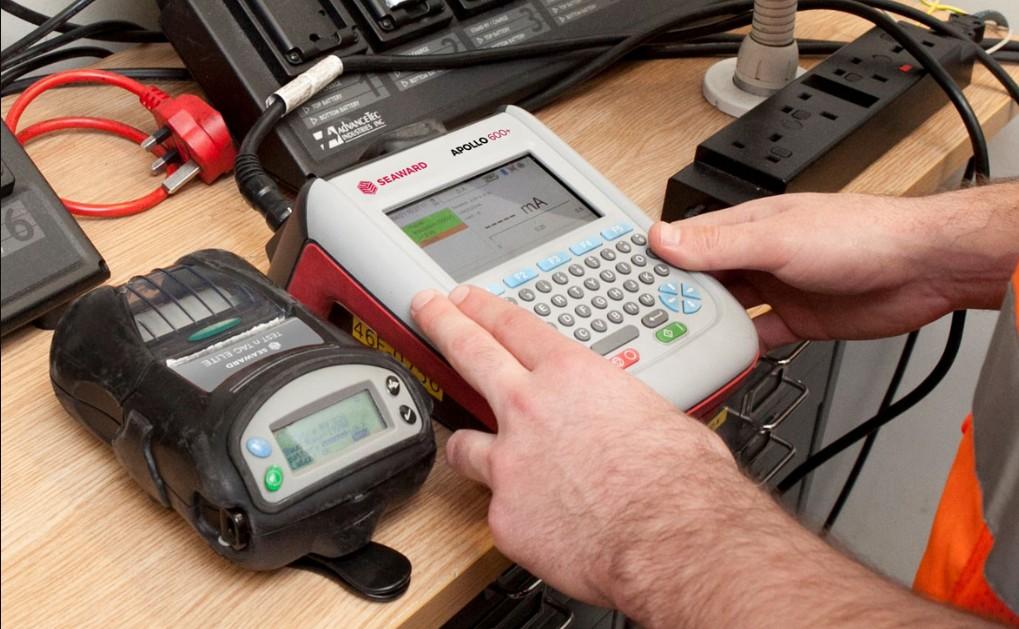
In the realm of modern information technology, power cords are the unsung heroes that keep our infrastructure alive. However, they are also a common point of failure. When an IT power cord—often carrying delicate power signals to servers, workstations, or networking equipment—begins to show signs of fraying or intermittent connectivity, the instinct is to perform a test. The danger lies in using high-voltage insulation resistance testing methods that, while standard for heavy-duty appliances, can be catastrophic to the sensitive circuitry found in the connected hardware if done incorrectly. Professional safety standards dictate that we test these cords in isolation, ensuring that no stray high-voltage pulse reaches the internal components of a power supply unit (PSU). This requires a disciplined approach, moving beyond simple "plug and play" diagnostics toward systematic electrical verification.
The construction of an IT power cord is designed for flexibility and longevity, but the internal conductors are susceptible to "work hardening" where the wire meets the plug head. Over time, the copper strands can snap inside the insulation, leading to high resistance or intermittent arcing. When testing such a cord, the primary risk is not just the equipment itself but the potential for a "hidden" fault to be bypassed during a rudimentary visual inspection. You must verify the continuity of the earth, neutral, and live conductors without subjecting the cord to excessive stress. If you use a high-voltage tester without proper grounding or fail to isolate the cord from the equipment, you risk inducing a voltage spike that could fry sensitive capacitors or logic boards.
Before any electrical test is performed, the visual inspection remains your most powerful tool. It is often surprising how many faults are discovered simply by paying attention to the details: loose plug heads, evidence of overheating on the prongs, or cuts in the outer sheath. For IT equipment, you must check for "pin deformation," where the male-to-female connection has become slack, leading to excessive heat buildup. This is a common silent killer of IT hardware. A visual check should also include checking the cord’s current rating; never use a cord rated for a standard office lamp on a high-draw enterprise server. You need to inspect the cable from end to end, looking for signs of pinching or crushing, particularly where the cable has been tied in tight bends around cable management trays. Formalizing this inspection process into a standardized checklist is a key skill developed during a professional pat testing course, ensuring that nothing is overlooked in the rush to get equipment back online.
When you move to electrical verification, you are testing two specific aspects: earth continuity and insulation resistance. Earth continuity ensures that the earth pin is actually connected to the exposed metallic parts of the plug—a vital safety feature in the event of a fault. This must be a low-resistance measurement; if you see anything above a fraction of an ohm, the connection is compromised. Next, insulation testing, or "meggering," checks that there is no electrical leakage between the conductors. Here is where the "IT risk" is highest. You must never perform an insulation resistance test while the cord is still attached to the computer. Always test the cord as a standalone device. By using a modern, digital appliance tester that can be set to test at lower voltages specifically for electronic peripherals, you can safely confirm the cord’s safety. Learning to navigate the settings on these sophisticated diagnostic tools is a major component of a pat testing course, which empowers you to test with confidence rather than fear.
In a busy IT department, the temptation to "just swap it" is high. However, by testing and tagging every power cord, you are creating a history of safety that is vital for insurance and audit purposes. A faulty cord, if left in a drawer, will inevitably find its way back into service eventually. By establishing a professional workflow—where cords are inspected, tested, logged, and then tagged with a clear status—you prevent the cycle of repetitive failures. If a cord fails, it should be immediately quarantined and cut to prevent reuse. This level of rigor is what distinguishes an amateur hobbyist from a certified professional. Whether you are dealing with a simple monitor lead or a high-wattage UPS cable, the principles of testing remain the same. The knowledge gained from a pat testing course provides the regulatory knowledge and hands-on technique required to manage these assets systematically, turning a minor safety task into a robust pillar of your overall IT maintenance strategy.
The field of electrical safety is never static. Regulations change, and equipment becomes more efficient and compact, requiring updated diagnostic techniques. For those working in IT support, facilities management, or laboratory settings, being the "go-to" person for electrical safety adds significant value to your career. It demonstrates that you are not just capable of fixing software or replacing components, but that you are deeply invested in the safety and operational continuity of the entire organization. By continuing to refine your skills and obtaining formal certifications, you position yourself as a leader who understands that safety is the foundation upon which all technical success is built.