Xanthan Gum Market Size, Applications and Emerging Industry Trends
Food |
2026-07-31 07:06:47
 Russian
 English
 Romaian
 Portuguese (Brazil)
 Greek
Greek
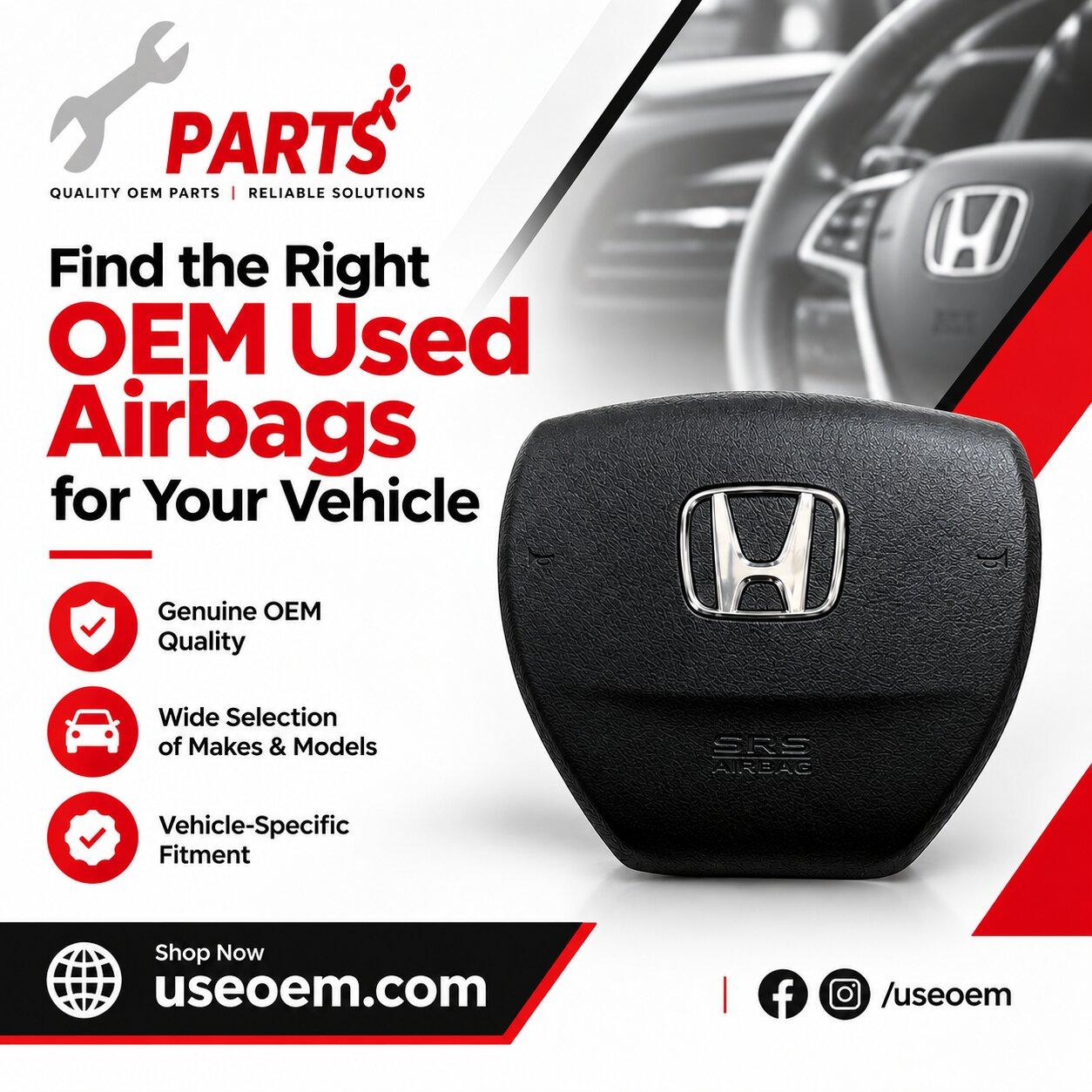
Finding the correct replacement airbag after a vehicle collision requires careful research, accurate vehicle information, and attention to component compatibility. Vehicle owners, collision repair professionals, and auto body shop operators must consider the original part number, airbag location, component condition, and vehicle specifications before purchasing a replacement. Use OEM helps customers explore used OEM airbags and factory-original automotive components for different vehicle makes, models, and model years.
Selecting a replacement based only on price or physical appearance can create compatibility problems. Understanding how original equipment manufacturer (OEM) components work, how airbag types differ, and why fitment verification matters can help buyers make more informed decisions.
OEM refers to original equipment manufacturer components associated with a vehicle's factory specifications. Used OEM airbags are previously installed factory-original components that may be available for replacement applications, subject to their condition and compatibility.
Modern vehicles can contain several types of airbags, each intended for a specific installation position and occupant-protection function. Common examples include driver steering wheel airbags, front passenger dashboard airbags, side-impact airbags, knee airbags, and roof curtain airbags.
These components are not automatically interchangeable. A driver-side airbag may have a different part number and configuration from a passenger-side airbag, even when both belong to the same vehicle model. Similarly, a roof curtain airbag must match the appropriate side and vehicle application.
When searching for replacement airbags, buyers should identify the exact component type and installation location before comparing available products. This approach helps narrow the search to relevant replacement options instead of relying on general vehicle descriptions.
Vehicle compatibility is one of the most important considerations when sourcing used automotive safety components. Two vehicles from the same model year can have different equipment configurations because of trim levels, production changes, optional safety features, or other specifications.
Before ordering used OEM airbags, buyers should review several important details:
Vehicle identification number (VIN): A VIN can help identify a vehicle's specific configuration and support fitment verification.
Make, model, and year: These details establish the basic vehicle application.
Trim level: Different trims may use different interior components and restraint-system configurations.
OEM part number: Comparing the original part number with the replacement listing can help establish whether the components match.
Airbag position: Driver, passenger, side, knee, and roof curtain airbags serve different installation locations.
Component condition: The listing should clearly describe the component's condition and whether it is identified as undeployed.
A matching model name alone is not enough to guarantee compatibility. Buyers should use available part-number information and vehicle-specific fitment checks together. When the application remains uncertain, a qualified automotive professional can help verify the correct replacement before installation.
Used automotive parts can offer additional sourcing options, but safety-related components require particular attention. Buyers should evaluate the available product information instead of assuming that every previously installed component is suitable for reuse.
First, review the component's condition and available history. An undeployed airbag has not been activated, but undeployed status alone does not establish that it is undamaged, functional, or suitable for installation.
Second, examine the product description and confirm the exact installation position. For example, a passenger dashboard airbag should not be confused with a driver steering wheel airbag. Differences in connectors, part numbers, and restraint-system configurations can affect compatibility.
Third, confirm the seller's fitment information and return policy before placing an order. Clear product information can help reduce purchasing uncertainty, particularly when sourcing components for collision repairs or professional automotive service.
Use OEM provides an online inventory of used OEM airbags and other factory-original automotive components. Customers can browse the complete automotive product collection to explore available replacement options and review product-specific information.
Understanding airbag categories makes it easier to identify the component required for a particular repair.
Driver steering wheel airbags: These are installed in the steering wheel area and form part of the driver's supplemental restraint system.
Front passenger airbags: These are commonly located in the dashboard area and must match the vehicle's passenger-side application.
Side-impact airbags: Depending on the vehicle, these may be installed in seats or other designated locations to provide protection during certain collisions.
Roof curtain airbags: These are positioned along the roof-side area and are intended to provide head protection in qualifying side-impact and rollover situations.
Knee airbags: These are installed in designated lower-dashboard areas and are intended to help manage lower-body movement during certain collisions.
In addition to airbags, automotive repair projects may involve seat belts, steering wheels, dashboards, and other interior components. However, each component must be evaluated according to its own fitment, condition, and installation requirements.
Airbags are part of a vehicle's supplemental restraint system (SRS), which may also include crash sensors, control modules, seat belt pretensioners, and associated electrical components. Replacing an airbag does not necessarily resolve every fault that appears after a collision.
Damage to related components, wiring, sensors, or restraint-system modules may require separate diagnosis. A warning light should not be ignored simply because a replacement airbag has been installed.
Because airbag systems can involve electrical hazards and specialized service procedures, inspection and replacement should be performed by a qualified automotive professional following the vehicle manufacturer's service instructions.
For additional guidance on airbag safety, recalls, and vehicle safety information, consult the National Highway Traffic Safety Administration (NHTSA). Buyers can use authoritative safety information alongside product-specific fitment checks when researching replacement components.
Searching for the right automotive replacement part can be challenging when several part numbers, model years, and installation positions are involved. Use OEM gives customers a place to explore used OEM airbags and other factory-original automotive components across a range of vehicle applications.
The available product categories include driver airbags, passenger airbags, roof curtain airbags, side airbags, knee airbags, seat belts, steering wheels, dashboards, and other interior parts.
Customers can visit the Use OEM homepage to learn more about the business and explore its inventory. Reviewing the product description, matching the OEM part number, and confirming the vehicle application can help buyers identify suitable replacement options.
Whether sourcing a component for an individual vehicle or a collision repair project, accurate product information and compatibility verification should remain central to the purchasing process.
Used OEM airbags are previously installed, factory-original airbag components offered for replacement applications. Their suitability depends on the specific vehicle, component condition, compatibility, and applicable safety requirements.
Start with the vehicle's make, model, year, and trim. Then compare the original OEM part number, airbag location, and available fitment information. A VIN-based compatibility check can provide additional assistance.
No. Undeployed means the airbag has not been activated. It does not independently confirm that the component is undamaged or suitable for reuse. The component must be evaluated according to applicable manufacturer guidance and professional service requirements.
Not necessarily. Different trims or production configurations may use different restraint-system components. Always verify the exact application and part number rather than assuming that all versions of a model share the same airbag.
Depending on the vehicle and extent of the damage, repairs may involve seat belts, steering wheels, dashboards, interior components, sensors, or restraint-system modules. Each component requires its own inspection and compatibility verification.
Use OEM offers an online product catalog featuring used OEM airbags and other factory-original automotive components. Visit Use OEM to explore available inventory and review vehicle-specific product information.
Choosing the right replacement airbag involves more than matching a product to a vehicle's make and model. Part-number verification, installation position, component condition, vehicle compatibility, and professional installation all contribute to an informed purchasing decision.
By researching used OEM airbags carefully and confirming fitment before ordering, vehicle owners and automotive professionals can reduce avoidable compatibility issues. Use OEM provides an online starting point for exploring factory-original automotive components and finding replacement options for different vehicle applications.