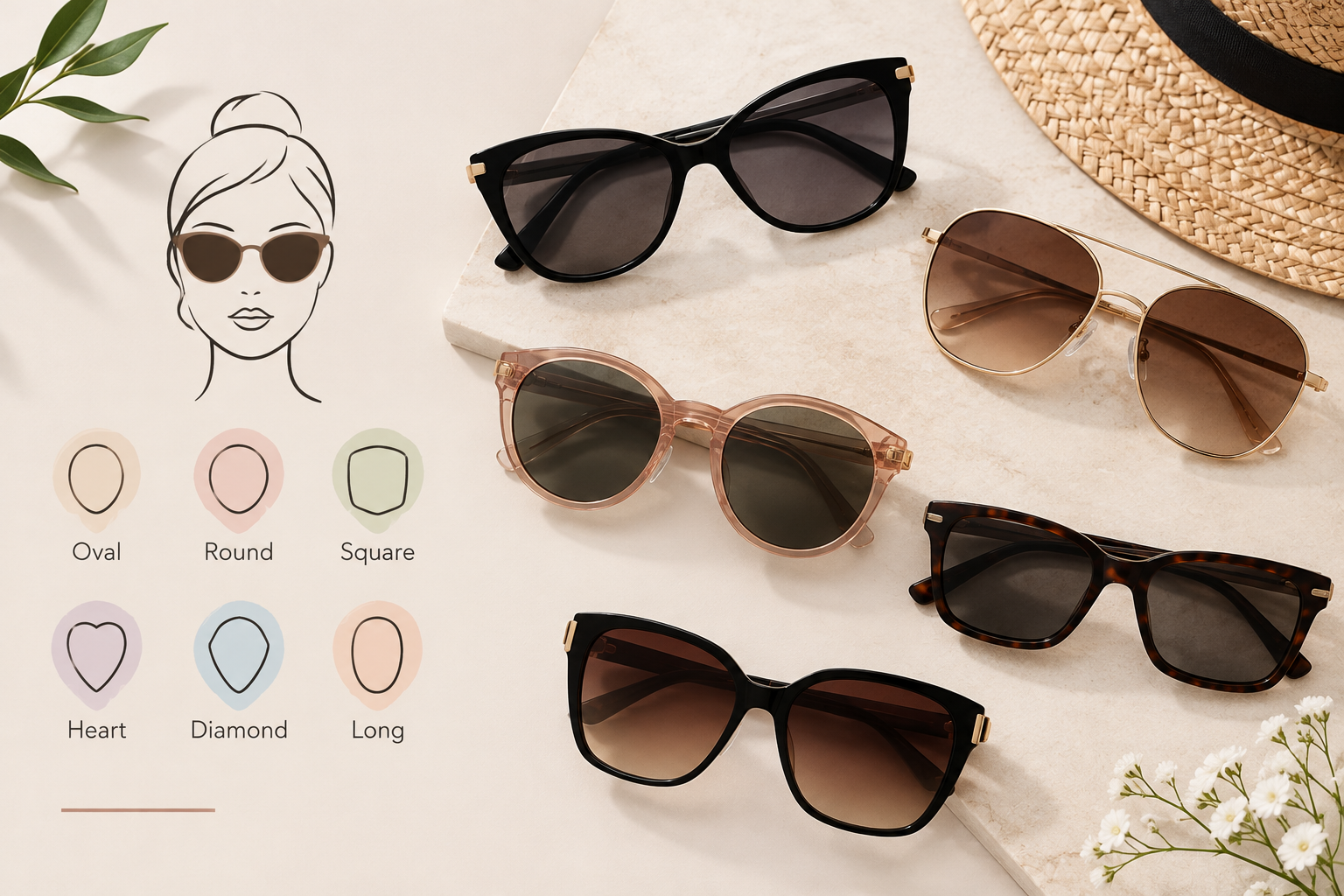
Choosing sunglasses often becomes easier when you understand how different frame shapes relate to your facial features. A wide frame can create a different effect than a narrow one, while rounded lenses can soften angular features. Comfort and proper coverage matter just as much as appearance.
When selecting Women's Sunglasses, consider face width, cheekbones, forehead proportions, and nose position. These details can guide the choice of a frame that looks balanced without following rigid fashion rules. Personal preference also matters because the most suitable pair should feel comfortable and fit naturally into everyday activities.
Which Sunglasses Suit a Round Face?
A round face generally has softer contours, with the width and length appearing relatively similar. Frames with defined edges can introduce contrast and create a more structured appearance.
Rectangular and square sunglasses are common options because their straight lines contrast with rounded facial features. Angular cat-eye styles can also work for people who prefer a more noticeable shape.
The frame should not be excessively wide or heavy. A balanced design can define while keeping the sunglasses proportionate to the face.
What Works Well With an Oval Face?
Oval faces typically have balanced proportions, with the face slightly longer than it is wide. This can make several frame shapes suitable, including rectangular, rounded, square, and aviator-inspired designs.
The main consideration is scale. Very large frames may dominate smaller features, while narrow frames can look out of proportion on a broader face.
Checking the frame's width against the widest part of the face is a practical starting point. The top of the frame should also sit comfortably without interfering with the eyebrows or cheeks.
How Can Sunglasses Balance a Square Face?
A square face often has a broad forehead, a defined jawline, and relatively straight sides. Rounded or oval lenses can introduce softer lines that contrast with these features.
Aviator-inspired frames and gently curved designs may suit people who prefer less angular eyewear. Rounded frames can also work, provided their size matches the wearer's facial proportions.
A frame does not need to hide or change natural features. The aim is to find a shape that complements them while providing comfortable coverage and a secure fit.
Which Frames Complement a Heart-Shaped Face?
A heart-shaped face often has a wider forehead and a narrower chin. Sunglasses with balanced proportions can help prevent the upper part of the face from appearing visually heavier.
Lightweight-looking frames, oval lenses, and some aviator styles may suit this face shape. Frames with a broader lower section can also create a balanced appearance, depending on their size and construction.
Avoid choosing a frame solely because a style guide recommends it. The bridge, lens height, and overall width should still feel right when the sunglasses are worn.
How Should Frame Size Match Facial Proportions?
Frame size can influence the overall appearance more than the shape alone. A frame that is too wide may extend far beyond the face, while a narrow design can create pressure around the temples.
People comparing different eyewear styles, including
sunglasses for men in Pakistan, can apply the same basic fitting principles: check frame width, bridge dimensions, lens height, and temple length rather than relying only on product photographs.
For women's sunglasses, the same measurements help determine whether a frame sits securely and follows the natural width of the face. The goal is a balanced fit, not simply choosing the smallest or largest available design.
Does Bridge Design Affect the Way Sunglasses Look?
The bridge is the section that rests on the nose, and its design influences how high or low the sunglasses sit. A poorly matched bridge may cause the frame to slide, touch the cheeks, or rest too close to the eyes.
Some frames have adjustable nose pads, while others use a fixed bridge moulded into the frame. Adjustable pads can offer more fitting flexibility, whereas fixed bridges depend more heavily on their dimensions and shape.
When trying sunglasses, check whether the frame remains in position while you look down or turn your head. It should not require frequent adjustment.
Can Lens Colour Complement Different Skin Tones?
Lens colour affects the overall appearance of sunglasses and can influence how they coordinate with clothing and accessories. Grey lenses provide a relatively neutral look, while brown lenses create a warmer appearance. Green, blue, and other coloured lenses offer different style options.
The choice should account for practical use as well as appearance. Lens darkness does not automatically indicate UV protection, so buyers should check the stated UV specifications.
For regular outdoor use, suitable UV protection is more important than choosing a colour simply because it matches an outfit.
Are Oversized Sunglasses Suitable for Every Face Shape?
Oversized sunglasses can make a strong style statement, but their proportions need attention. A frame that covers much of the cheeks or extends too far beyond the temples may feel cumbersome.
On a smaller face, a moderately oversized design may offer the intended appearance without overwhelming the features. On a broader face, a larger frame may provide more balanced coverage.
Weight is another consideration. Large lenses and substantial frame materials can feel heavier during extended wear, so comfort should be checked before purchase.
What Should You Check Before Buying Sunglasses Online?
Online shopping makes it possible to compare many frame designs, but photographs do not always show how a pair will fit. Measurements and product details are therefore important.
Before purchasing, check:
- Overall frame width.
- Lens width and height.
- Bridge width and design.
- Temple length.
- Frame material and weight.
- UV protection information.
- Return or exchange conditions.
- Whether prescription lenses are available if needed.
If possible, compare these measurements with a pair of sunglasses you already wear comfortably. This gives you a more reliable starting point than selecting a frame based on its appearance alone.
How Can You Choose a Shape That Suits Your Personal Style?
Face shape can help narrow down the options, but it should not dictate the final decision. Clothing preferences, daily activities, comfort, and the setting in which sunglasses will be worn all influence the choice.
For office commutes, a simple rectangular or oval frame may fit easily into everyday outfits. For holidays or outdoor events, a bolder cat-eye or oversized design may better match personal taste.
Trying more than one shape can reveal which proportions feel natural. A suitable pair should complement the face without causing pressure or obstructing vision.
Sunglasses Frame Guide by Face Shape
| |
|
|
| Round |
Rectangular, square |
Defined edges and balanced width |
| Oval |
Aviator, rectangular, rounded |
Keep frame size proportionate |
| Square |
Oval, rounded |
Softer lines and comfortable width |
| Heart-shaped |
Oval, selected aviator styles |
Balance forehead and chin proportions |
| Narrow face |
Smaller rectangular or oval frames |
Avoid excessive width |
| Broad face |
Wider frames with suitable temples |
Prevent pressure at the sides |
FAQs
Which sunglasses shape suits most face shapes?
There is no single shape that suits everyone. Oval and rectangular designs can be useful starting points, but individual facial proportions and fit should guide the final choice.
Should sunglasses be wider than the face?
The frame should generally align with the sides of the face without extending excessively or creating pressure around the temples.
Are cat-eye sunglasses suitable for round faces?
They can be. Their angled upper edges provide contrast with rounded features, although the frame size should remain proportionate.
How important is UV protection when choosing sunglasses?
UV protection is important for outdoor eyewear. Check the product specifications instead of assuming that dark lenses provide adequate protection.
Can I choose sunglasses based on face shape alone?
Face shape is a useful guide, but bridge fit, frame measurements, lens coverage, comfort, and personal style also matter.
Wrapping Up
Choosing sunglasses becomes more straightforward when face shape is considered alongside frame measurements, bridge design, lens colour, and comfort. Angular styles can provide contrast with rounded features, while curved frames may soften a more defined face.
These guidelines are starting points rather than strict rules. Comparing frame dimensions and checking UV protection can help you select sunglasses that suit your facial proportions, daily activities, and personal preferences.
 Russian
 English
 Romaian
 Portuguese (Brazil)
 Greek
Greek