Russian
 English
 Romaian
 Portuguese (Brazil)
 Greek
Greek

Foam Rollers Market Analysis: Textured, Smooth & Vibrating Roller Growth Potential
Home |
2026-08-18 09:16:40
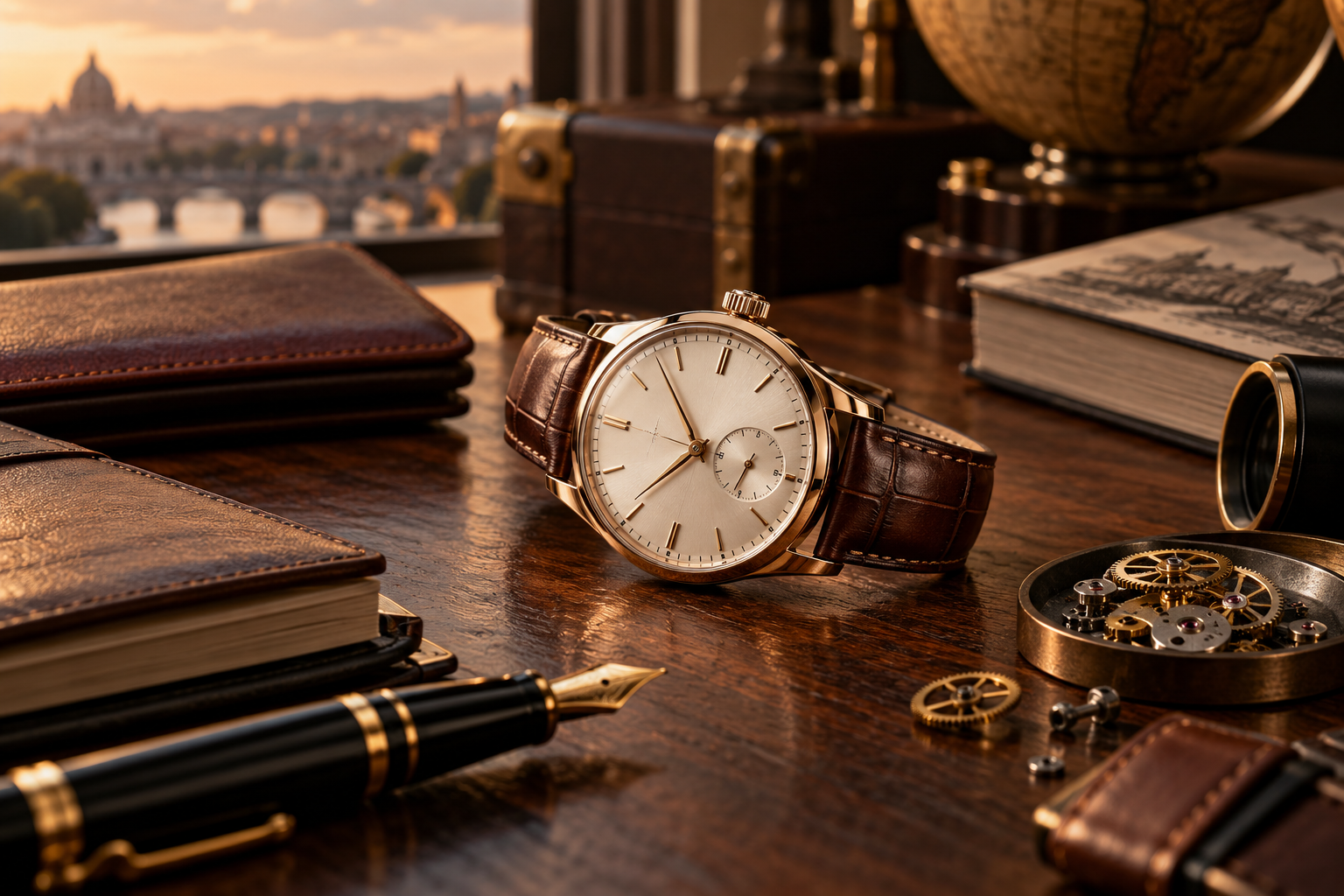
Owning an automatic watch comes with the responsibility of keeping its delicate mechanical movement in good condition. Unlike quartz watches, automatic timepieces rely on a mechanical movement powered by a mainspring that is wound through wrist motion. Understanding how to maintain an automatic watch can help preserve its accuracy, appearance, and long-term performance. Whether you own an everyday timepiece or appreciate luxury watch craftsmanship, following proper maintenance practices can protect your watch from unnecessary damage.
Automatic watches are designed to last for years, and many can function for generations when properly cared for. However, dirt, moisture, magnetic fields, and neglected servicing can affect their performance. A few simple habits can help keep your watch running reliably without requiring complicated maintenance routines.
An automatic watch is a mechanical timepiece that uses the movement of your wrist to wind its mainspring. Inside the watch, a weighted rotor rotates as you move your arm, transferring energy to the winding mechanism.
The mainspring stores this energy and gradually releases it to power the movement.
Unlike battery-powered quartz watches, automatic watches rely on mechanical components such as gears, springs, and an escapement to measure time.
Most modern automatic watches also allow manual winding through the crown, although some older movements do not.
Because these movements contain numerous interconnected components, proper care helps maintain their performance.
One of the simplest ways to maintain an automatic watch is to wear it regularly.
Normal wrist movement allows the rotor to wind the mainspring and replenish its stored energy.
If you wear your watch frequently, it may remain running without needing manual winding.
However, the amount of winding depends on your activity level and the efficiency of the movement.
When an automatic watch is left unworn, it eventually stops after its power reserve runs out.
Many automatic watches have power reserves of approximately 38 to 80 hours, although some models offer shorter or longer durations.
A stopped automatic watch is not necessarily damaged. You can usually restart it by winding it according to the manufacturer's instructions and resetting the time.
It is generally safe to let a properly functioning automatic watch stop when it is not being worn.
Proper winding is an important part of automatic watch maintenance.
Although the rotor winds the watch during regular wear, manual winding may be necessary when the watch has stopped.
For most modern automatic watches with manual winding capability, the process is straightforward.
Steps to wind an automatic watch:
Remove the watch from your wrist.
If the watch has a screw-down crown, carefully unscrew it.
Keep the crown in the appropriate winding position.
Turn the crown gently in the direction specified by the manufacturer.
Wind the watch using the recommended number of crown turns.
Push the crown back into place and secure it if necessary.
Many modern automatic movements have a slipping bridle mechanism that helps prevent damage from excessive winding. However, you should still follow the manufacturer's instructions rather than winding continuously.
Avoid forcing the crown if you notice unusual resistance.
Everyday wear exposes your watch to dust, skin oils, fingerprints, and moisture.
Over time, these substances can accumulate around the case, bracelet, crown, and clasp.
Regular external cleaning helps preserve the appearance of your watch and prevents dirt buildup.
Start by wiping the case and crystal with a clean, soft microfiber cloth.
For additional cleaning:
Use a soft, dry brush to remove dust from accessible areas.
Wipe metal bracelets with a slightly damp cloth when appropriate.
Dry the watch thoroughly after cleaning.
Use cleaning products recommended for the watch's materials.
Avoid harsh chemicals, abrasive cleaners, and household solvents.
A water-resistant watch may tolerate more thorough cleaning, but cleaning methods should always match its condition and manufacturer guidance.
Leather straps require different care because excessive moisture can damage the material.
Never immerse a watch in water unless its water resistance is suitable and its seals have been checked when necessary.
Water exposure is one of the most important considerations in automatic watch care.
Even watches labeled as water-resistant have limitations.
Water resistance depends on the watch's construction, seals, crown, and overall condition.
Over time, gaskets can deteriorate and reduce the watch's resistance to moisture.
|
Water Resistance Rating |
General Guidance |
|---|---|
|
30 meters / 3 ATM |
Usually suitable for minor splashes, not swimming |
|
50 meters / 5 ATM |
Some models support shallow-water activities; check manufacturer guidance |
|
100 meters / 10 ATM |
Often suitable for swimming when maintained and properly sealed |
|
200 meters / 20 ATM |
Common on watches designed for demanding water activities |
|
Diver's-rated watches |
Designed and tested for diving under applicable standards |
These ratings are not direct indicators of safe diving depth. Always follow the manufacturer's recommendations.
Avoid operating the crown or pushers underwater unless the watch is specifically designed for that function.
If water enters the watch or condensation appears beneath the crystal, contact a qualified watchmaker promptly.
Magnetic fields can interfere with the accuracy of mechanical watches.
When certain components become magnetized, the watch may begin running unusually fast or show inconsistent timekeeping.
Common sources of magnetic fields include:
Strong magnetic phone accessories.
Magnetic clasps and closures.
Speakers and audio equipment.
Magnetic tool holders.
Industrial equipment.
Powerful household magnets.
Modern watches may include components designed to resist magnetism, but resistance levels vary.
Avoid placing your watch directly against strong magnets for extended periods.
If your watch suddenly gains substantial time without an obvious cause, a watchmaker can check whether magnetization is responsible.
Demagnetization is often a relatively simple professional procedure.
Proper storage helps protect a watch when it is not being worn.
A safe storage area should be clean, dry, and away from excessive heat, moisture, and direct sunlight.
A padded watch box or storage case can protect the watch from scratches and accidental impacts.
Keep your watch in a clean, dry environment.
Avoid prolonged exposure to direct sunlight.
Store watches separately to prevent scratches.
Use soft padding to protect the case and bracelet.
Keep the watch away from strong magnetic objects.
Avoid storing watches in excessively humid areas.
For watches with leather straps, ensure the strap is dry before placing the watch in storage.
If you own multiple automatic watches, individual compartments can help keep them organized and protected.
A watch winder is a device that rotates an automatic watch to simulate wrist movement and maintain its power reserve.
Watch winders can be convenient for collectors who own multiple timepieces.
They may be particularly useful for watches with complicated calendar functions that take time to reset.
However, a watch winder is not essential for every automatic watch.
Letting an automatic watch stop does not automatically harm its movement.
A watch winder may be beneficial if:
You regularly alternate between several automatic watches.
Your watch has a complicated calendar mechanism.
You prefer not to reset the time and date frequently.
The manufacturer recommends a particular winding routine.
Choose a winder with adjustable turns per day and rotation direction suited to your watch's movement.
Incorrect settings may leave the watch insufficiently wound, while unnecessary continuous operation adds wear.
Automatic watches contain delicate mechanical components that can be affected by physical shocks.
Although many modern movements include shock-protection systems, significant impacts can still damage the balance assembly or other components.
Activities that involve repeated strong vibrations or impacts may increase the risk of damage.
Examples include:
Contact sports.
Heavy construction work.
Activities involving powerful vibrating equipment.
Situations where the watch may strike hard surfaces.
Some automatic watches are designed for demanding environments, but protection varies by model.
If your watch experiences a strong impact and begins losing or gaining significant time, arrange a professional inspection.
Incorrect crown operation can damage certain watch mechanisms.
Many automatic watches include a date complication that should not be adjusted through the quick-set function while the calendar mechanism is engaged.
The restricted period varies by movement, but it often occurs around the hours near midnight.
Before adjusting the date, consult the watch's instruction manual.
If your movement has a restricted date-setting period, move the hands to a safe time before using the quick-set date function.
After setting the date, adjust the hands to the correct time and confirm whether the displayed hour is AM or PM.
Always push or screw down the crown properly after making adjustments.
Do not force the crown if it feels stuck or unusually resistant.
Even a well-maintained automatic watch requires occasional professional attention.
Mechanical movements contain lubricated components that experience gradual wear.
Over time, lubricants can deteriorate, and seals may lose their effectiveness.
Professional servicing helps identify developing problems and maintain the movement's reliability.
Service intervals depend on the manufacturer, movement type, operating conditions, and frequency of wear.
Some manufacturers recommend servicing approximately every three to five years, while others specify longer intervals or recommend servicing based on the watch's condition.
Always check the recommendations for your particular model.
During a professional service, a watchmaker may:
Inspect the movement and its components.
Clean and lubricate movement parts.
Replace worn components when necessary.
Check timekeeping performance.
Inspect the crown and seals.
Test water resistance when appropriate.
Examine the bracelet and case condition.
If you notice unusual noises, condensation, difficulty winding, or sudden changes in accuracy, seek professional help rather than waiting for a routine service.
Automatic watches are not expected to maintain the same level of accuracy as quartz watches.
Small daily variations are normal because mechanical movements are affected by factors such as position, temperature, and movement design.
Some certified chronometers meet specific accuracy standards, while other automatic watches may have wider tolerances.
Compare your watch against a reliable time reference over several days.
Record whether it gains or loses time and look for a consistent pattern.
If the performance changes significantly from its usual behavior, a watchmaker can inspect the movement.
A sudden problem may indicate magnetization, an impact, insufficient winding, or a servicing issue.
Avoid attempting to regulate the internal movement yourself unless you have appropriate watchmaking expertise.
The strap or bracelet contributes to both the appearance and comfort of an automatic watch.
Different materials require different maintenance methods.
Stainless steel and other metal bracelets can collect dirt between their links.
Use a soft cloth or appropriate brush to remove buildup.
Avoid excessive moisture near the watch case unless its water resistance has been confirmed.
Leather straps should be kept away from prolonged moisture exposure.
Allow them to dry naturally after contact with perspiration.
Avoid direct heat sources, which can cause leather to dry out or crack.
Rubber and silicone straps are often easier to clean.
Wipe them regularly and check for cracks or signs of wear.
Replace damaged straps or spring bars before they create a risk of the watch falling.
Some everyday habits can shorten a watch's service life or create unnecessary repair expenses.
|
Common Mistake |
Why It Matters |
Better Practice |
|---|---|---|
|
Forcing the crown |
Can damage winding or setting components |
Operate it gently |
|
Ignoring water resistance |
May lead to moisture entering the case |
Follow the manufacturer's limits |
|
Using harsh cleaning products |
Can damage finishes, seals, and straps |
Use compatible cleaning methods |
|
Exposing the watch to strong magnets |
May affect timekeeping |
Avoid close contact with powerful magnets |
|
Changing the date at the wrong time |
Can damage some calendar mechanisms |
Check the movement's instructions |
|
Ignoring unusual timekeeping changes |
May allow mechanical problems to worsen |
Arrange an inspection |
|
Wearing the watch during heavy impacts |
Can affect delicate movement components |
Remove it during high-impact activities |
Avoiding these mistakes can help maintain the watch's appearance and mechanical condition.
Yes. Automatic watches are designed for regular wear. Daily wrist movement helps wind the mainspring, while normal cleaning and appropriate handling support long-term performance.
No. Allowing an automatic watch to stop when it is not being worn is generally harmless. Restart it according to the manufacturer's winding instructions when you want to wear it again.
Many automatic watches have a power reserve between 38 and 80 hours, although the exact duration varies by movement. Check your watch's specifications for its rated power reserve.
Some automatic watches can be cleaned with water, depending on their water-resistance rating and condition. However, watches with uncertain water resistance, damaged seals, or moisture-sensitive straps should be cleaned using safer, non-immersive methods.
Traditional automatic mechanical watches do not require a conventional battery. Their mainsprings store the energy needed to power the movement.
Warning signs include sudden changes in accuracy, unusually short power reserve, difficult winding, unexpected noises, or condensation inside the crystal. Follow the manufacturer's recommended servicing schedule as well.
Learning how to maintain an automatic watch does not require advanced watchmaking knowledge. Simple habits such as regular cleaning, proper winding, careful storage, and avoiding unnecessary moisture or impact can help protect your timepiece.
Automatic watches combine engineering, craftsmanship, and traditional mechanical design. With proper attention and professional servicing when needed, they can deliver reliable performance for many years.
Whether you own a single automatic watch or maintain a growing collection, following these practical care tips can help preserve your watch's functionality, appearance, and long-term value.