Top 10 Bathroom Vanity Trends Transforming Modern Home Interiors
Networking |
2026-09-18 05:21:18
 Russian
 English
 Romaian
 Portuguese (Brazil)
 Greek
Greek
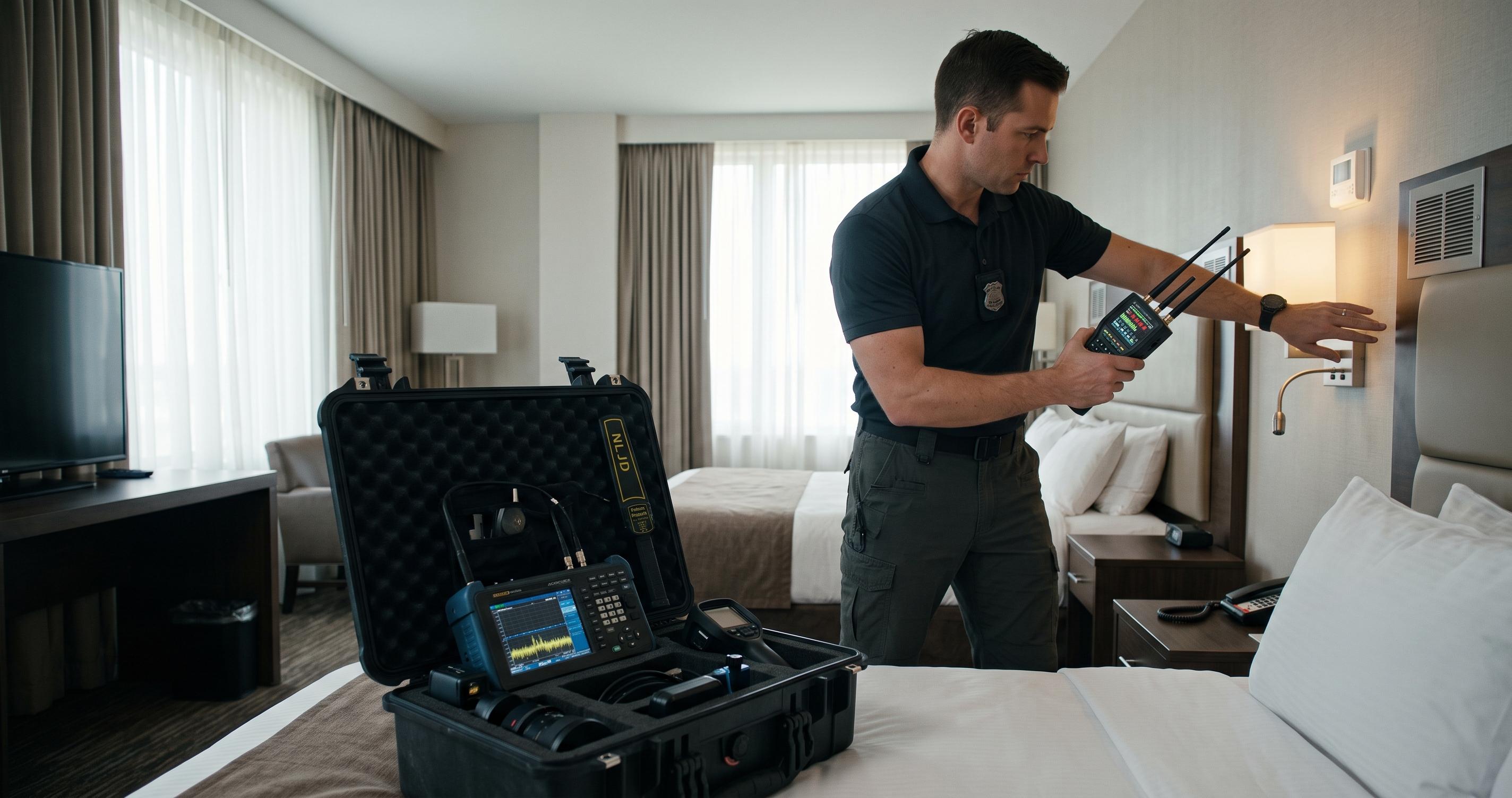
A clean hotel room should provide guests with comfort, privacy, and peace of mind. However, even well-maintained hotels can experience pest problems that affect the guest experience and create operational challenges. Hotel room bug sweepers can help address these concerns by supporting pest inspections, identifying possible signs of insect activity, and helping hotel management determine when professional treatment is needed. From bed bugs hidden around mattress seams to insects found near furniture or plumbing, early identification is an important part of maintaining a comfortable accommodation environment.
Hotels accommodate travelers from different cities and countries, and pests can sometimes be transported through luggage, clothing, and personal belongings. As a result, regular cleaning alone may not be enough to identify every potential problem. A room can appear spotless while insects remain concealed in small gaps, furniture joints, or other difficult-to-reach areas.
For hotel owners, property managers, and housekeeping teams, a structured pest inspection process can help reduce uncertainty and support timely action. Understanding how hotel room bug sweepers fit into a wider pest management strategy can help hospitality businesses protect guest comfort, maintain their reputation, and manage pest concerns more effectively.
The term hotel room bug sweepers can describe pest inspection professionals, specialized detection services, or tools used to investigate suspected insect activity in hotel rooms. The specific service depends on the provider and the equipment being used.
Unlike ordinary housekeeping, a pest inspection focuses on identifying evidence of insects and locating areas where they may be hiding. The inspection process may involve a visual examination, monitoring devices, or additional assessment by a qualified pest control professional.
The main objective is to determine whether a pest problem may exist and establish the appropriate next steps.
Typical inspection activities include:
Examining mattresses, bed frames, and headboards for possible bed bug activity.
Checking upholstered furniture and concealed spaces for signs of insects.
Inspecting carpet edges, cracks, and gaps around fixtures.
Identifying possible evidence such as shed skins, eggs, droppings, or live insects.
Recording guest complaints and previous inspection findings.
Recommending suitable treatment or additional monitoring when necessary.
Not every inspection method is suitable for every pest. Bed bugs, cockroaches, ants, and moisture-associated insects have different habits and hiding places. Therefore, the inspection should be tailored to the suspected pest rather than relying on one general approach.
Pest problems can affect much more than the physical condition of a hotel room. They may influence guest satisfaction, staff workload, room availability, and the property's public reputation.
A consistent inspection process helps management respond to potential problems before they become more difficult to control.
Guests expect a clean sleeping environment. Finding insects in a bed, suitcase, or upholstered chair can cause distress and interrupt a stay.
When concerns are investigated promptly, guests can be informed about the steps being taken. If a potential infestation is identified, the affected room can be assessed before it is occupied again.
A well-managed response also helps prevent speculation and unnecessary alarm. Reports should be based on inspection findings rather than assumptions about the source of the problem.
Online reviews and travel platforms influence accommodation decisions. Reports of unresolved pest issues can discourage prospective guests, especially when complaints suggest that management failed to respond appropriately.
A documented pest inspection program shows that guest concerns are taken seriously. Although no inspection program can eliminate every risk, consistent procedures can help hotels demonstrate responsible management.
If certain pests remain undetected, they may spread to nearby areas or furnishings, depending on the species and the circumstances.
This can lead to additional treatment costs, room closures, staff disruption, and repeat inspections. Early detection may reduce the scope of the required response, although the actual outcome depends on the extent of the infestation.
The inspection process should focus on areas where the suspected pest is likely to hide. For bed bugs, this often means examining places close to sleeping areas. Other pests may require greater attention to food storage, plumbing, moisture, or structural gaps.
Mattresses and bed frames are important inspection points when bed bugs are suspected. These insects can hide in narrow spaces and may remain unnoticed during routine cleaning.
Inspectors may examine:
Mattress seams, piping, and labels.
Bed frame joints and screw holes.
Headboard edges and mounting points.
Bedside tables and nearby furniture.
Cracks and crevices around the sleeping area.
Live insects, shed skins, eggs, and small dark marks may provide useful evidence. However, stains or isolated marks should not automatically be classified as bed bug activity without further assessment.
Sofas, lounge chairs, and fabric-covered furniture contain seams and folds that may provide hiding places for certain insects.
Furniture close to the bed may receive particular attention during a bed bug investigation. Inspectors should also consider the furniture's construction and whether concealed spaces can be examined properly.
Carpet edges, spaces beneath furniture, and gaps around flooring can provide shelter for some pests.
Where signs of insect activity are discovered, the surrounding area should be examined to determine whether the problem is limited to one location or extends further into the room.
Bathrooms can be relevant when the suspected pest is attracted to moisture or may enter through plumbing openings.
Drains, damp surfaces, pipe gaps, and areas with persistent moisture should be investigated when appropriate. These areas are not typically the primary hiding locations for bed bugs, so inspection priorities must reflect the pest involved.
Wardrobes, luggage racks, and spaces where suitcases are stored may be checked when a bed bug problem is suspected.
Travelers can unintentionally transport bed bugs in their belongings. However, the presence of luggage does not establish where an infestation originated, and guests should not be blamed without supporting evidence.
Bed bugs are among the more challenging pests to detect because they hide in small spaces and may not be visible during ordinary room cleaning.
Effective identification depends on a combination of careful inspection, suitable equipment, and professional judgment.
A trained inspector examines likely hiding places for live insects and other supporting evidence.
The quality of the inspection depends on several factors, including:
The inspector's experience and training.
Access to mattress seams, furniture joints, and other hiding places.
The size and location of the suspected infestation.
The inspection methods used.
Whether additional monitoring is required.
A quick visual check should not be treated as equivalent to a detailed inspection.
Depending on the situation, pest professionals may use flashlights, inspection tools, bed bug interceptors, or other monitoring equipment.
Each method has a particular purpose. Some tools help examine narrow gaps, while monitoring devices may provide evidence of insect activity over time.
No single tool should be assumed to detect every infestation. When the evidence is inconclusive, further monitoring or a second inspection may be recommended.
When suspicious evidence is discovered, a qualified pest control professional can help identify the insect and recommend suitable control measures.
Treatment should be based on the findings rather than assumptions. If bed bugs are confirmed, the management plan may include targeted treatment, monitoring, preparation of affected areas, and follow-up inspections.
The affected room should be returned to normal use according to the treatment provider's instructions and the hotel's safety procedures.
A suspected pest problem should be handled through a clear response procedure. The goal is to investigate the concern, protect guests, and reduce the possibility of the issue being overlooked.
The following steps can help establish a practical process.
Record the complaint: Document the room number, date, reported observations, and available photographs or insect specimens.
Arrange an inspection: Have the affected area examined using methods appropriate to the suspected pest.
Assess room availability: Consider temporarily removing the room from service when an infestation is reasonably suspected.
Prevent unnecessary movement: Avoid transferring potentially affected bedding, furniture, or belongings into other rooms.
Contact a qualified professional: Obtain identification and treatment recommendations when further action is required.
Communicate with guests: Explain the response process clearly without making unsupported claims about the source or extent of the issue.
Arrange follow-up checks: Confirm whether further inspection, monitoring, or treatment is necessary before the room returns to normal use.
These steps should be adjusted to reflect the type of pest, the hotel's internal policies, and applicable local requirements.
Chemical treatments should never be applied casually. Products must be used according to their labels, and employees should not be expected to perform tasks beyond their training or authorization.
Inspections are most effective when they form part of a wider pest management program. Housekeeping, maintenance, staff training, and professional pest control all contribute to identifying and managing potential risks.
Hotels should incorporate appropriate inspections into their housekeeping and maintenance routines.
Additional checks may be required following guest complaints, confirmed pest activity, room maintenance, or treatment.
Inspection records should include:
The date and location of the inspection.
The areas examined.
Any evidence discovered.
The action taken.
Follow-up requirements and findings.
These records help management identify recurring concerns and determine whether further investigation is needed.
Housekeeping staff often have the opportunity to notice unusual conditions before other employees do. Training helps them recognize possible warning signs and report concerns promptly.
Staff training should cover:
Common signs associated with relevant pests.
Procedures for reporting suspected activity.
Safe handling of potentially affected items.
Escalation procedures for supervisors and pest professionals.
Accurate documentation and guest privacy.
Employees should be encouraged to report suspicious evidence without being expected to identify every insect independently.
Routine cleaning supports general hygiene and helps remove food debris that may attract certain pests. However, cleanliness alone cannot guarantee that a room is free from bed bugs.
Hotels should also address damaged seals, gaps around pipes, deteriorating fixtures, and other openings that may allow pests to enter or hide.
Food waste should be managed correctly, spills should be cleaned promptly, and moisture problems should be investigated before they contribute to recurring pest activity.
A reliable pest control provider can help hotels establish suitable inspection schedules and select appropriate treatment methods.
When evaluating a provider, management should consider relevant experience, qualifications, inspection procedures, safety practices, reporting standards, and follow-up support.
Treatment results should be assessed according to the agreed control plan. One inspection or treatment should not automatically be considered proof that every pest has been eliminated.
Hotels considering hotel room bug sweepers or related inspection services should evaluate the quality of the service rather than choosing solely on price.
The following factors can help management make an informed decision.
Hospitality experience: Check whether the provider has worked with hotels and similar accommodation businesses.
Inspection methods: Ask which areas will be examined and what equipment or monitoring methods will be used.
Evidence-based reporting: Findings should be documented clearly, with recommendations linked to the observations.
Appropriate treatment plans: Methods should be selected according to the pest identified and the severity of the problem.
Safety procedures: Room restrictions, preparation requirements, and treatment precautions should be explained in advance.
Follow-up services: Determine whether repeat inspections and monitoring are available.
Transparent pricing: Confirm which services are included and whether additional visits or treatments involve separate charges.
A dependable provider should also explain the limitations of its inspection methods. Promises of guaranteed detection in every situation should be treated cautiously because inspection effectiveness depends on the circumstances.
Maintaining a comfortable and hygienic hotel environment requires consistent inspections, trained employees, responsible maintenance, and timely professional support. Hotel room bug sweepers can contribute to this process by helping identify possible pest activity and directing attention toward areas that require further investigation. However, detection is only one part of effective pest management. Suspected infestations must be assessed carefully, appropriate control measures must be implemented, and follow-up inspections should be conducted when necessary. By establishing a structured approach to pest prevention and response, hotels can protect guest comfort, manage operational risks, and maintain stronger standards across their properties.