Car Transport Service in Gurgaon – Safe, Reliable & Affordable Vehicle Relocation
Other |
2026-07-06 06:59:07
 Russian
 English
 Romaian
 Portuguese (Brazil)
 Greek
Greek
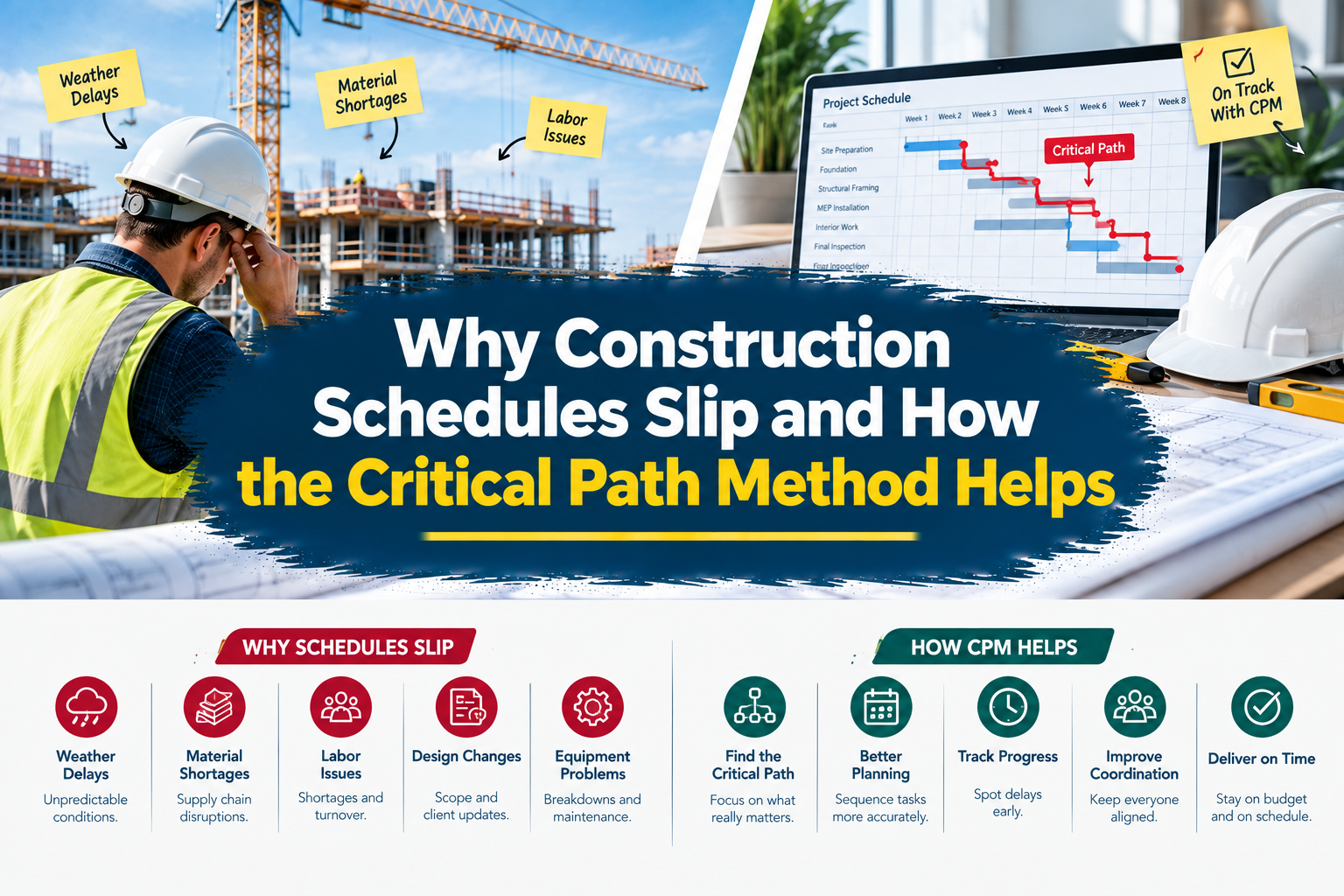
Almost every contractor has lived through the same scene. The project starts with a neat timeline, then a delivery arrives late, an inspection gets pushed, and suddenly three trades are waiting on each other. By the time anyone notices, the finish date has moved by weeks.
Delays like these are rarely caused by one dramatic event. They usually come from a schedule that was built on assumptions instead of logic. The Critical Path Method, known as CPM, exists to fix that problem. If you’d like help building one for your own job, you can explore professional CPM scheduling services after reading the basics below.
CPM breaks a project into individual activities, then links them according to which must finish before others can start. Pouring a slab, for example, can’t happen until formwork and rebar are complete. Mapping these links shows the true order of the work.
Among all those linked activities, one chain determines the shortest possible project duration. That chain is the critical path. If any activity on it slips, the whole project finishes later. Activities off the path have some breathing room, called float.
Many schedules are built from a desired end date and then worked backward. That approach ignores weather, material lead times, and inspection waits.
A job with hundreds or thousands of activities hides links that nobody notices until something goes wrong. A missed dependency can stall several crews at once.
A baseline schedule is only useful if it’s compared with reality. When updates stop, the plan and the job site drift apart.
Good schedules start by dividing the project into manageable pieces. The better the breakdown, the easier it is to assign durations and spot problems early.
Durations should reflect crew sizes, productivity, and site conditions. Sequencing should follow how the work is actually built, not how it looks on a Gantt chart.
Materials with long lead times, like structural steel or specialty glazing, can control the whole timeline. Tying procurement dates into the schedule keeps those items from becoming surprises.
Milestones give owners and managers checkpoints, while float tracking shows where there is flexibility and where there isn’t.
Many contracts charge daily penalties for late completion. A well-maintained schedule helps you spot trouble early enough to recover time.
When the owner changes scope or something unexpected delays work, you need documentation. Methods like time impact analysis show how a specific event affected the completion date, which strengthens negotiations over time and cost.
When labor, equipment, and materials arrive at the right moment, you avoid paying for idle crews or storing deliveries too early.
Primavera P6 is common on larger and public-sector projects, while Microsoft Project is popular for smaller jobs. Either can support a proper CPM schedule when used correctly.
Government work often comes with strict scheduling specifications. Following them from the start helps prevent rejected submittals and resubmission delays. Many teams bring in outside specialists so they don’t have to build that expertise in-house.
Schedules and budgets influence each other. A compressed timeline raises labor and equipment costs, and a budget cut can stretch the timeline. Teams that plan both together make better decisions, which is why many contractors work with a full-service construction estimating company that handles takeoffs and estimates alongside scheduling.
Building a rough schedule during the bid stage helps you price general conditions and risk more accurately.
Large projects, public contracts, and jobs with delay-claim exposure benefit from a specialist’s experience. A professional schedule also tends to hold up better if it ever needs to be defended.
If your project managers are already juggling several jobs, delegating schedule development and updates can free them to focus on the field. For a closer look at deliverables, standards, and software support, see this page on critical path method scheduling for contractors.
A schedule is only as good as the logic behind it. CPM gives contractors a way to see which tasks truly control the finish date, protect their margins, and respond quickly when plans change. Whether you build the schedule yourself or hand it to specialists, the key is to keep it honest and keep it updated.