Professional Artificial Turf Installation Services Protect Your Property
Home |
2026-08-04 22:26:35
 Russian
 English
 Romaian
 Portuguese (Brazil)
 Greek
Greek
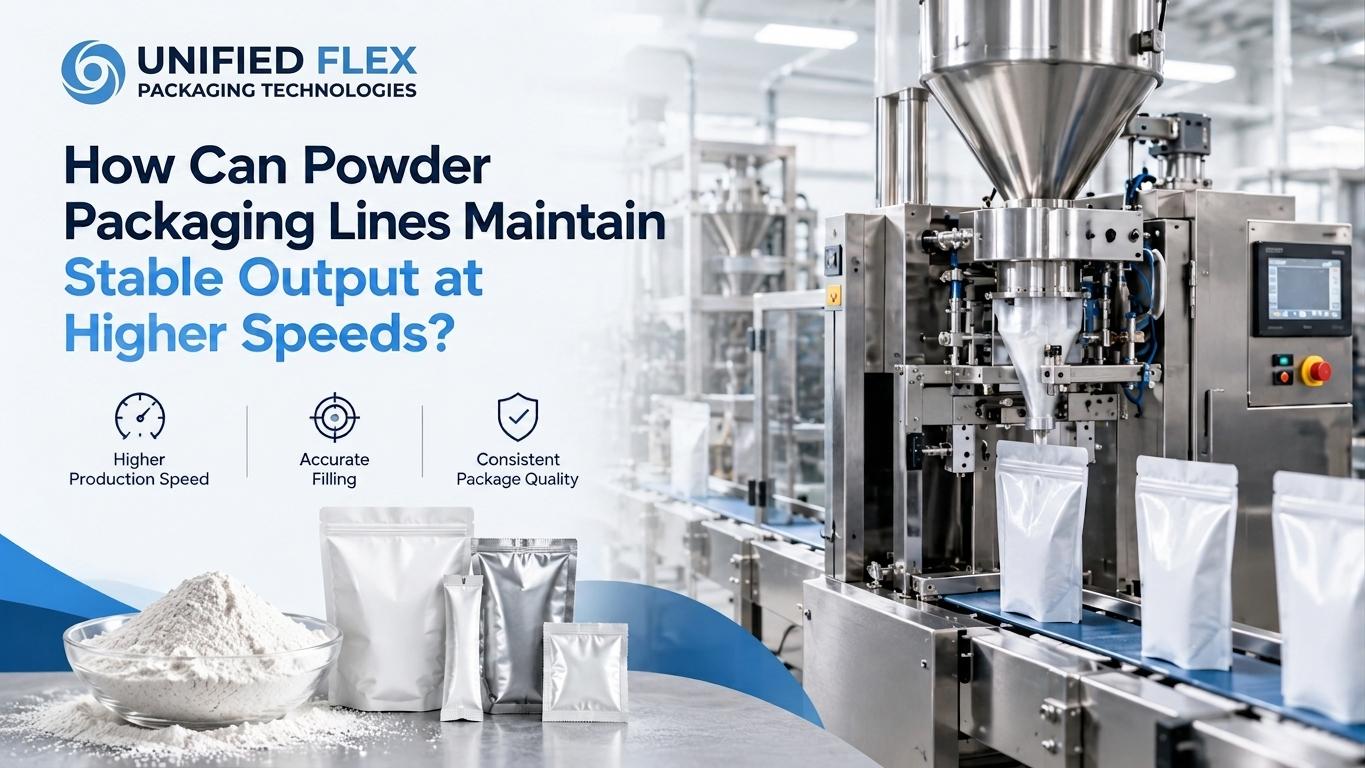
Increasing production speed is a common goal for manufacturers that package industrial powders, minerals, chemicals, food ingredients, and other powdered materials. However, running a packaging line faster does not always mean producing more saleable packages. If filling accuracy drops, bags develop weak seals, or powder spills during dosing, the line may require frequent adjustments and unplanned stops.
Maintaining stable output requires more than increasing machine speed. Manufacturers need to coordinate powder feeding, dosing, bag forming, filling, sealing, and product handling so that each stage works at a consistent pace. The type of powder, packaging material, bag size, and production requirements also influence how quickly a line can operate reliably.
Modern Powder Filling Machines can support consistent production when their dosing systems, filling settings, and packaging equipment are matched to the product. For manufacturers using flexible packaging, the right combination of filling technology and bag-making equipment can help maintain output without creating unnecessary waste or quality issues.
Stable output means a packaging line can maintain a consistent production rate while meeting the required fill weight, package quality, and sealing standards. A machine may run quickly for a short period, but frequent interruptions can reduce its actual production capacity over an entire shift.
For example, a line may operate at a fast cycle rate but lose time because powder accumulates around the filling area, bags fail to seal properly, or operators repeatedly adjust the dosing system. These issues can reduce the number of acceptable packages produced each hour.
Consistent production helps manufacturers manage several important areas:
The objective is to maintain the fastest practical operating rate that meets the required packaging standards, rather than focusing on the machine's maximum advertised speed alone.
Different powders behave differently during handling and filling. Particle size, bulk density, moisture content, and flow characteristics can all affect how a product moves through a hopper and dosing system.
Free-flowing powders may move easily through feeding equipment, while fine or cohesive materials can form clumps, create dust, or move inconsistently. These differences can cause variations in fill weight when the machine is not configured for the material.
Before selecting or adjusting Powder Filling Machines, manufacturers should assess the characteristics of the product and its required package weight.
For example, an auger filling system uses a rotating screw to dispense a measured quantity of powder. It can be suitable for many fine or cohesive products when the auger, hopper, and operating settings are selected correctly. Other materials may require a different dosing arrangement based on their flow properties and accuracy requirements.
The filling system should also accommodate the expected production rate. If powder feeding cannot keep pace with the packaging cycle, increasing the machine's speed may lead to inconsistent fills or empty cycles.
A stable supply of powder is necessary for continuous packaging. When the hopper receives material unevenly, the dosing system may struggle to deliver the same quantity during each cycle.
Powder bridging is one possible cause. It occurs when material forms an arch or blockage above the outlet, preventing powder from flowing freely. Cohesive powders may also stick to hopper walls or form clumps that interrupt feeding.
Manufacturers can address these problems by:
Feeding assistance should be selected carefully because excessive agitation can cause dust formation or affect materials that are sensitive to handling.
A consistent powder supply allows the dosing system to operate more predictably. It also reduces the need for operators to stop the line and correct feeding problems during production.
Filling accuracy becomes particularly important when a packaging line operates at a higher cycle rate. The dosing system has less time to complete each filling cycle, so its design and settings must suit both the product and the required output.
Manufacturers should establish an acceptable fill-weight range and check whether the equipment can maintain it at the intended operating speed.
Several factors can affect dosing consistency:
Regular weight checks can reveal whether the machine is maintaining consistent fills. Where appropriate, checkweighers or other weighing systems can help identify packages that fall outside specified limits.
Operators should also assess trends rather than relying on occasional individual checks. Repeated overfilling may increase material costs, while underfilled packages may fail quality or regulatory requirements.
Adjustments should be based on actual measurements and validated machine settings. Simply increasing the dosing speed may not solve the underlying cause of inconsistent fills.
Powder filling is only one stage of the packaging process. The bag-forming, product-dispensing, and sealing operations must work together to maintain a consistent production rate.
Vertical form-fill-seal (VFFS) machines form bags from a roll of flexible packaging film, fill them with the product, and seal them during the packaging cycle. Their performance depends on several coordinated operations, including film movement, bag formation, dosing, and sealing.
If one stage operates more slowly than the others, it can become a production bottleneck. For example, a dosing system may be capable of delivering powder quickly, but the line may still need to slow down if the sealing process requires more time.
To maintain stable output, manufacturers should assess:
Coordinating these operations helps the packaging line maintain a practical production rate without sacrificing package quality.
Packaging format affects how a line handles, fills, and seals each package. Manufacturers should consider the product's properties, package size, storage needs, distribution requirements, and target production rate before choosing equipment.
For products packed in flexible bags, Stand Up Pouch Packaging may be suitable when the application calls for a pouch that can stand upright on a shelf. The format can accommodate different pouch sizes and designs, depending on the packaging equipment and material specifications.
However, stand-up pouches do not automatically provide a faster packaging cycle. Pouch handling, opening, filling, and sealing requirements can influence the achievable output.
When comparing pouch packaging with VFFS packaging, manufacturers should consider the complete process rather than the bag format alone.
|
Factor |
What manufacturers should assess |
|
Powder properties |
Flow behaviour, particle size, density, and dust formation |
|
Package format |
Bag dimensions, pouch design, and opening requirements |
|
Filling system |
Dosing method, accuracy, and cycle time |
|
Packaging material |
Film compatibility, stiffness, and sealing requirements |
|
Production target |
Required packages per minute and output per shift |
|
Changeovers |
Time needed to switch products, weights, or package sizes |
The most suitable format is the one that meets product and packaging requirements while supporting the planned production rate.
Sealing problems can interrupt production even when the filling system operates correctly. Powder trapped in the sealing area may prevent the packaging material from forming a reliable seal. Incorrect temperature, pressure, or dwell time can also contribute to seal defects, depending on the film and sealing method.
These problems may lead to leaking packages, product contamination, rework, or rejected bags.
To reduce sealing interruptions, manufacturers should:
Increasing speed may reduce the time available for sealing, so the process must be validated at the intended operating rate. If the sealing system cannot maintain the required seal quality, the line may need a different configuration or a lower operating speed.
Consistent sealing helps reduce rejected packages and prevents the filling and dosing stages from being disrupted by repeated quality checks or equipment stops.
Fine powders can create dust during transfer, dosing, and filling. Excessive dust may affect the working environment, accumulate around equipment, interfere with sealing, and increase product loss.
Dust control is particularly important for chemical powders and other materials that require specific handling precautions.
Manufacturers can assess several measures:
The control method should reflect the properties and hazards of the specific powder. Some materials require additional precautions to manage inhalation, combustible dust, or chemical exposure risks.
Reducing spills and dust buildup can also limit cleaning-related stops. This supports more predictable production and helps maintain a cleaner filling and sealing area.
A packaging line may experience more frequent interruptions when components become worn, sensors are misaligned, or product residue accumulates inside the equipment. Operating at higher speeds can make existing mechanical or control problems more noticeable.
Preventive maintenance helps manufacturers identify issues before they cause extended downtime.
A maintenance schedule should cover the components and systems relevant to the machine, including:
Operators should record recurring faults, rejected packages, cleaning time, and maintenance-related stops. These records help identify patterns and determine whether a recurring problem requires a mechanical adjustment, a change in operating settings, or a replacement component.
Maintenance intervals should follow the equipment manufacturer's recommendations and account for the material being packaged and the actual operating conditions.
Machine speed alone does not show how effectively a packaging line performs. Manufacturers should measure the number of acceptable packages produced over a defined period and compare that figure with the production target.
Useful performance indicators include:
For example, if a machine runs quickly but regularly stops for powder buildup and seal adjustments, its actual output may be lower than that of a line operating at a more moderate speed with fewer interruptions.
Tracking these indicators helps manufacturers identify bottlenecks and make adjustments based on production data rather than assumptions.
Choosing packaging equipment requires an assessment of the complete application, from powder characteristics and target fill weights to package format and required output.
Unified Flex provides packaging machinery for different product types and flexible packaging formats. Depending on the application, manufacturers may consider VFFS equipment, stick pack and sachet machines, or stand-up pouch packaging systems.
When evaluating equipment for a powder packaging line, manufacturers should discuss the product being packed, its flow characteristics, the intended package dimensions, and the required production rate. These details help determine whether the proposed filling and packaging arrangement is suitable for the application.
Equipment selection should also account for cleaning requirements, changeover frequency, sealing specifications, and the available production space. A complete assessment helps establish realistic output expectations and reduces the risk of selecting a machine that cannot meet the needs of the operation.
For manufacturers planning to increase production, the priority should be to match the filling system and packaging format to the product while ensuring that each stage can maintain consistent performance.
Output depends on powder flow characteristics, dosing accuracy, package size, filling time, sealing speed, and machine configuration. Product blockages, frequent changeovers, and unplanned downtime can also reduce the number of acceptable packages produced per hour.
Manufacturers should first identify the current bottleneck, then assess powder feeding, dosing settings, calibration, and sealing performance. The line should be tested at the intended speed to confirm that fill weights and package quality remain within the required limits.
Auger fillers are commonly used for fine and cohesive powders because they dispense material through a rotating screw. However, the appropriate system depends on the powder's flow properties, required fill weight, accuracy target, and packaging format.
It can be suitable for certain industrial powders when the pouch material, closure or seal design, filling equipment, and package dimensions meet the product's requirements. The equipment must also handle the powder without excessive spillage and maintain reliable seals.
Preventive maintenance, consistent powder feeding, appropriate dust control, reliable sealing settings, and operator training can help reduce interruptions. Recording downtime and recurring faults helps identify the issues that have the greatest effect on production.
No. A higher cycle rate may increase theoretical output, but frequent stoppages, filling errors, and rejected packages can reduce actual production. Manufacturers should evaluate good packages produced over time rather than relying only on the machine's maximum speed.
Maintaining stable output at higher speeds requires manufacturers to manage the entire powder packaging process. Powder feeding, dosing accuracy, bag formation, sealing, dust control, and equipment maintenance all influence the number of acceptable packages a line can produce.
Selecting suitable Powder Filling Machines is an important part of this process, but the filling equipment must also work in coordination with the rest of the line. Manufacturers considering Stand Up Pouch Packaging should assess pouch handling, filling requirements, and sealing performance alongside their production targets.
By monitoring actual output, addressing recurring bottlenecks, and matching equipment to the material and package format, manufacturers can make informed decisions about production speed without compromising filling accuracy or package quality.
For packaging equipment enquiries, visit Unified Flex to discuss your product, packaging format, and production requirements.